3-Pyridinecarboxaldehyde → N-((4-phenoxy)phenylethyl)pyridine-3-methylamine
Reaction equation

[N:1]1[CH:6]=[CH:5][CH:4]=[C:3]([CH:7]=O)[CH:2]=1.[O:9]([C:16]1[CH:24]=[CH:23][C:19]([CH2:20][CH2:21][NH2:22])=[CH:18][CH:17]=1)[C:10]1[CH:15]=[CH:14][CH:13]=[CH:12][CH:11]=1.[BH4-].[Na+]>CO>[O:9]([C:16]1[CH:17]=[CH:18][C:19]([CH2:20][CH2:21][NH:22][CH2:7][C:3]2[CH:2]=[N:1][CH:6]=[CH:5][CH:4]=2)=[CH:23][CH:24]=1)[C:10]1[CH:15]=[CH:14][CH:13]=[CH:12][CH:11]=1Participants
5
Reactant 3
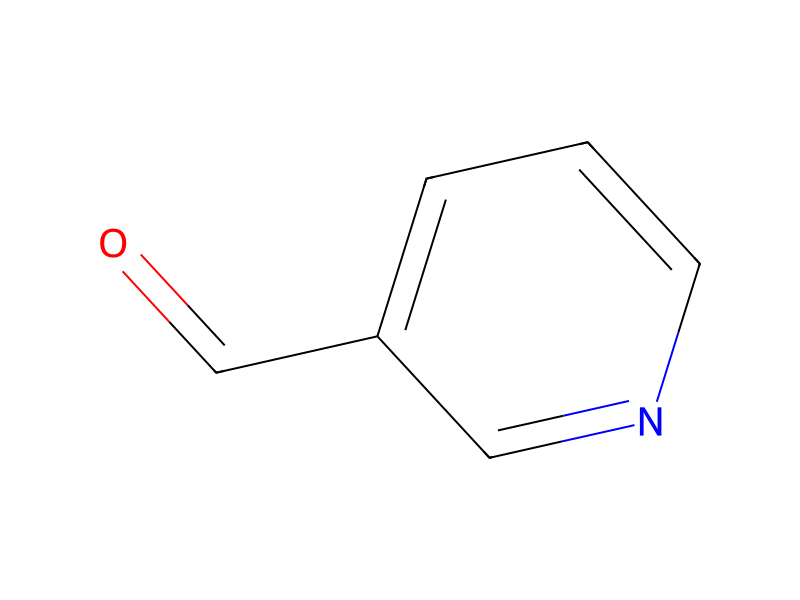


Product 1

Reagents, catalysts & solvents 1

Conditions
- Temperature
- 5 °C
Procedure
A solution of pyridine-3-carboxaldehyde (322 mg, 3.0 mmol) and 4-phenoxyphenethylamine (747 mg, 3.5 mmol) in reagent grade methanol (5 mL) under nitrogen was refluxed for 2 h, then cooled to 5° C. (ice bath), and diluted with more methanol (5 mL). Sodium borohydride (0.23 g, 6 mmol) was added, and the mixture was slowly allowed to reach room temperature and stirred at room temperature overnight (18 h). The mixture was concentrated in vacuo, taken up in dichloromethane, and filtered. The filtrate was concentrated in vacuo and chromatographed on silica gel (eluted with 7% methanol/dichloromethane) to afford N-((4-phenoxy)phenylethyl)pyridine-3-methylamine (863 mg, 94%).
Workup
- customto reach room temperature
- concentrationThe mixture was concentrated in vacuo
- filtrationfiltered
- concentrationThe filtrate was concentrated in vacuo
- customchromatographed on silica gel (eluted with 7% methanol/dichloromethane)
Sources & evidence
- ORD record
- ord-78334a7dc6754ff8b9a39cb558175067
- Source dataset
- uspto-grants-2004_10
- Patent number
- US06800651B2
Reaction notes
Loading…