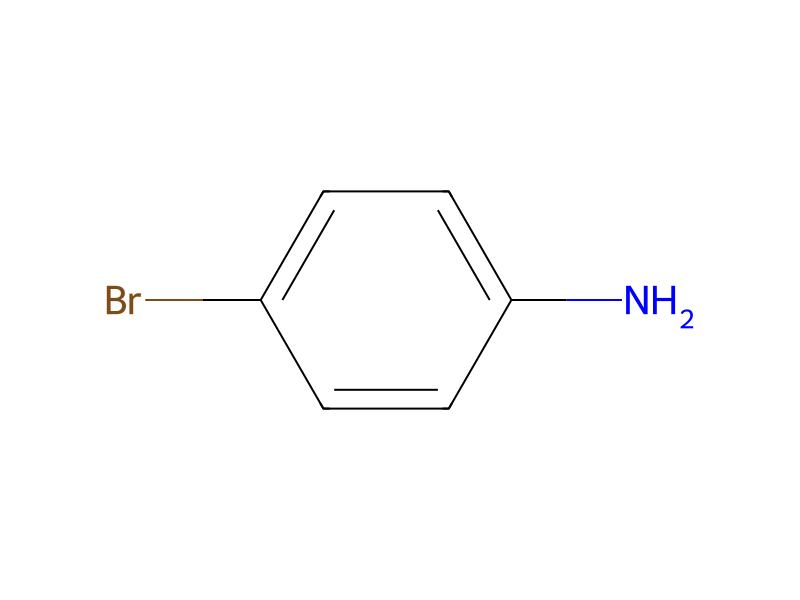
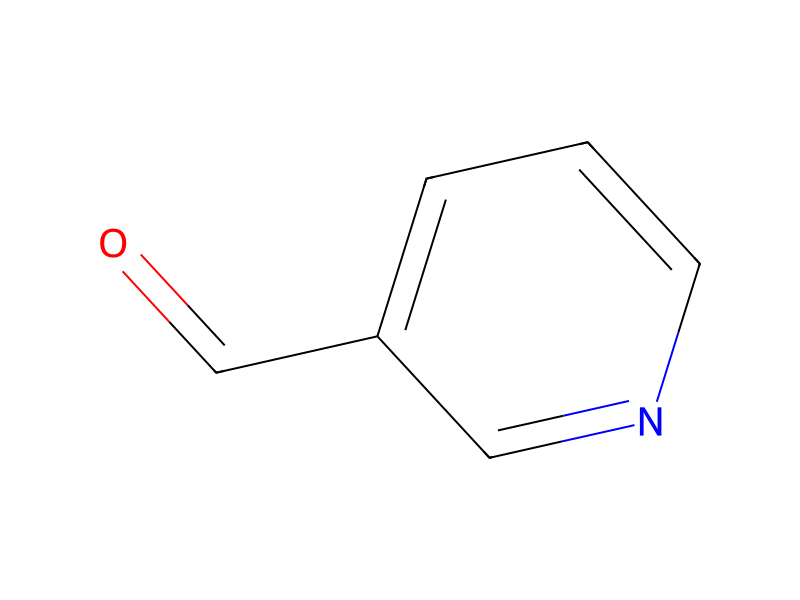
4-Bromoaniline → 4-bromo-N-(pyridin-3-ylmethyl)aniline
Reaction equation

[Br:1][C:2]1[CH:8]=[CH:7][C:5]([NH2:6])=[CH:4][CH:3]=1.[N:9]1[CH:14]=[CH:13][CH:12]=[C:11]([CH:15]=O)[CH:10]=1.[BH4-].[Na+]>CO>[Br:1][C:2]1[CH:8]=[CH:7][C:5]([NH:6][CH2:15][C:11]2[CH:10]=[N:9][CH:14]=[CH:13][CH:12]=2)=[CH:4][CH:3]=1Participants
Reactant 3

Product 1

Reagents, catalysts & solvents 1

Conditions
- Temperature
- 0 °C
Procedure
A solution of 4-bromoaniline (Aldrich; 1.3 equiv.) in methanol (0.4 M) was treated with 3-pyridinecarboxaldehyde (Aldrich; 1.0 equiv.). The solution was heated to reflux for 2 hours. The reaction was cooled to 0° C. and treated slowly with sodium borohydride (3.4 equiv.). After 1 hour the cooling bath was removed and stirring continued overnight. The reaction was concentrated in vacuo. The residue was partitioned between DCM and water. The aqueous phase was back-extracted once with DCM. The combined organics were washed with water and brine. The organic layer was concentrated to a white solid, which was purified via recrystallization from 1.2:4 ethyl acetate/hexanes to give the title compound. Anal Calcd for C12H11BrN2.0.1H2O: C, 54.40; H, 4.26; N, 10.57. Found: C, 54.30; H, 4.12; N, 10.44. MS found 262.84, 264.83 [M+H]+.
Workup
- temperatureThe solution was heated
- temperatureto reflux for 2 hours
- customAfter 1 hour the cooling bath was removed
- concentrationThe reaction was concentrated in vacuo
- customThe residue was partitioned between DCM and water
- extractionThe aqueous phase was back-extracted once with DCM
- washThe combined organics were washed with water and brine
- concentrationThe organic layer was concentrated to a white solid, which
- customwas purified via recrystallization from 1.2:4 ethyl acetate/hexanes
Sources & evidence
- ORD record
- ord-e42b6beacf2940d6b8a0db027847ac4f
- Source dataset
- uspto-grants-2004_10
- Patent number
- US06800651B2
Reaction notes
Loading…