Borane → (2R)-2-(4-nitrophenyl)propan-1-ol
Reaction equation

[N+:1]([C:4]1[CH:9]=[CH:8][C:7]([C@@H:10]([CH3:14])[C:11](O)=[O:12])=[CH:6][CH:5]=1)([O-:3])=[O:2].CSC.B.B>C1COCC1>[N+:1]([C:4]1[CH:5]=[CH:6][C:7]([C@@H:10]([CH3:14])[CH2:11][OH:12])=[CH:8][CH:9]=1)([O-:3])=[O:2]Participants
Reactant 3

Product 1

Reagents, catalysts & solvents 1

Procedure
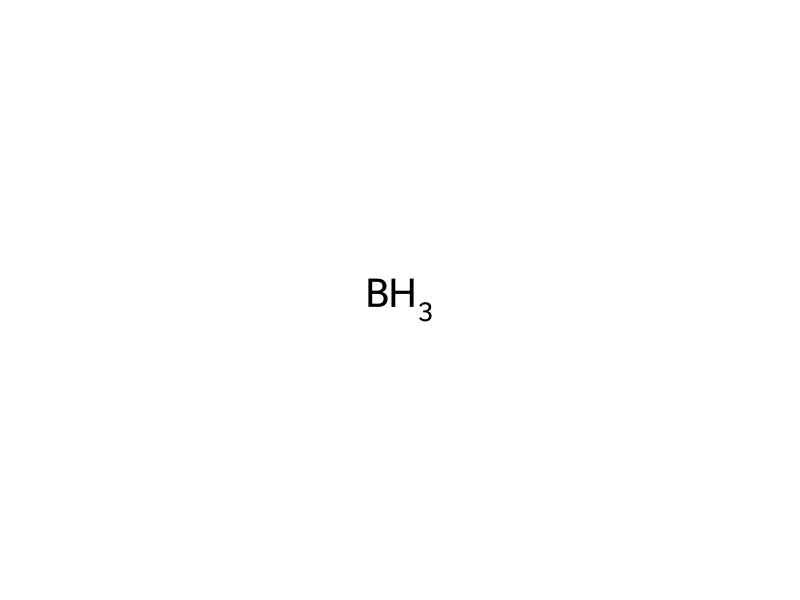
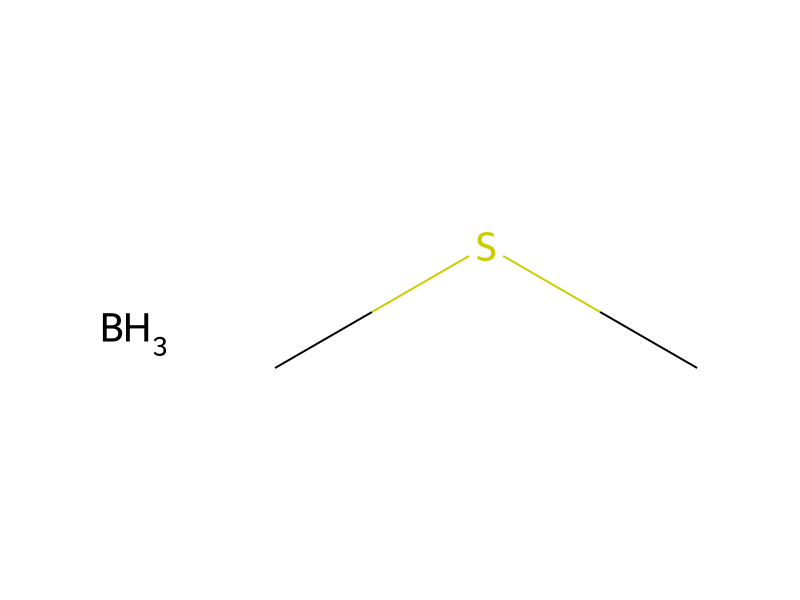
A 500 ml three necked round bottom flask equipped with a mechanical stirrer, thermometer, addition funnel, reflux condenser and a continuous nitrogen purge is charged with (2R)-2-(4-nitrophenyl)propanoic acid (8.12 g, 41.6 mmol) and THF (120.0 mL). To this solution was added 10.0 M borane dimethylsulfide (10.56 ml, 105.66 mmol) over a period of 30.0 minutes at room temperature. Reaction is quite exothermic with evolution of gas (exotherm can be controlled by the rate of addition of borane solution). The reaction is then refluxed for 5.0 hours, brought to room temperature and then quenched very carefully with saturated potassium carbonate solution (100.0 mL). Foaming observed during the quench can be controlled by the rate of addition of the carbonate solution. After 3.0 hours of stirring, the top organic layer is separated and the aqueous layer back extracted with methylene chloride (130.0 mL). The combined organic layer is then washed with saturated brine (100.0 mL), dried over anhydrous magnesium sulfate, filtered, and concentrated under reduced pressure at 50° C. to afford (2R)-2-(4-nitrophenyl)propan-1-ol (7.24 g, 96%); 1H nmr (CDCl3, 300 MHz) δ 1.29 (d, 3H, J=7.02 Hz), 1.69 (b. triplet, OH), 3.05 (m, 1H), 3.72 (m, 2H), 7.39 (d, 2H), 8.15 (d, 2H); 13C nmr (CDCl3, 300 MHz) δ 17.61, 25.82, 42.61, 68.17, 123.92, 128.61, 146.90, 152.24.
Workup
- additionthermometer, addition funnel
- temperaturereflux condenser
- customa continuous nitrogen purge
- customReaction
- temperatureThe reaction is then refluxed for 5.0 hours
- custombrought to room temperature
- customquenched very carefully with saturated potassium carbonate solution (100.0 mL)
- customquench can
- additionbe controlled by the rate of addition of the carbonate solution
- customthe top organic layer is separated
- extractionthe aqueous layer back extracted with methylene chloride (130.0 mL)
- washThe combined organic layer is then washed with saturated brine (100.0 mL)
- dry with materialdried over anhydrous magnesium sulfate
- filtrationfiltered
- concentrationconcentrated under reduced pressure at 50° C.
Sources & evidence
- ORD record
- ord-1080085b10bf4f4da1bfa31f37de0267
- Source dataset
- uspto-grants-2004_10
- Patent number
- US06803484B2
Reaction notes
Loading…