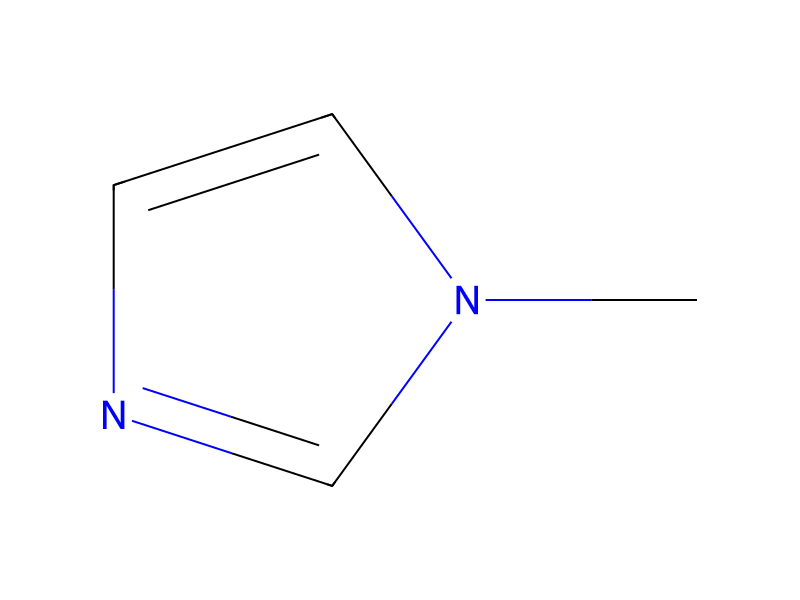
1-Methylimidazole → HCID 21087642, compound
Reaction equation

[CH3:1][N:2]1[CH:6]=[CH:5][N:4]=[CH:3]1.[CH3:7][S:8]([NH:11][C:12]1[CH:21]=[CH:20][CH:19]=[C:18]2[C:13]=1[CH:14]=[CH:15][C:16]([NH:23][C:24](=[O:27])[CH2:25][Cl:26])=[C:17]2[OH:22])(=[O:10])=[O:9]>O1CCCC1>[Cl-:26].[OH:22][C:17]1[C:18]2[C:13](=[C:12]([NH:11][S:8]([CH3:7])(=[O:10])=[O:9])[CH:21]=[CH:20][CH:19]=2)[CH:14]=[CH:15][C:16]=1[NH:23][C:24]([CH2:25][N:4]1[CH:5]=[CH:6][N+:2]([CH3:1])=[CH:3]1)=[O:27]Participants
4
Reactant 2

Product 1

Reagents, catalysts & solvents 1

Procedure
0.25 ml of N-methylimidazole (3.1 mmol) was introduced into a solution of N-(5-methanesulphonylamino-1-hydroxynaphthalen-2-yl)-2-chloroacetamide obtained above in the preceding step (1 g, 3 mmol) in 20 ml of tetrahydrofuran. The reaction medium was heated under reflux for 8 hours. The precipitate formed was drained, washed abundantly with dioxane and dried under vacuum to constant weight to give 0.86 g of 3-[(1-hydroxy-5-methanesulphonylaminonaphthalen-2-ylcarbamoyl)methyl]-1-methyl-3H-imidazol-1-ium chloride in the form of a brown powder melting at 198° C., with a yield of 70%. The cation mass spectroscopy analysis: m/z=375 of the product obtained was consistent with that of the expected product.
Workup
- temperatureThe reaction medium was heated
- temperatureunder reflux for 8 hours
- customThe precipitate formed
- washwashed abundantly with dioxane
- customdried under vacuum to constant weight
Sources & evidence
- ORD record
- ord-dbd6cab27e044fde99fa4f78a5fe921e
- Source dataset
- uspto-grants-2003_08
- Patent number
- US06605124B1
Reaction notes
Loading…