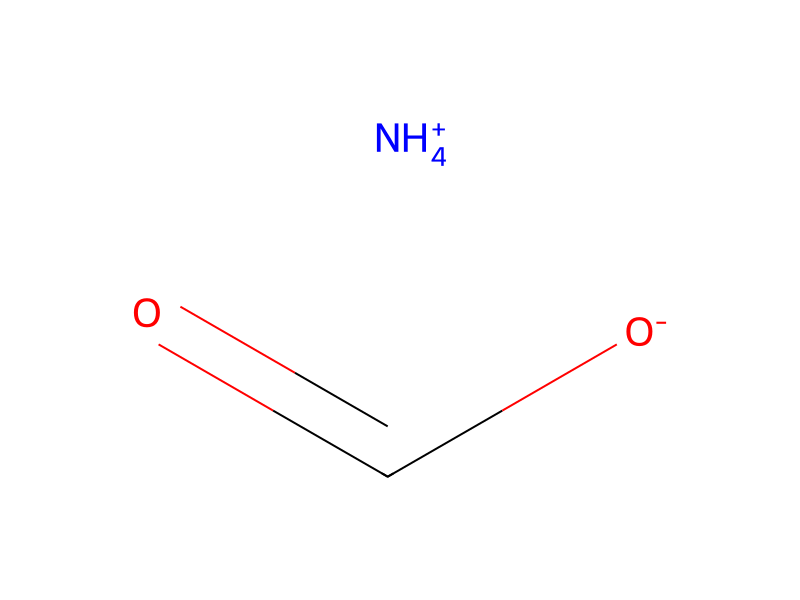
Ammonium formate → HCID 23003959, compound
Reaction equation

[C:1]([N:8]1[C:16]2[C:11](=[CH:12][C:13](/[C:17](/[CH3:24])=[CH:18]\[C:19]([O:21][CH2:22][CH3:23])=[O:20])=[CH:14][CH:15]=2)[CH2:10][CH2:9]1)([O:3][C:4]([CH3:7])([CH3:6])[CH3:5])=[O:2].C([O-])=O.[NH4+]>C(O)C.[Pd]>[C:1]([N:8]1[C:16]2[C:11](=[CH:12][C:13]([CH:17]([CH3:24])[CH2:18][C:19]([O:21][CH2:22][CH3:23])=[O:20])=[CH:14][CH:15]=2)[CH2:10][CH2:9]1)([O:3][C:4]([CH3:7])([CH3:6])[CH3:5])=[O:2]Participants
5
Reactant 2

Product 1

Reagents, catalysts & solvents 2


Conditions
- Temperature
- 60 °C
Procedure
A mixture of ethyl 3-(1-boc-2,3-dihydro-1H-indol-5-yl)crotonate (11.4 g, Reference Example 7) and ammonium formate (about 30 g) in ethanol (about 200 ml) was warmed in an oil-bath to 60° C. Palladium on charcoal (10%, about 1 g) was added in one portion under a blanket of nitrogen—effervescence began almost immediately. The mixture was stirred at about 60° C. for about one hour, then cooled to room temperature and filtered through Celite. The filtrate was evaporated and the residue was partitioned between water and ethyl acetate. The organic layer was washed with water, then dried and then evaporated to give the title compound (11.1 g) as a colourless, mobile oil.
Workup
- temperaturecooled to room temperature
- filtrationfiltered through Celite
- customThe filtrate was evaporated
- customthe residue was partitioned between water and ethyl acetate
- washThe organic layer was washed with water
- customdried
- customevaporated
Sources & evidence
- ORD record
- ord-857797184eb14f99a2f96a9637a15957
- Source dataset
- uspto-grants-2003_08
- Patent number
- US06608084B1
Reaction notes
Loading…