Chloroacetaldehyde → HCID 86693816, compound
Reaction equation

[Cl:1][CH2:2][CH:3]=[O:4].FC(F)(F)[C:7]1[CH:8]=[C:9]([C:17](C2C=C(C(F)(F)F)C=C(C(F)(F)F)C=2)(O)[C@@H:18]2CCCN2)[CH:10]=[C:11](C(F)(F)F)[CH:12]=1.C1(CCC=O)C=CC=CC=1.[CH:50](OC)([O:53][CH3:54])[O:51][CH3:52].O.C1(C)C=CC(S(O)(=O)=O)=CC=1>>[CH2:17]([C@H:18]([CH:50]([O:53][CH3:54])[O:51][CH3:52])[C@@H:3]([OH:4])[CH2:2][Cl:1])[C:9]1[CH:10]=[CH:11][CH:12]=[CH:7][CH:8]=1Participants


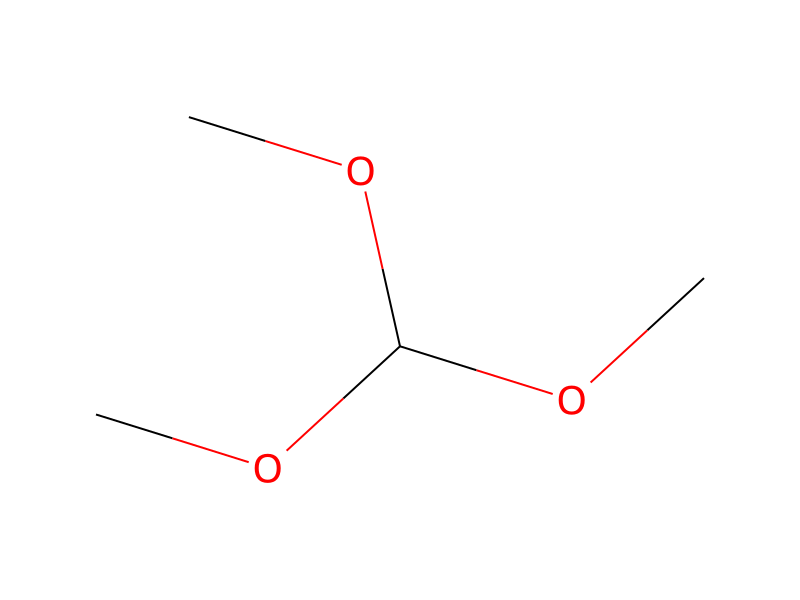


Conditions
- Temperature
- 23 °C
Procedure
To a 40% aqueous chloroacetaldehyde solution (0.75 mmol, 123 μL) were added (S)-2-[bis(3,5-bis-trifluoromethylphenyl)hydroxymethyl]pyrrolidine (0.05 mmol, 10 mol % relative to 3-phenylpropanal), the solvent shown in Table 1 (0.5 mL) and 3-phenylpropanal (aldehyde compound (1), 0.5 mmol). The reaction mixture was stirred at 23° C. for the time shown in Table 1, trimethyl orthoformate (6.0 mmol) and p-toluenesulfonic acid monohydrate (0.1 mmol) were added thereto, and the mixture was stirred at 23° C. for 1 hr. The acetalization reaction was quenched by the addition of saturated aqueous sodium hydrogen carbonate solution. The organic materials were extracted with chloroform (threetimes), and the extract was dried over anhydrous MgSO4, filtered, and concentrated under reduced pressure. The residue was purified by column chromatography (ethyl acetate:hexane=1:6) to give (2R,3S)-3-benzyl-1-chloro-4,4-dimethoxybutan-2-ol. The yield, syn/anti ratio and enantiomeric excess are shown in Table 1. The yield was calculated as a yield over two steps. The syn/anti ratio was determined by 1H-NMR spectrum. The enantiomeric excess was determined by HPLC equipped with CHIRALPAK AD-H column (iPrOH:hexane=1:100) (0.25 mL/min, the retention time of the minor enantiomer=32.1 min, the retention time of the major enantiomer=41.8 min) after conversion to the corresponding 3,5-dinitrobenzoate.
Workup
- additionwere added
- stirringthe mixture was stirred at 23° C. for 1 hr
- customThe acetalization reaction
- customwas quenched by the addition of saturated aqueous sodium hydrogen carbonate solution
- extractionThe organic materials were extracted with chloroform (threetimes)
- dry with materialthe extract was dried over anhydrous MgSO4
- filtrationfiltered
- concentrationconcentrated under reduced pressure
- customThe residue was purified by column chromatography (ethyl acetate:hexane=1:6)
Sources & evidence
- ORD record
- ord-dcd91039c9534af4a562def5836f54d8
- Source dataset
- uspto-grants-2014_06
- Patent number
- US08742176B2
Reaction notes
Loading…