Potassium Iodide → (3-(Cyclopropylmethoxy)-4-fluorophenyl)(4-fluorophenyl)methanamine
Reaction equation

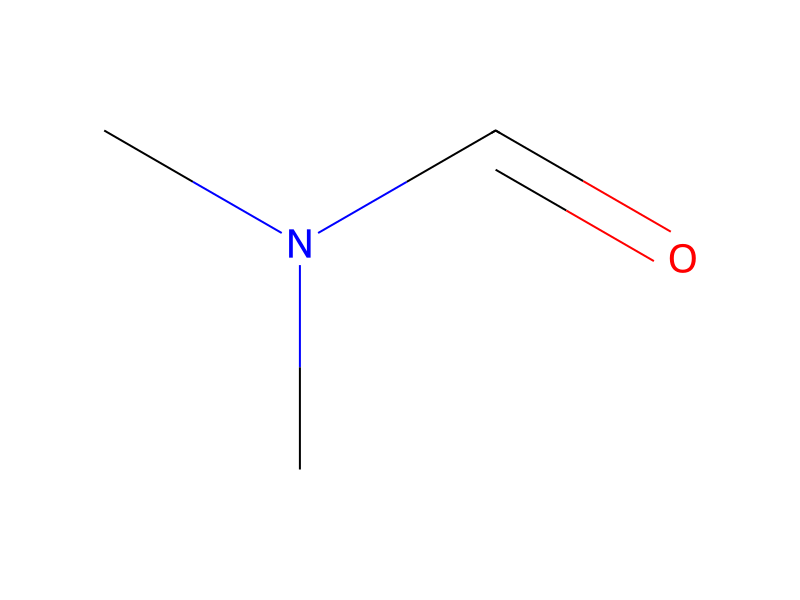
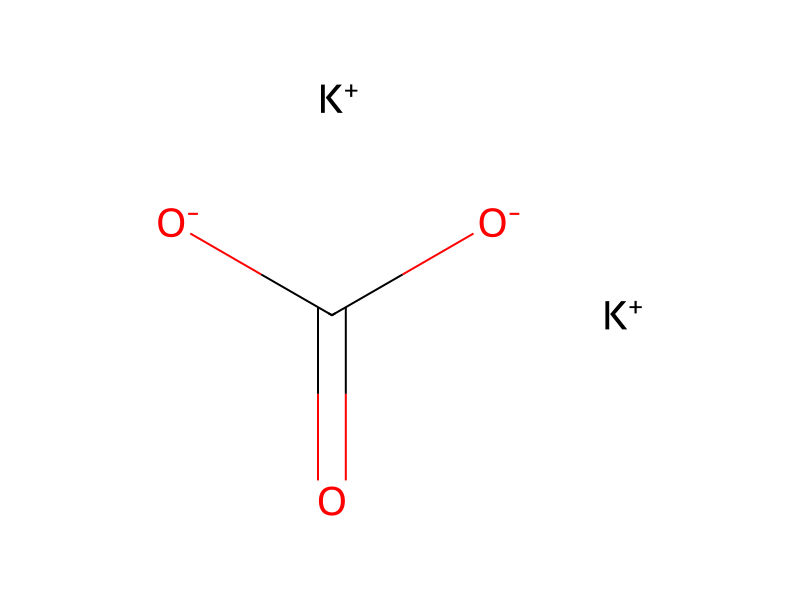
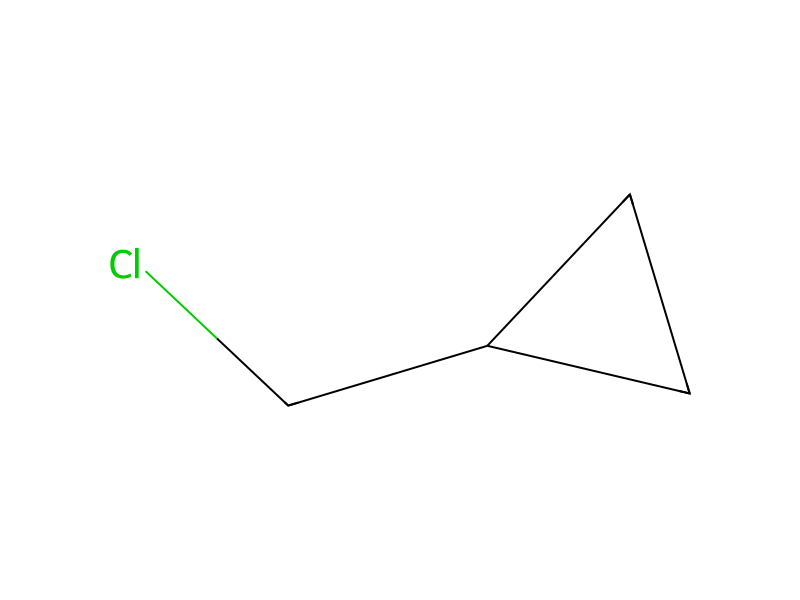
[F:1][C:2]1[CH:10]=[CH:9][C:5](C(O)=O)=[CH:4][C:3]=1O.Cl[CH2:13][CH:14]1[CH2:16][CH2:15]1.[C:17](=[O:20])([O-])[O-].[K+].[K+].[I-].[K+].C[N:26]([CH:28]=O)C>O>[CH:16]1([CH2:15][O:20][C:17]2[CH:9]=[C:5]([CH:28]([C:5]3[CH:4]=[CH:3][C:2]([F:1])=[CH:10][CH:9]=3)[NH2:26])[CH:4]=[CH:3][C:2]=2[F:1])[CH2:14][CH2:13]1Participants
Reactant 5


Product 1

Reagents, catalysts & solvents 1
Conditions
- Temperature
- 90 °C
Procedure
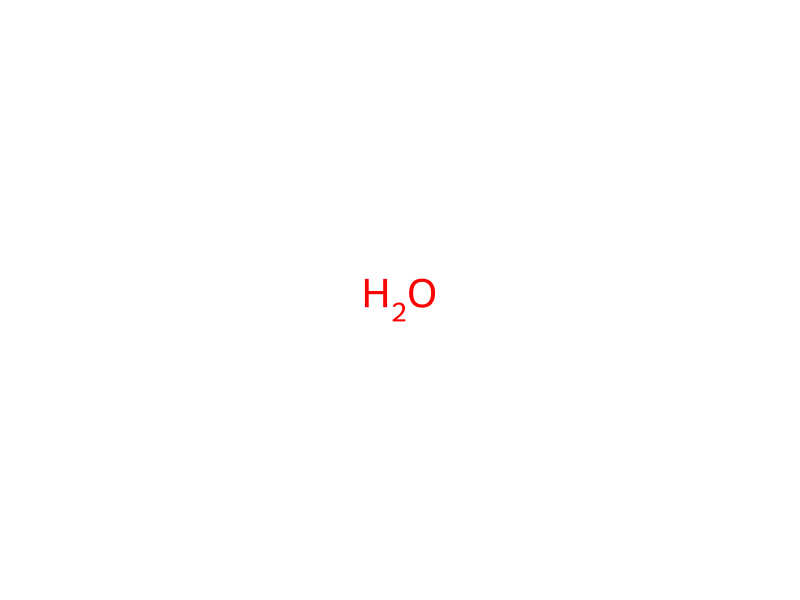
4-Fluoro-3-hydroxybenzoic acid (2.0 g) was dissolved in DMF (15 mL). To the solution, (chloromethyl)cyclopropane (2.4 mL), potassium carbonate (3.9 g), and potassium iodide (212 mg) were added, and the mixture was stirred at 90° C. for 6 hours. The reaction mixture was cooled to room temperature, water (30 mL) was then added thereto, and the resultant mixture was then extracted with toluene (30 mL). The organic layer was washed with brine (30 mL), dried over anhydrous sodium sulfate, and then concentrated under reduced pressure. The residue was dissolved in toluene (10 mL). To the mixture, a solution of DIBAL in hexane (1.0 M, 20 mL) was added dropwise at 0° C., and the reaction mixture was stirred at 0° C. for 2 hours. To the reaction mixture, water (1.0 mL) and an aqueous sodium hydroxide solution (1.0 M, 1.0 mL) were gradually added. The resultant precipitate was removed by filtration and washed with ethyl acetate (10 mL×5). Then, the combined filtrate was concentrated under reduced pressure. To the residue, water (20 mL) was added, and the resultant mixture was then extracted with ethyl acetate (30 mL). The organic layer was washed with brine (15 mL), dried over anhydrous sodium sulfate, and then concentrated under reduced pressure. The residue was purified by silica gel column chromatography (40% ethyl acetate/hexane). The obtained compound was dissolved in dichloromethane (20 mL). To the solution, manganese dioxide (8.6 g) was added at room temperature, and the mixture was heated to reflux at 45° C. for 6 hours. The reaction mixture was cooled to room temperature, and the precipitate was removed by filtraion and washed with chloroform (20 mL×4). Then, the combined filtrate was concentrated under reduced pressure. The residue was dissolved in THF (2.0 mL). To the mixture, a solution of 4-fluorophenylmagnesium bromide in THF (1.0 M, 12 mL) was added dropwise at 0° C., and the mixture was stirred at room temperature for 2 hours. To the reaction mixture, an aqueous saturated ammonium chloride solution (10 mL) was added at 0° C., and the resultant mixture was then extracted with ethyl acetate (15 mL×2). The organic layer was washed with brine (20 mL), dried over anhydrous sodium sulfate, and then concentrated under reduced pressure. The residue was purified by silica gel column chromatography (30% ethyl acetate/hexane). The obtained compound was dissolved in chloroform (10 mL). To the solution, sodium azide (1.9 g) was added. To the reaction mixture, trifluoroacetic acid (3.6 mL) was added dropwise at 0° C., and the mixture was then stirred at room temperature for 1 hour. To the reaction mixture, water (10 mL) was added, and the resultant mixture was then extracted with chloroform (10 mL). The organic layer was washed with an aqueous saturated sodium bicarbonate solution (10 mL), dried over anhydrous sodium sulfate, and then concentrated under reduced pressure. The residue was purified by silica gel column chromatography (20% ethyl acetate/hexane). The obtained compound was dissolved in methanol (30 mL). To the solution, 10% palladium-carbon (420 mg) was added, and the reaction mixture was stirred at room temperature for 2 hours under a hydrogen atmosphere. The precipitate was removed by filtration through a pad of Celite and washed with methanol (80 mL). Then, the combined filtrate was concentrated under reduced pressure to obtain the title compound (2.08 g) as a crude product.
Workup
- temperatureThe reaction mixture was cooled to room temperature
- extractionthe resultant mixture was then extracted with toluene (30 mL)
- washThe organic layer was washed with brine (30 mL)
- dry with materialdried over anhydrous sodium sulfate
- concentrationconcentrated under reduced pressure
- dissolutionThe residue was dissolved in toluene (10 mL)
- additionTo the mixture, a solution of DIBAL in hexane (1.0 M, 20 mL) was added dropwise at 0° C.
- stirringthe reaction mixture was stirred at 0° C. for 2 hours
- additionTo the reaction mixture, water (1.0 mL) and an aqueous sodium hydroxide solution (1.0 M, 1.0 mL) were gradually added
- customThe resultant precipitate was removed by filtration
- washwashed with ethyl acetate (10 mL×5)
- concentrationThen, the combined filtrate was concentrated under reduced pressure
- additionTo the residue, water (20 mL) was added
- extractionthe resultant mixture was then extracted with ethyl acetate (30 mL)
- washThe organic layer was washed with brine (15 mL)
- dry with materialdried over anhydrous sodium sulfate
- concentrationconcentrated under reduced pressure
- customThe residue was purified by silica gel column chromatography (40% ethyl acetate/hexane)
- dissolutionThe obtained compound was dissolved in dichloromethane (20 mL)
- additionTo the solution, manganese dioxide (8.6 g) was added at room temperature
- temperaturethe mixture was heated
- temperatureto reflux at 45° C. for 6 hours
- temperatureThe reaction mixture was cooled to room temperature
- customthe precipitate was removed by filtraion
- washwashed with chloroform (20 mL×4)
- concentrationThen, the combined filtrate was concentrated under reduced pressure
- dissolutionThe residue was dissolved in THF (2.0 mL)
- additionTo the mixture, a solution of 4-fluorophenylmagnesium bromide in THF (1.0 M, 12 mL) was added dropwise at 0° C.
- stirringthe mixture was stirred at room temperature for 2 hours
- additionTo the reaction mixture, an aqueous saturated ammonium chloride solution (10 mL) was added at 0° C.
- extractionthe resultant mixture was then extracted with ethyl acetate (15 mL×2)
- washThe organic layer was washed with brine (20 mL)
- dry with materialdried over anhydrous sodium sulfate
- concentrationconcentrated under reduced pressure
- customThe residue was purified by silica gel column chromatography (30% ethyl acetate/hexane)
- dissolutionThe obtained compound was dissolved in chloroform (10 mL)
- additionTo the solution, sodium azide (1.9 g) was added
- additionTo the reaction mixture, trifluoroacetic acid (3.6 mL) was added dropwise at 0° C.
- stirringthe mixture was then stirred at room temperature for 1 hour
- additionTo the reaction mixture, water (10 mL) was added
- extractionthe resultant mixture was then extracted with chloroform (10 mL)
- washThe organic layer was washed with an aqueous saturated sodium bicarbonate solution (10 mL)
- dry with materialdried over anhydrous sodium sulfate
- concentrationconcentrated under reduced pressure
- customThe residue was purified by silica gel column chromatography (20% ethyl acetate/hexane)
- dissolutionThe obtained compound was dissolved in methanol (30 mL)
- additionTo the solution, 10% palladium-carbon (420 mg) was added
- stirringthe reaction mixture was stirred at room temperature for 2 hours under a hydrogen atmosphere
- customThe precipitate was removed by filtration through a pad of Celite
- washwashed with methanol (80 mL)
- concentrationThen, the combined filtrate was concentrated under reduced pressure
Sources & evidence
- ORD record
- ord-44f490fc18a44212b86c854982f96786
- Source dataset
- uspto-grants-2013_09
- Patent number
- US08530490B2
Reaction notes
Loading…