4-Chlorobutyryl chloride → HCID 57245589, compound
Reaction equation

[Cl:1][CH2:2][CH2:3][CH2:4][C:5](Cl)=[O:6].[Al+3].[Cl-].[Cl-].[Cl-].[C:12]1([CH2:18][C:19]([O:21][CH2:22][CH:23]([CH2:28][CH3:29])[CH2:24][CH2:25][CH2:26][CH3:27])=[O:20])[CH:17]=[CH:16][CH:15]=[CH:14][CH:13]=1>>[Cl:1][CH2:2][CH2:3][CH2:4][C:5]([C:15]1[CH:16]=[CH:17][C:12]([CH2:18][C:19]([O:21][CH2:22][CH:23]([CH2:28][CH3:29])[CH2:24][CH2:25][CH2:26][CH3:27])=[O:20])=[CH:13][CH:14]=1)=[O:6]Participants
4
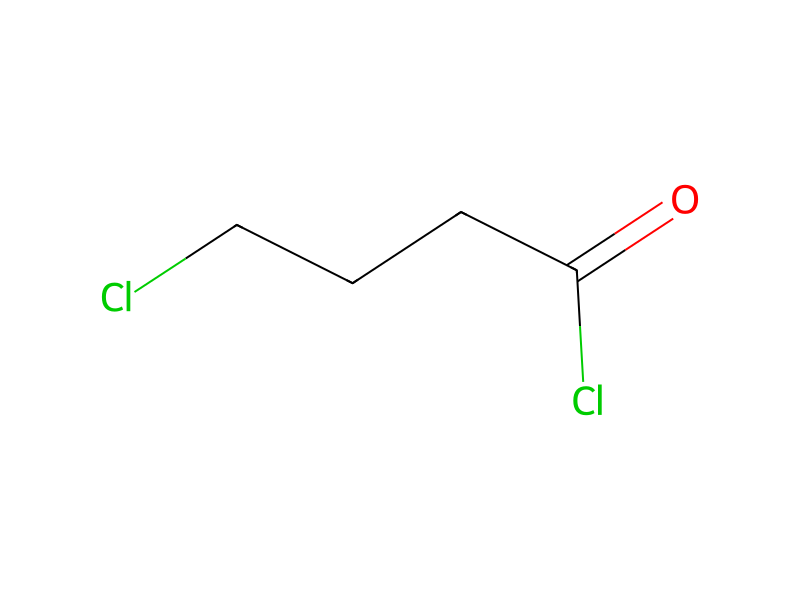



Conditions
- Temperature
- 35 °C
Procedure
Mix chlorobutyryl chloride (16.9 g) and AlCl3 (29.3 g) at room temperature. Add 2-phenylacetic acid, 2-ethylhexyl ester (27.6 g), keeping the temperature below 10° C. Heat at 35° C. for 24 hours, quench in ice water (200 g). Separate the organic phase, dry (MgSO4) and evaporate the solvent in vacuo. Dilute the residue with ethanol (150 mL), add hydrogen chloride (5 g) and heat to 75° C. After 2.5 hours, add another 5 g of hydrogen chloride and stir at 75° C. for 24 hours. Evaporate the solvent in vacuo to give the title compound.
Workup
- customthe temperature below 10° C
- customquench in ice water (200 g)
- customSeparate the organic phase
- dry with materialdry (MgSO4)
- customevaporate the solvent in vacuo
- additionDilute the residue with ethanol (150 mL)
- additionadd hydrogen chloride (5 g)
- temperatureheat to 75° C
- additionadd another 5 g of hydrogen chloride
- customEvaporate the solvent in vacuo
Sources & evidence
- ORD record
- ord-cd7b63210e234585b56252cdc4c87dd2
- Source dataset
- uspto-grants-2003_05
- Patent number
- US06559312B2
Reaction notes
Loading…