Hydroquinone → p-Hydroxyphenyl acrylate
Reaction equation

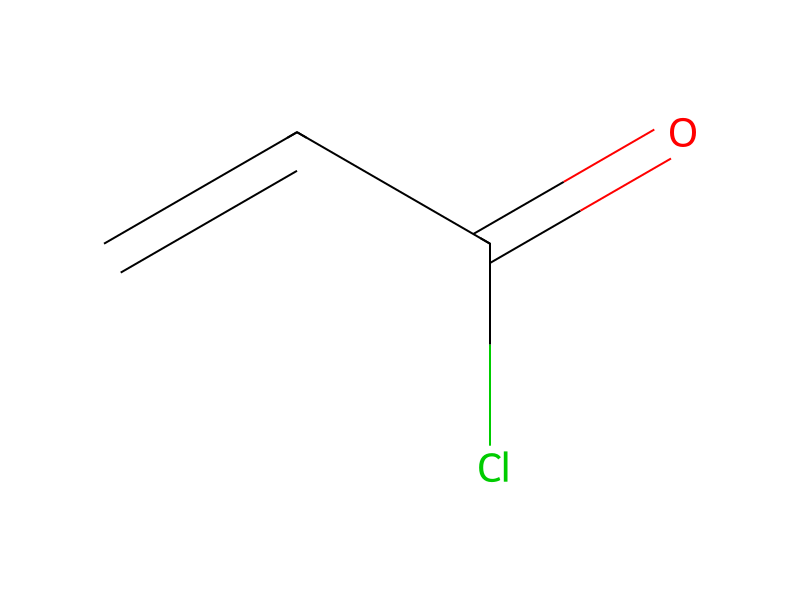
[C:1]1([CH:8]=[CH:7][C:5]([OH:6])=[CH:4][CH:3]=1)[OH:2].[C:9](Cl)(=[O:12])[CH:10]=[CH2:11]>>[C:9]([O:2][C:1]1[CH:8]=[CH:7][C:5]([OH:6])=[CH:4][CH:3]=1)(=[O:12])[CH:10]=[CH2:11]Participants
3


Procedure
Compound 5 can be prepared, for example, by the following method. Namely, hydroquinone and acrylic acid chloride are reacted to obtain 4-hydroxyphenyl acrylate (Formula 6) as a half ester. On the other hand, a 4-alkoxycarbonyloxy benzoic acid is heated and refluxed in a mixture of carbon-tetrachloride (a solvent) and thionyl chloride, and excess thionyl chloride and carbon tetrachloride (solvent) are distilled off under reduced pressure to obtain a 4-alkoxycarbonyloxy benzoic acid chloride (Formula 7). Then, in the presence of a base such as trimethylamine, the 4-hydroxyphenyl acrylate (Formula 6) and the 4-alkoxycarbonyloxy benzoic acid chloride (Formula 7) are reacted to obtain the compound 5.
Sources & evidence
- ORD record
- ord-d52aeb3b736247eb944d3847f371d5c6
- Source dataset
- uspto-grants-2003_05
- Patent number
- US06562259B1
Reaction notes
Loading…