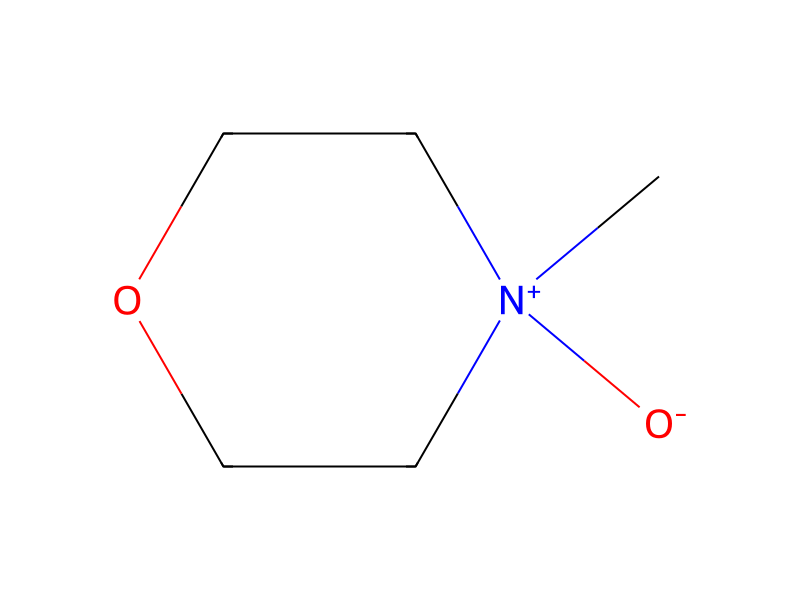
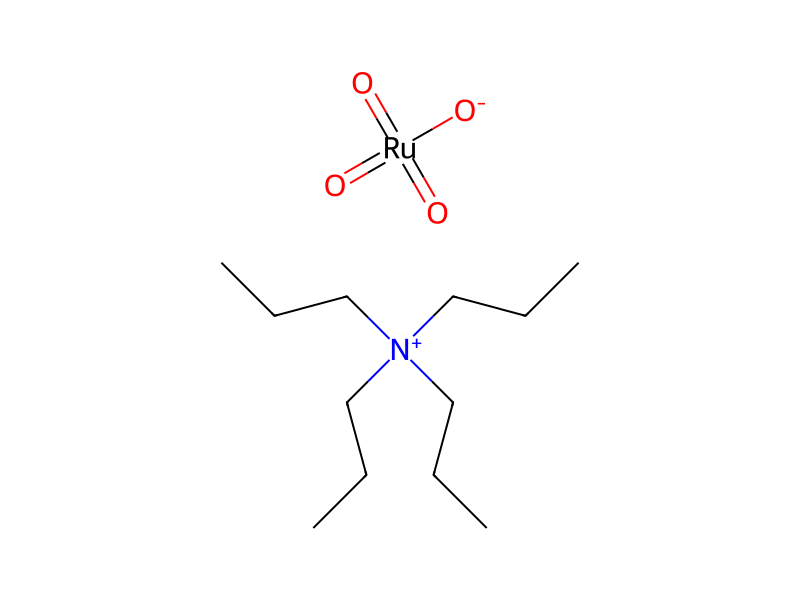
Methyl morpholine oxide → Ethyl 4-oxocyclohexanecarboxylate
Reaction equation

[OH:1][CH:2]1[CH2:7][CH2:6][CH:5]([C:8]([O:10][CH2:11][CH3:12])=[O:9])[CH2:4][CH2:3]1.C[N+]1([O-])CCOCC1>[Ru]([O-])(=O)(=O)=O.C([N+](CCC)(CCC)CCC)CC.C(Cl)Cl>[O:1]=[C:2]1[CH2:7][CH2:6][CH:5]([C:8]([O:10][CH2:11][CH3:12])=[O:9])[CH2:4][CH2:3]1Participants
5



Procedure
To a solution of ethyl 4-hydroxycyclohexanecarboxylate (16 g, 93 mmol), 4-methylmorpholine N-oxide (16.32 g, 139.5 mmol) and CH2Cl2 (180 mL) was added tetrapropylammonium perruthenate (0.8 g, 2.3 mmol) in small portions at a rate that maintained the reaction temperature at 35-40°. The reaction slowly cooled and was stirred overnight. The resulting mixture was filtered through silica with CH2Cl2 to afford 13.46 g (85%) of the title compound as a colorless oil. 1H NMR (CDCl3): d 4.19 (q, 2), 2.75 (m, 1), 2.5 (m, 2), 2.37 (m, 2), 2.19 (m, 2), 2.04 (m, 2).
Workup
- temperaturemaintained the reaction temperature at 35-40°
- customThe reaction
- temperatureslowly cooled
- filtrationThe resulting mixture was filtered through silica with CH2Cl2
Sources & evidence
- ORD record
- ord-1bf1b2b6f4ef46f68ff8e7352925505f
- Source dataset
- uspto-grants-2003_05
- Patent number
- US06562832B1
Reaction notes
Loading…