2-Bromotoluene → N-(2-tolyl)diphenylamine
Reaction equation

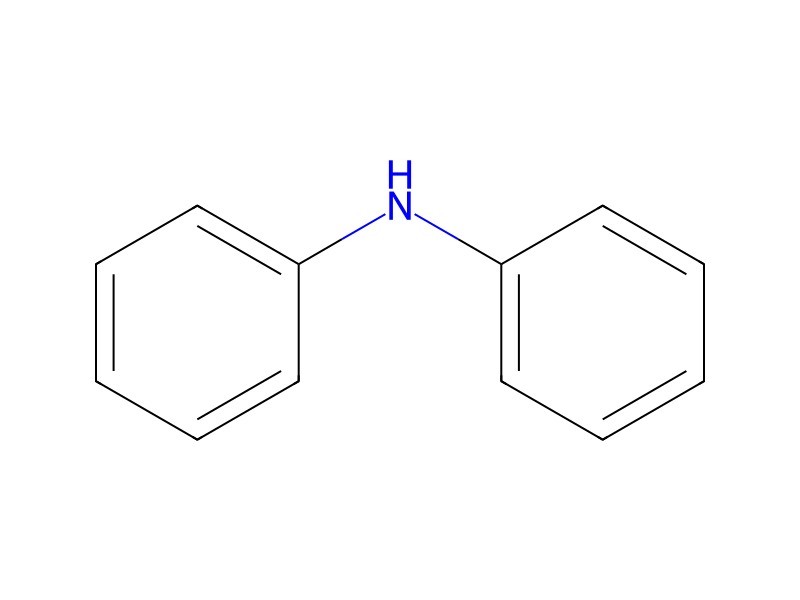
Br[C:2]1[CH:7]=[CH:6][CH:5]=[CH:4][C:3]=1[CH3:8].[C:9]1([NH:15][C:16]2[CH:21]=[CH:20][CH:19]=[CH:18][CH:17]=2)[CH:14]=[CH:13][CH:12]=[CH:11][CH:10]=1>>[C:3]1([CH3:8])[CH:4]=[CH:5][CH:6]=[CH:7][C:2]=1[N:15]([C:16]1[CH:17]=[CH:18][CH:19]=[CH:20][CH:21]=1)[C:9]1[CH:14]=[CH:13][CH:12]=[CH:11][CH:10]=1Participants
3


Procedure
According to the general procedure A, 2-bromotoluene (188 mg, 1.10 mmol) reacted with diphenylamine (169 mg, 1.00 mmol) to give the title compound (258 mg, 99%) as a white solid at room temperature for 4 h. Reaction of 2-chlorotoluene (70 mg, 0.55 mmol) with diphenylamine (85 mg, 0.50 mmol) proceeded at 80° C. for 21 h to give the title compound (134 mg, 99%). 1H-NMR (400 MHz, CDCl3): δ 7.14-7.27 (m, 8H), 7.01-6.92 (m, 6H), 2.06 (s, 3H). 13C{1H}-NMR (100 MHz, CDCl3): δ 147.46, 145.37, 136.49, 131.67, 129.61, 128.99, 127.33, 125.95, 121.50, 121.33, 18.56. GC/MS(EI): m/z 259 (M+).
Sources & evidence
- ORD record
- ord-acfb4a84af2c429c8b37a6b954dfcc59
- Source dataset
- uspto-grants-2003_05
- Patent number
- US06562989B2
Reaction notes
Loading…