Dibutylamine → HCID 12008983, compound
Reaction equation

Cl[C:2]1[CH:9]=[CH:8][C:5]([C:6]#[N:7])=[CH:4][CH:3]=1.[CH2:10]([NH:14][CH2:15][CH2:16][CH2:17][CH3:18])[CH2:11][CH2:12][CH3:13].[O-]P([O-])([O-])=O.[K+].[K+].[K+]>COCCOC.C1C=CC(/C=C/C(/C=C/C2C=CC=CC=2)=O)=CC=1.C1C=CC(/C=C/C(/C=C/C2C=CC=CC=2)=O)=CC=1.[Pd]>[CH2:10]([N:14]([CH2:15][CH2:16][CH2:17][CH3:18])[C:2]1[CH:9]=[CH:8][C:5]([C:6]#[N:7])=[CH:4][CH:3]=1)[CH2:11][CH2:12][CH3:13]Participants
6





Procedure
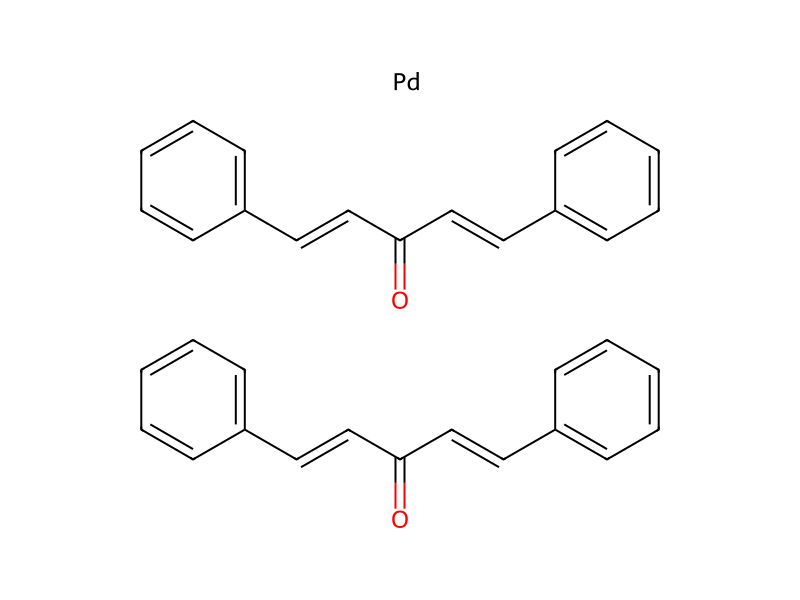
According to the general procedure B, 4-chlorobenzonitrile (70 mg, 0.51 mmol) reacted with N,N-di-n-butylamine (77 mg, 0.60 mmol) using 1 mol % Pd(dba)2, 2 mol % of ligand, and K3PO4 (254 mg, 1.20 mmol) at 100° C. in DME solvent to give the title compound (110 mg, 94%) as a colorless oil: 1H-NMR (300 MHz, CDCl3): δ 7.43 (d, 2H, J=8.7 Hz), 6.58 (d, 2H, J=9.0 Hz), 3.28 (t, 4H, J=7.5 and 8.1 Hz), 1.58 (m, 4H), 1.36 (m, 4H), 0.97 (t, 6H, J=7.2 Hz). 13C{1H}-NMR (100 MHz, CDCl3): δ 150.59, 133.52, 120.88, 111.01, 96.20, 50.64, 29.08, 20.20, 13.89. GC/MS(EI): m/z 230 (M+). Anal. Calcd for C15H22N2: C, 78.21; H, 9.63; N, 12.16. Found: C, 78.22; H, 9.75; N, 12.29.
Workup
- customat 100° C.
Sources & evidence
- ORD record
- ord-b1f571fa7db8473ba2e3a4159f7167d0
- Source dataset
- uspto-grants-2003_05
- Patent number
- US06562989B2
Reaction notes
Loading…