Benzylamine → Benzylaniline
Reaction equation

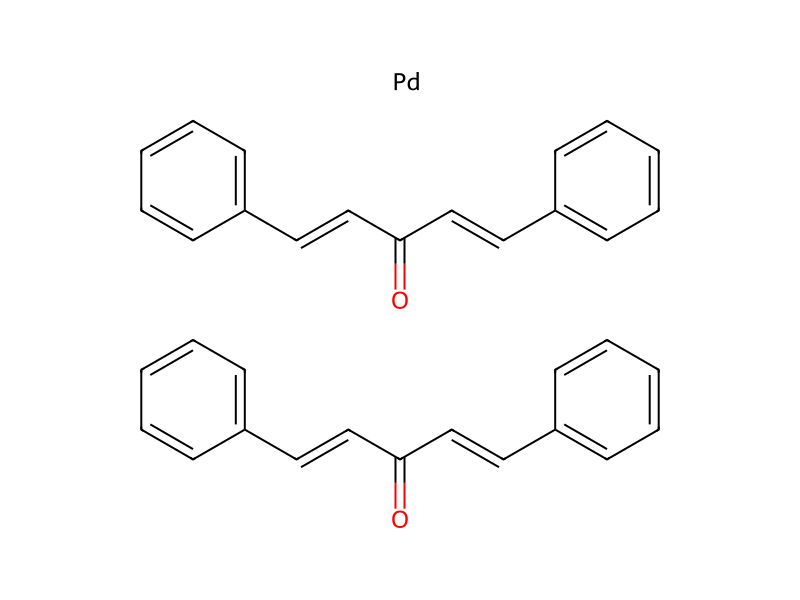
Cl[C:2]1[CH:7]=[CH:6][CH:5]=[CH:4][CH:3]=1.[CH2:8]([NH2:15])[C:9]1[CH:14]=[CH:13][CH:12]=[CH:11][CH:10]=1.CC(C)([O-])C.[Na+]>C1(C)C=CC=CC=1.C1C=CC(/C=C/C(/C=C/C2C=CC=CC=2)=O)=CC=1.C1C=CC(/C=C/C(/C=C/C2C=CC=CC=2)=O)=CC=1.[Pd]>[C:2]1([NH:15][CH2:8][C:9]2[CH:14]=[CH:13][CH:12]=[CH:11][CH:10]=2)[CH:7]=[CH:6][CH:5]=[CH:4][CH:3]=1Participants
6
Reactant 3



Product 1

Reagents, catalysts & solvents 2

Procedure
According to the general procedure A, chlorobenzene (58 mg, 0.51 mmol) reacted with benzylamine (68 mg, 0.64 mmol) using 1 mol % of Pd(dba)2, 2 mol % of Ph5FcP(t-Bu)2, and sodium tert-butoxide (59 mg, 0.60 mmol) in toluene at 100° C. for 5 h to give the title compound (85 mg, 92%) as an oil. GC/MS(EI): m/z 183 (M+), 184.
Workup
- customat 100° C.
- customfor 5 h
Sources & evidence
- ORD record
- ord-d69ab271b491437888ce6027345687d8
- Source dataset
- uspto-grants-2003_05
- Patent number
- US06562989B2
Reaction notes
Loading…