1-Chloro-4-nitrobenzene → 4-(4-Nitrophenyl)morpholine
Reaction equation

Cl[C:2]1[CH:7]=[CH:6][C:5]([N+:8]([O-:10])=[O:9])=[CH:4][CH:3]=1.[NH:11]1[CH2:16][CH2:15][O:14][CH2:13][CH2:12]1.[O-]P([O-])([O-])=O.[K+].[K+].[K+]>COCCOC.C1C=CC(/C=C/C(/C=C/C2C=CC=CC=2)=O)=CC=1.C1C=CC(/C=C/C(/C=C/C2C=CC=CC=2)=O)=CC=1.[Pd]>[N+:8]([C:5]1[CH:6]=[CH:7][C:2]([N:11]2[CH2:16][CH2:15][O:14][CH2:13][CH2:12]2)=[CH:3][CH:4]=1)([O-:10])=[O:9]Participants
6





Procedure
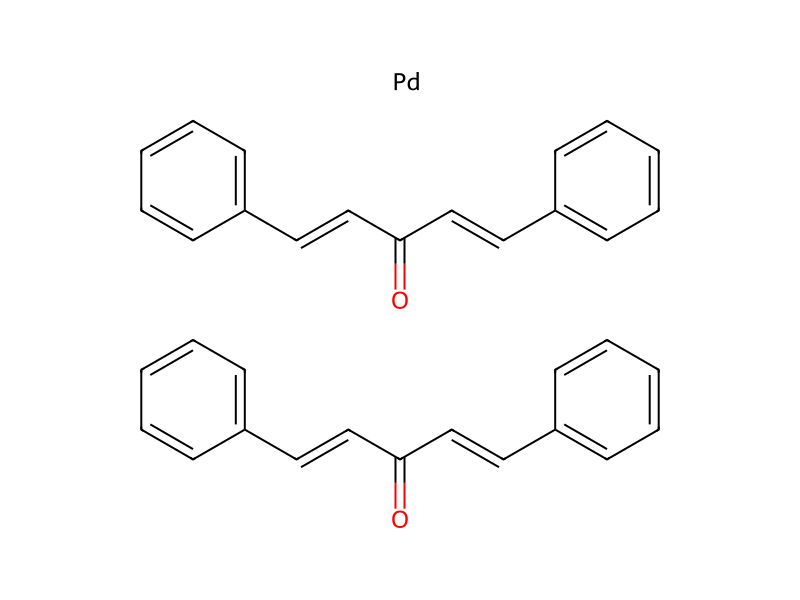
According to the general procedure B, 4-chloronitrobenzene (80 mg, 0.51 mmol) reacted with morpholine (53 mg, 0.60 mmol) using 1 mol % of Pd(dba)2, 2 mol % of Ph5FcP(t-Bu)2, and K3PO4 (256 mg, 1.21 mmol) in DME at 100° C. to give the title compound (58 mg, 56%) as a yellow solid: 1H-NMR (400 MHz, CDCl3): δ 8.11 (d, 2H, J=9.6 Hz), 6.82 (d, 2H, J=9.6 Hz), 3.85 (t, 4H, J=5.2 Hz), 3.37 (t, 4H, J=5.2 Hz). 13C{1H}-NMR (125 MHz, CDCl3): δ 154.91, 138.80, 125.76, 112.50, 66.26, 47.00. GC/MS(EI): m/z 208 (M+).
Workup
- customat 100° C.
Sources & evidence
- ORD record
- ord-f5a8ad8cd2e24914b717146290e8f32f
- Source dataset
- uspto-grants-2003_05
- Patent number
- US06562989B2
Reaction notes
Loading…