Toluene → Benzene, (3-bromopropoxy)-
Reaction equation

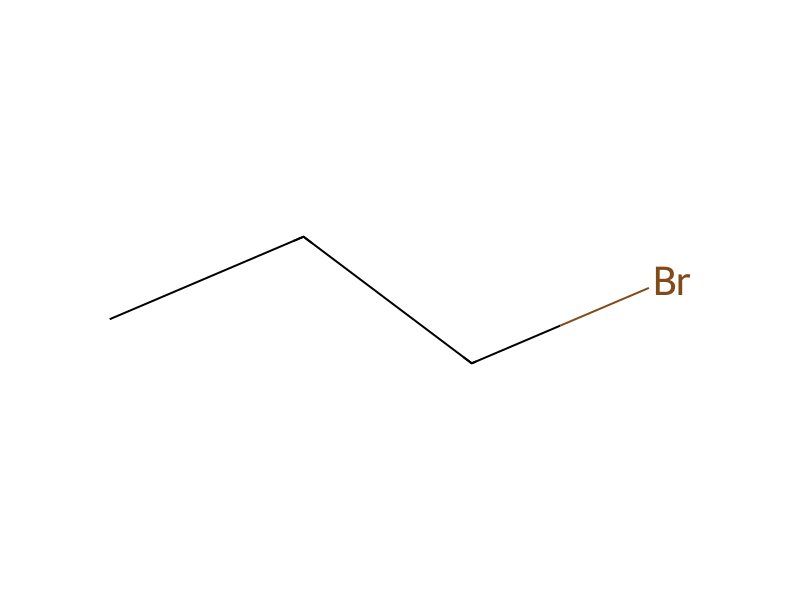
[Br:1]C1C=CC=CC=1O.[OH-].[Na+].[C:11]1(C)[CH:16]=[CH:15][CH:14]=[CH:13][CH:12]=1.[O:18]1C[CH2:21][CH2:20][CH2:19]1>S([O-])(O)(=O)=O.C([N+](CCCC)(CCCC)CCCC)CCC.CS(C)=O.O.BrCCC>[Br:1][CH2:21][CH2:20][CH2:19][O:18][C:11]1[CH:12]=[CH:13][CH:14]=[CH:15][CH:16]=1Participants
Reactant 4




Product 1

Reagents, catalysts & solvents 4



Procedure
Bromophenol (996 g, 5.76 mmol), bromopropane (790 ml, 8.70 mmol) and tetrabutylammonium hydrogensulfate (19.6 g, 48.9 mmol) were dissolved slowly in 5 L of dimethyl sulfoxide. A solution resulting from dissolving sodium hydroxide (2300 g, 57.6 mmol) in 2300 g of water was dropped slowly. Since heat was generated during the above operation, the solution was added so that the internal temperature was kept at 40-45° C. After stirring at room temperature for 1 hour, the mixture was cooled to 25° C. and then 6.7 L of water was added while keeping at 20-30° C. After addition of 12 L of toluene, 3 L of tetrahydrofuran and 3.3 L of water, phase separation was conducted. The organic layer was washed with 8 L of water, two 4.2 L portions of a 20% brine and 8 L of water. After vacuum concentration, the residue was distilled under reduced pressure to yield p-bromopropoxybenzene (b.p. 96-100° C./4 mmHg, 1182.5 g, Yield 95.5%) as a colorless oily matter.
Workup
- customA solution resulting
- additionwas dropped slowly
- temperatureSince heat
- additionthe solution was added so that the internal temperature
- customwas kept at 40-45° C
- temperaturethe mixture was cooled to 25° C.
- customwhile keeping at 20-30° C
- washThe organic layer was washed with 8 L of water, two 4.2 L portions of a 20% brine and 8 L of water
- concentrationAfter vacuum concentration
- distillationthe residue was distilled under reduced pressure
Sources & evidence
- ORD record
- ord-55685fd4096e4c27b7a933e364e06f60
- Source dataset
- uspto-grants-2003_05
- Patent number
- US06566535B1
Reaction notes
Loading…