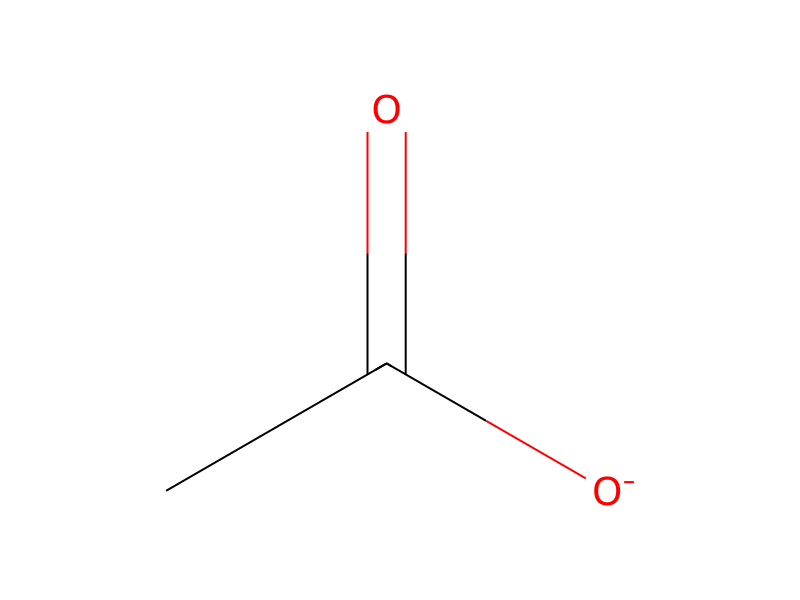
Acetate → 5'-Adenylic acid, N-(2-aminoethyl)-
Reaction equation

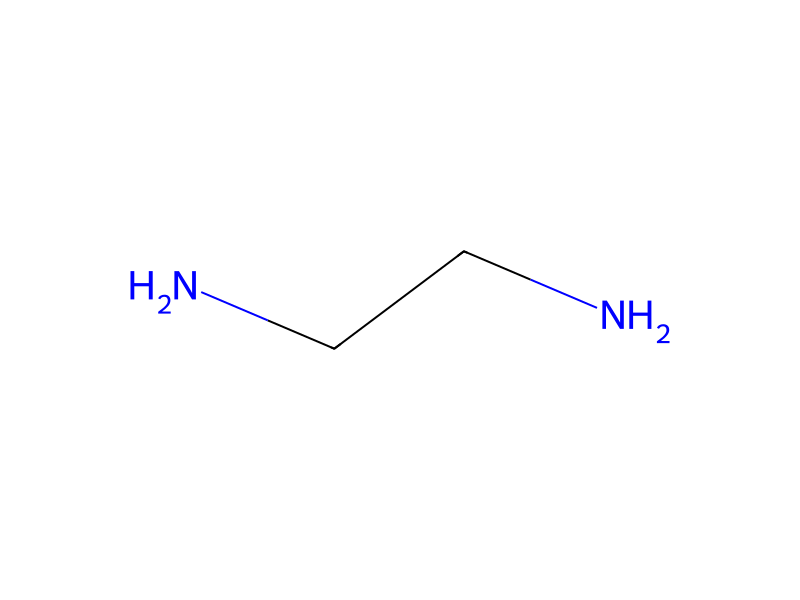
[CH:1]1[N:6]=[C:5](Cl)[C:4]2[N:8]=[CH:9][N:10]([C@@H:11]3[O:15][C@H:14]([CH2:16][OH:17])[C@@H:13]([OH:18])[C@H:12]3[OH:19])[C:3]=2[N:2]=1.C(O[P:23]([O:28]CC)([O:25]CC)=[O:24])C.P(Cl)(Cl)(Cl)=O.[CH2:36]([NH2:39])[CH2:37][NH2:38].[OH-].[Na+].C([O-])(=O)C>O>[P:23]([O:17][CH2:16][C@H:14]1[O:15][C@@H:11]([N:10]2[C:3]3[N:2]=[CH:1][N:6]=[C:5]([NH:38][CH2:37][CH2:36][NH2:39])[C:4]=3[N:8]=[CH:9]2)[C@H:12]([OH:19])[C@@H:13]1[OH:18])([OH:25])([OH:28])=[O:24]Participants






Procedure
Two g (7 mmol) 6-chloropurine riboside (available from Sigma Chemical Co., St. Louis, Mo.) was stirred with 17 ml triethylphosphate and was reacted with phosphoryl chloride in the presence of water as described in Chem. Scrip. 19: 165-70(1972). After hydrolysis of the phosphodichloridate, 9.5 ml ethylenediamine (140 mmol) was added and allowed to react at room temperature for 3 hr. The reaction mixture was diluted to 4 liters with water and adjusted to pH 12 with sodium hydroxide. This solution was passed through a 5×30 cm column of Dowex 1×8 (available from Bio-Rad Laboratories, Richmond, Calif.) in the acetate form. Then the column was washed with 3 liters 0.01M ammonium chloride and the chromatogram was developed with a linear gradient generated with 3 liters water and 3 liters 1M acetic acid. An isolated peak of uv absorbing material eluted between 1800 ml and 2050 ml of the gradient was concentrated to about 25 ml under vacuum. While this solution stood at 7° C. overnight, white crystals formed and these were collected and dried to give 65 percent yield of the product. A sample was recrystallized from hot water for analysis. Calculated for C12H19N6O7P.2H2O: C, 33.8; H, 5.45; N, 19.7. Found: C, 34.3; H, 5.22; N, 19.7. Separate thin-layer chromatograms developed with two solvent systems, the first consisting of 4 parts 0.5M ammonium acetate to 1 part ethanol and the second consisting of 3 parts isobutyric acid to 5 parts 1M ammonium hydroxide, each showed one component which quenched fluorescence and reacted with ninhydrin. The compound in 0.1N hydrochloric acid had an absorption maximum at 264 nm and the millimolar extinction coefficient was 17.7 which spectral properties are characteristic of N6 -alkylated adenosine derivatives.
Workup
- additionwas added
- customto react at room temperature for 3 hr
- washThen the column was washed with 3 liters 0.01M ammonium chloride
- customAn isolated peak of uv absorbing material
- washeluted between 1800 ml and 2050 ml of the gradient
- concentrationwas concentrated to about 25 ml under vacuum
- customwhite crystals formed
- customthese were collected
- customdried
Sources & evidence
- ORD record
- ord-eb73a6df369e4e96a8dc2c1102342388
- Source dataset
- uspto-grants-1988_12
- Patent number
- US04791055
Reaction notes
Loading…