Dibutylamine → HCID 14348742, compound
Reaction equation

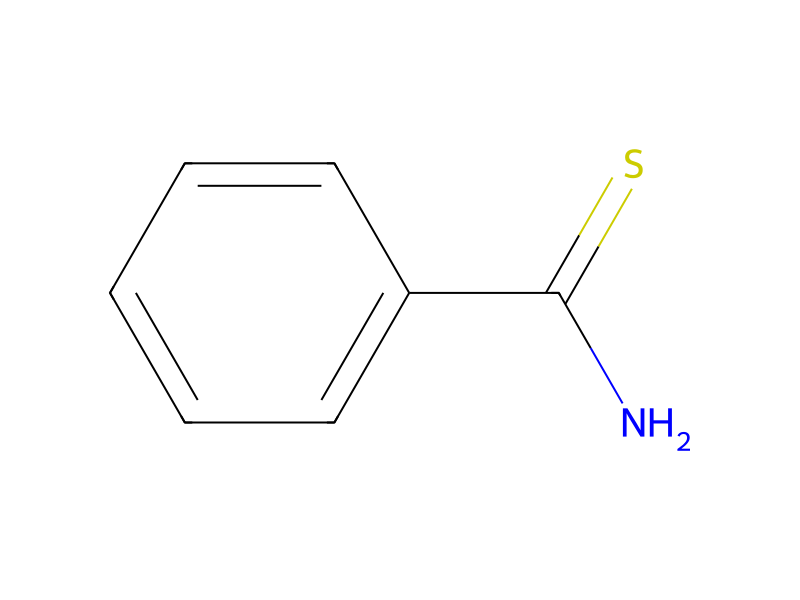
C(N)(=S)C1C=CC=CC=1.[Cl:10][C:11]1[CH:12]=[C:13]([C:23]2[N:24]=[C:25]([C:28]3[CH:33]=[CH:32][CH:31]=[CH:30][CH:29]=3)[S:26][CH:27]=2)[CH:14]=[C:15]([Cl:22])[C:16]=1[O:17][CH2:18][CH2:19][CH2:20]Cl.[CH2:34]([NH:38][CH2:39][CH2:40][CH2:41][CH3:42])[CH2:35][CH2:36][CH3:37]>>[Cl:22][C:15]1[CH:14]=[C:13]([C:23]2[N:24]=[C:25]([C:28]3[CH:29]=[CH:30][CH:31]=[CH:32][CH:33]=3)[S:26][CH:27]=2)[CH:12]=[C:11]([Cl:10])[C:16]=1[O:17][CH2:18][CH2:19][CH2:20][N:38]([CH2:39][CH2:40][CH2:41][CH3:42])[CH2:34][CH2:35][CH2:36][CH3:37]Participants



Procedure
Following the procedure of Example 1, 3,5-dichloro-4-hydroxyacetophenone (10 g, 49 mmol) was used in place of p-hydroxyacetophenone with 1-bromo-3-chloropropane (21 ml, 0.20 mol) to give 10.5 g (76% yield) of 3,5-dichloro-4-chloropropoxyacetophenone. 1H NMR (CDCl3): δ7.88 (s, 2H), 4.24 (t, J=5.7 Hz, 2H), 3.86 (t, J=6.4 Hz, 2H), 2.57 (s, 3H), 2.24 (m, 2H). Bromination (6.0 g, 37 mmol) followed by condensation with thiobenzamide (2.6 g, 19 mmol) of this product in accordance with Example 1 afforded 4-[3,5-dichloro-4-(chloropropoxy)phenyl]-2-phenylthiazole in 98% yield (7.4 g). 1H NMR (CD3OD): δ8.08-7.48 (m, 8H), 4.22 (t, J=5.7 Hz, 2H), 3.89 (t, J=6.4 Hz, 2H), 2.32 (m, 2H). Treatment of this product (3.9 g, 9.8 mmol) with dibutylamine in accordance with Example 1 gave 2.5 g (48% yield) of the free base of the title compound which was converted to the HCl salt, mp 167°-169° C. IR(KBr): 2440 cm-1, MS: 491(MH+). 1H NMR (CD3OD): 8.05-7.46 (m, 8H), 4.20 (t, J=5.0 Hz, 2H), 3.64-3.16 (m, 6H), 2.28 (m, 2H), 1.85-1.34 (m, 8H), 1.01 (m, 6H).
Sources & evidence
- ORD record
- ord-f13b45453015472a8706214c856116d5
- Source dataset
- uspto-grants-1988_12
- Patent number
- US04791200
Reaction notes
Loading…