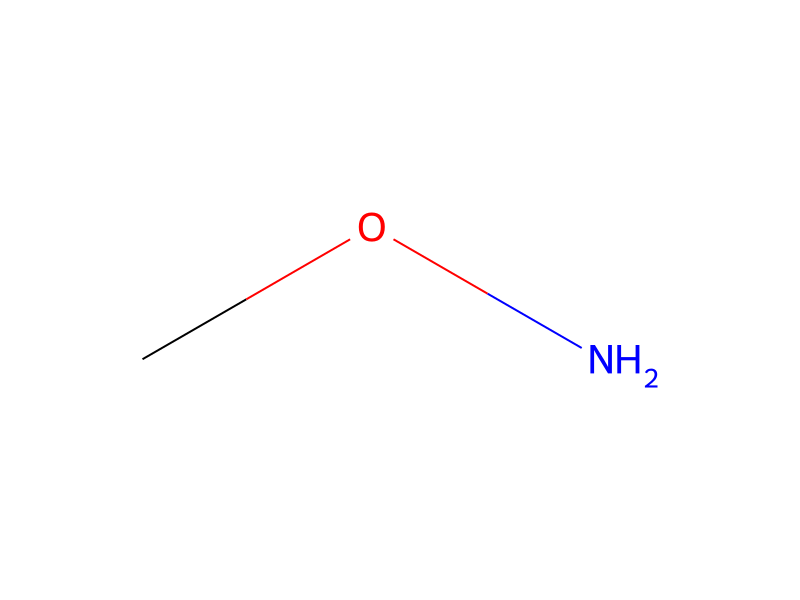
O-Methylhydroxylamine → Methyl 2-(4-((methoxyamino)methyl)phenyl)benzo[d]oxazole-7-carboxylate
Reaction equation

Br[CH2:2][C:3]1[CH:8]=[CH:7][C:6]([C:9]2[O:10][C:11]3[C:17]([C:18]([O:20][CH3:21])=[O:19])=[CH:16][CH:15]=[CH:14][C:12]=3[N:13]=2)=[CH:5][CH:4]=1.[CH3:22][O:23][NH2:24]>>[CH3:22][O:23][NH:24][CH2:2][C:3]1[CH:8]=[CH:7][C:6]([C:9]2[O:10][C:11]3[C:17]([C:18]([O:20][CH3:21])=[O:19])=[CH:16][CH:15]=[CH:14][C:12]=3[N:13]=2)=[CH:5][CH:4]=1Participants
3


Procedure
Following the experimental procedure as described in Example 144 C, and replacing methyl 2-(4-(bromomethyl)phenyl)benzo[d]oxazole-4-carboxylate with methyl 2-(4-(bromomethyl)phenyl)benzo[d]oxazole-7-carboxylate and substituting dimethylamine with methoxyamine, methyl 2-(4-((methoxyamino)methyl)phenyl)benzo[d]oxazole-7-carboxylate (Yield: 65%. LC-MS (ESI) m/z: 313 (M+1)+) was made.
Sources & evidence
- ORD record
- ord-1de2ab52085e4334a5ded581255bd7d9
- Source dataset
- uspto-grants-2012_01
- Patent number
- US08088760B2
Reaction notes
Loading…