Diisopropylethylamine → 2-chloro-N-(5-cyclopropyl-1H-pyrazol-3-yl)-5-nitro-pyrimidin-4-amine
Reaction equation

[Cl:1][C:2]1[N:7]=[C:6](Cl)[C:5]([N+:9]([O-:11])=[O:10])=[CH:4][N:3]=1.CCN(C(C)C)C(C)C.[CH:21]1([C:24]2[NH:28][N:27]=[C:26]([NH2:29])[CH:25]=2)[CH2:23][CH2:22]1>CCCCO>[Cl:1][C:2]1[N:7]=[C:6]([NH:29][C:26]2[CH:25]=[C:24]([CH:21]3[CH2:23][CH2:22]3)[NH:28][N:27]=2)[C:5]([N+:9]([O-:11])=[O:10])=[CH:4][N:3]=1Participants
5

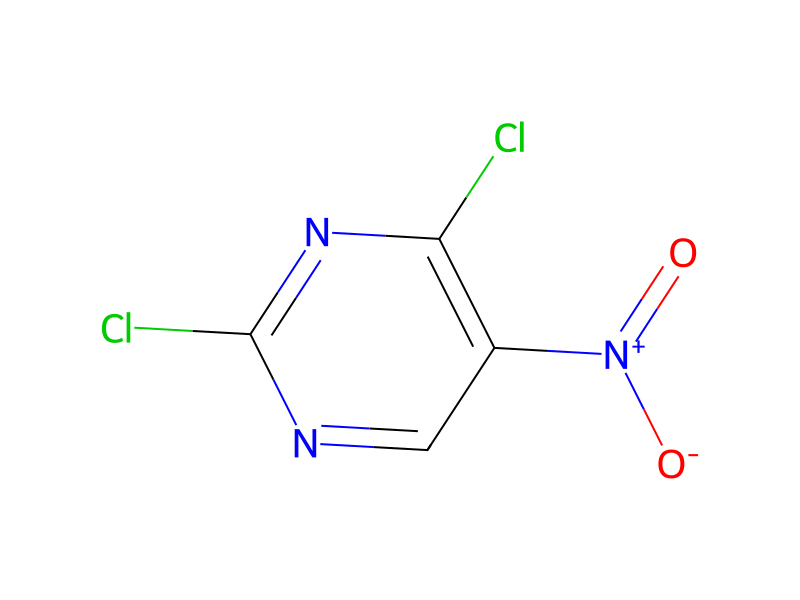



Conditions
- Temperature
- 25 °C
Procedure
To a solution of 2,4-dichloro-5-nitropyrimidine (3.0 g, 15 mmol) and DIEA (2.4 g, 18.5 mmol) in n-BuOH (30 ml) was slowly added 5-cyclopropyl-1H-pyrazol-3-amine (2.0 g, 16.2 mmol) at 25° C. The resulting solution was stirred at 25° C. for 5 minutes and concentrated to dryness to give the title compound (3.1 g). NMR (CDCl3) 0.80 (m, 2H), 1.05 (m, 2H), 6.60 (s, 1H), 9.20 (s, 1H), 9.70 (br s, 1H), 10.40 (br s, 1H).
Workup
- customat 25° C
- concentrationconcentrated to dryness
Sources & evidence
- ORD record
- ord-e315ad1328b74f7bbbfb1e47c1801534
- Source dataset
- uspto-grants-2012_01
- Patent number
- US08088784B2
Reaction notes
Loading…