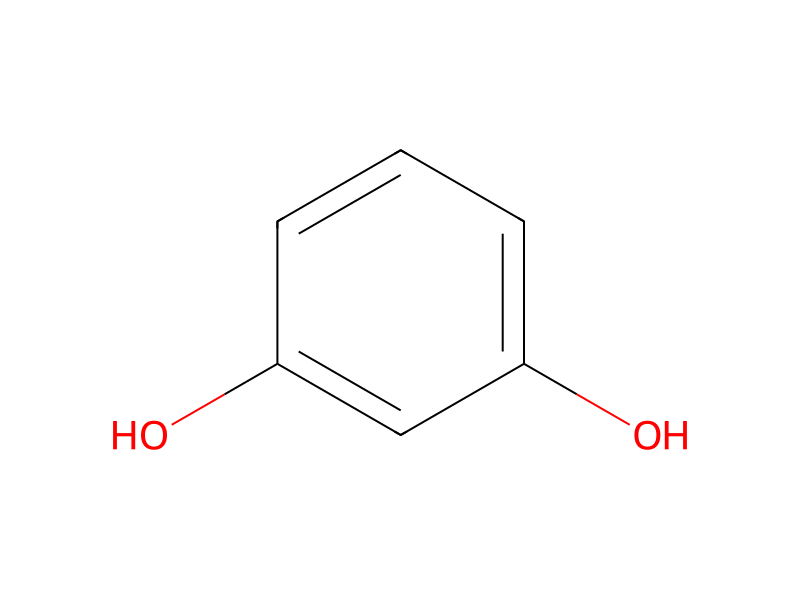
Resorcinol → 4-(10-Bromodecyloxy)benzoic acid
Reaction equation

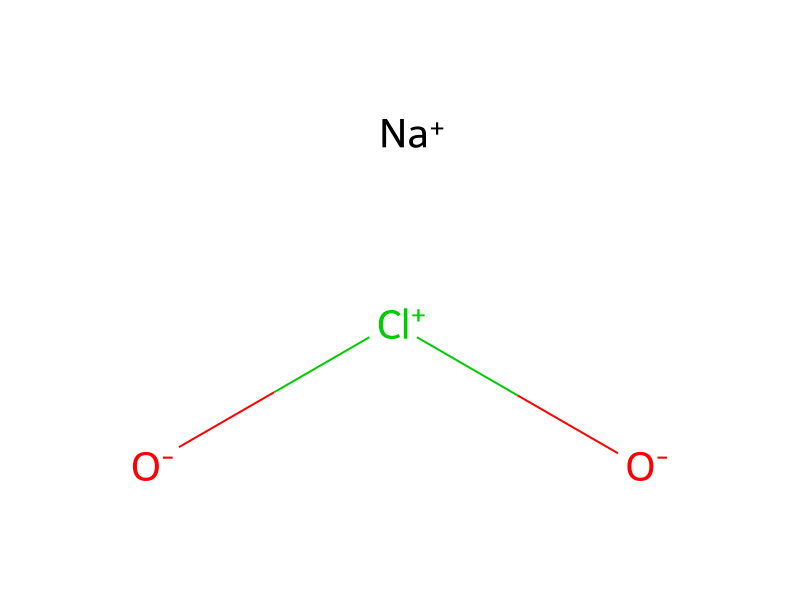
C1(C=CC=C(O)C=1)[OH:2].[Br:9][CH2:10][CH2:11][CH2:12][CH2:13][CH2:14][CH2:15][CH2:16][CH2:17][CH2:18][CH2:19][O:20][C:21]1[CH:28]=[CH:27][C:24]([CH:25]=[O:26])=[CH:23][CH:22]=1.[O-]Cl=O.[Na+]>C(O)(C)(C)C.O>[Br:9][CH2:10][CH2:11][CH2:12][CH2:13][CH2:14][CH2:15][CH2:16][CH2:17][CH2:18][CH2:19][O:20][C:21]1[CH:22]=[CH:23][C:24]([C:25]([OH:2])=[O:26])=[CH:27][CH:28]=1Participants
Reactant 3

Product 1

Reagents, catalysts & solvents 2


Conditions
- Temperature
- 70 °C
Procedure
Resorcinol (4.16 g, 38 mmol) and 5 (10.0 g, 29 mmol) were dissolved in t-butanol (600 mL) through gentle heating to 70° C. The solution was cooled to room temperature, and a solution of NaH2PO4·H2O (13.7 g, 88 mmol) and NaClO2 (15.3 g, 170 mmol) in deionized H2O (100 mL) was added dropwise to the flask over a period of 10 minutes. The purple-red mixture was stirred overnight, following which it faded to a pale yellow colour. Volatile components were removed, and the residue was taken in hexane (200 mL) and 1 M HCl (200 mL). The white precipitate was filtered and washed profusely with distilled H2and hexane. Yield 10.5 g (quant.). 1H NMR: δH (CDCl3; 300 MHz): 1.26-1.55 (12 H, m, CH2), 1.86 (4 H, m, O—CH2—CH2/Br—CH2—CH2), 3.44 (2 H, t, 3J=6.8 Hz, Br—CH2), 4.04 (2 H, t, 3J=6.5 Hz, O—CH2), 6.95 (2 H, d, 3J=8.9 Hz, Ar—H), 8.07 (2 H, d, 3J=8.9 Hz, Ar—H). 13C NMR: δC (CDCl3; 75 MHz): 26.0, 28.1, 28.7, 29.0, 29.3, 29.4, 32.8, 34.0, 68.3, 114.2, 121.4, 132.3, 163.7, 171.5.
Workup
- temperatureThe solution was cooled to room temperature
- customVolatile components were removed
- filtrationThe white precipitate was filtered
- washwashed profusely with distilled H2and hexane
Sources & evidence
- ORD record
- ord-d017216fa3e244849280fd1b5839f756
- Source dataset
- uspto-grants-2012_01
- Patent number
- US08092712B2
Reaction notes
Loading…