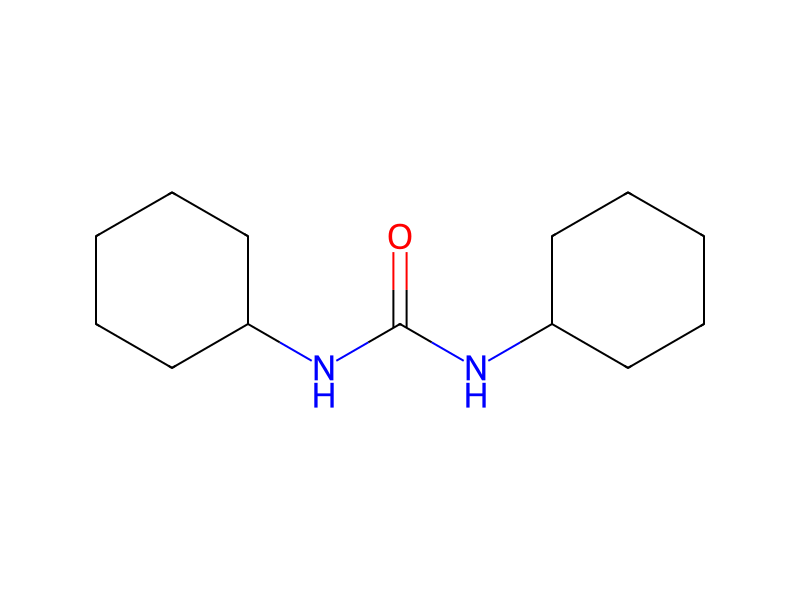
Dicyclohexylcarbodiimide → N,N'-Dicyclohexylurea
Reaction equation

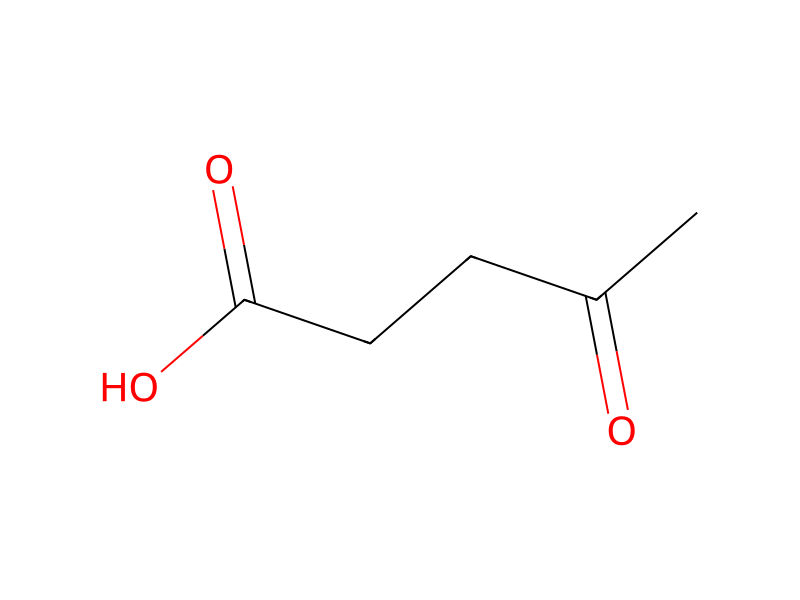
[CH:1]1([N:7]=[C:8]=[N:9][CH:10]2[CH2:15][CH2:14][CH2:13][CH2:12][CH2:11]2)[CH2:6][CH2:5][CH2:4][CH2:3][CH2:2]1.C(O)(=O)CCC(C)=[O:20]>ClCCl>[C:8]([NH:7][CH:1]1[CH2:2][CH2:3][CH2:4][CH2:5][CH2:6]1)([NH:9][CH:10]1[CH2:15][CH2:14][CH2:13][CH2:12][CH2:11]1)=[O:20]Participants
4
Reactant 2

Product 1
Reagents, catalysts & solvents 1

Procedure
A solution of dicyclohexylcarbodiimide (0.084 g, 0.216 mmol) in dichloromethane (1 ml) was added to a solution of levulinic acid (0.047 g, 0.406 mmol) in dichloromethane (2 ml). A white crystalline solid of dicyclohexylurea formed immediately. The suspension was allowed to stand at room temperature for 30 min, then chilled in an ice bath for 3 h min, and left to stand at 4° overnight before filtration. The colourless filtrate was concentrated to give a colourless oil with a small amount of suspended white solid of dicyclohexylcarbodiimide (DCC) and dicyclohexylurea (DCU). This was used as crude in the preparation of (3).
Sources & evidence
- ORD record
- ord-72ec65ec0cb3482ca20a2a417a71229b
- Source dataset
- uspto-grants-2012_01
- Patent number
- US08097238B2
Reaction notes
Loading…