Acetic Acid → Benzyl Alcohol
Reaction equation

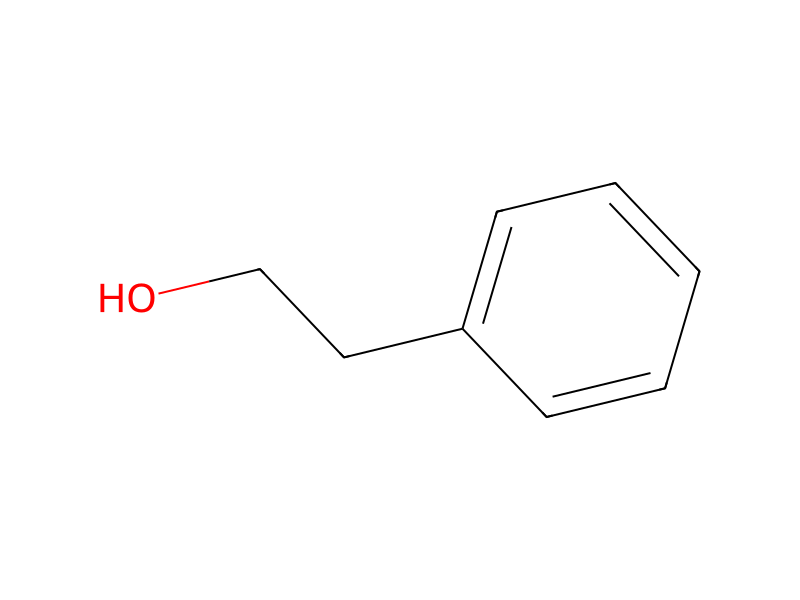
[CH:1](=[O:8])[C:2]1[CH:7]=[CH:6][CH:5]=[CH:4][CH:3]=1.[C:9]([C:12]1[CH:17]=[CH:16][CH:15]=[CH:14][CH:13]=1)(=O)[CH3:10].C(O)(=[O:20])C.B.C(C1C=CC(C)=NC=1)C>>[CH2:1]([OH:8])[C:2]1[CH:7]=[CH:6][CH:5]=[CH:4][CH:3]=1.[CH2:10]([OH:20])[CH2:9][C:12]1[CH:17]=[CH:16][CH:15]=[CH:14][CH:13]=1Participants



Procedure
Benzaldehyde (1.6 g, 15 mmol), acetophenone (1.8 g, 15% mmol) and acetic acid (0.3 g, 5 mmol) were combined in a flask under nitrogen. 5-Ethyl-2-methylpyridine borane (0.7 g, 5 mmol) was added via syringe over 5 minutes at room temperature. At the end of the addition the temperature of the reaction mixture reached 70° C. An ice water bath was applied immediately to bring the temperature down. The 1H NMR spectrum indicated that the reaction was complete, giving a 91:9 ratio of benzyl alcohol to phenethylalcohol. Of the combined carbonyl substrates, 37% were reduced and 63% remained unreduced. The 11B NMR spectrum indicated 77% borate (reduced carbonyl products) and 22% (combined species between 0 and 2 ppm) of amine coordinated to borate products.
Workup
- additionAt the end of the addition the temperature of the reaction mixture
- customreached 70° C
- customAn ice water bath was applied immediately
Sources & evidence
- ORD record
- ord-6e37f817a1a045f3bf55bf49c64443ee
- Source dataset
- uspto-grants-2012_01
- Patent number
- US08106200B2
Reaction notes
Loading…