Methyl morpholine oxide → 1-tert-butyl 2-methyl (2S)-4-oxopyrrolidine-1,2-dicarboxylate
Reaction equation

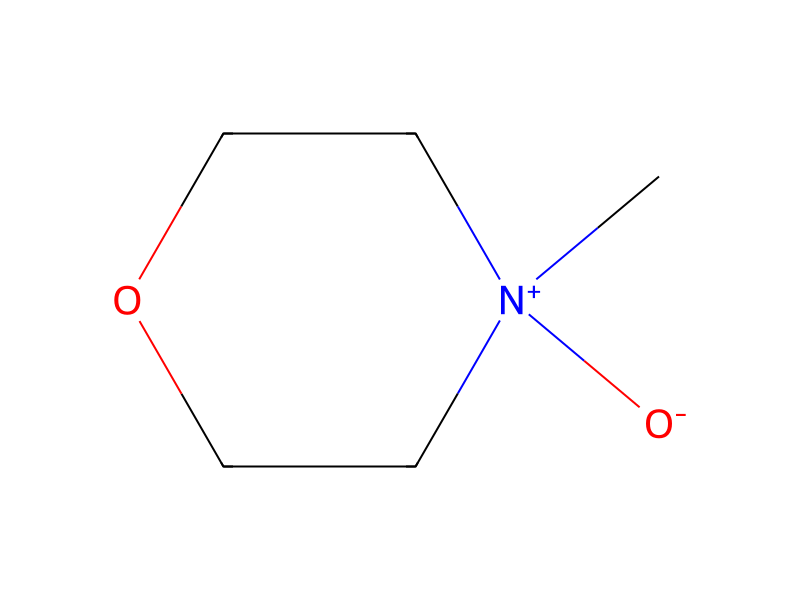
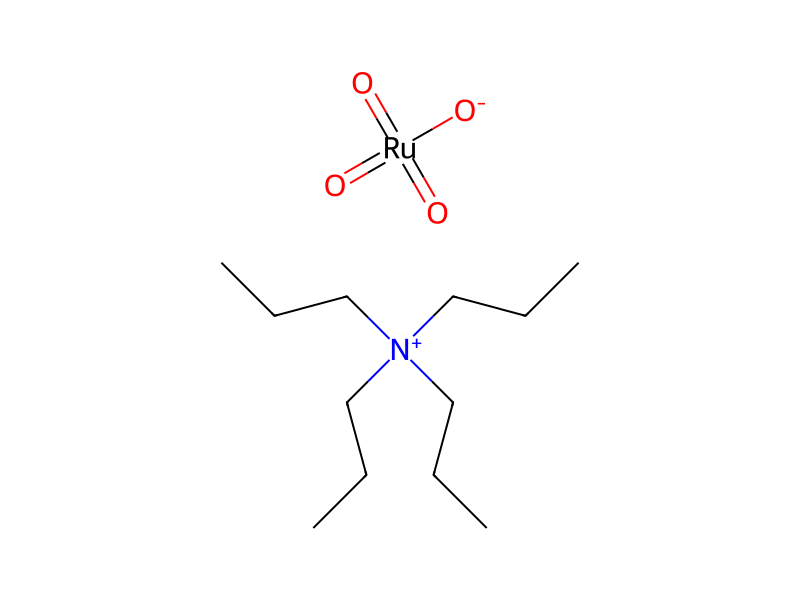
[C:1]([O:5][C:6]([N:8]1[CH2:15][C@H:14]([OH:16])[CH2:13][C@H:9]1[C:10]([OH:12])=[O:11])=[O:7])([CH3:4])([CH3:3])[CH3:2].[CH3:17][N+]1([O-])CCOCC1>ClCCl.[Ru]([O-])(=O)(=O)=O.C([N+](CCC)(CCC)CCC)CC>[O:16]=[C:14]1[CH2:15][N:8]([C:6]([O:5][C:1]([CH3:4])([CH3:2])[CH3:3])=[O:7])[C@H:9]([C:10]([O:12][CH3:17])=[O:11])[CH2:13]1Participants
5
Reactant 2

Product 1

Reagents, catalysts & solvents 2

Procedure
Tetrapropylammonium perruthenate (287 mg, 0.82 mmol) was added to a solution of trans-N-(tert-butoxycarbonyl)-4-hydroxy-L-proline (2.0 g, 8.15 mmol) and 4-methylmorpholine N-oxide (2.1 g, 17.9 mmol) in dichloromethane (50 mL). After stirring at ambient temperature overnight, the reaction mixture was concentrated in vacuo. Chromatography over silica eluting with 0-50% ethyl acetate/hexane afforded 1-tert-butyl 2-methyl (2S)-4-oxopyrrolidine-1,2-dicarboxylate.
Workup
- concentrationthe reaction mixture was concentrated in vacuo
Sources & evidence
- ORD record
- ord-d3e74550eeaf4cf191a3feeae11b50d2
- Source dataset
- uspto-grants-2012_01
- Patent number
- US08106070B2
Reaction notes
Loading…