Piperazine → N-1,4-Benzodioxane-2-carbonyl piperazine
Reaction equation

[O:1]1[C:6]2[CH:7]=[CH:8][CH:9]=[CH:10][C:5]=2[O:4][CH2:3][CH2:2]1.CC[C:13]([O-:15])=O.[NH:16]1[CH2:21][CH2:20][NH:19][CH2:18][CH2:17]1>>[O:1]1[C:6]2[CH:7]=[CH:8][CH:9]=[CH:10][C:5]=2[O:4][CH2:3][CH:2]1[C:13]([N:16]1[CH2:21][CH2:20][NH:19][CH2:18][CH2:17]1)=[O:15]Participants
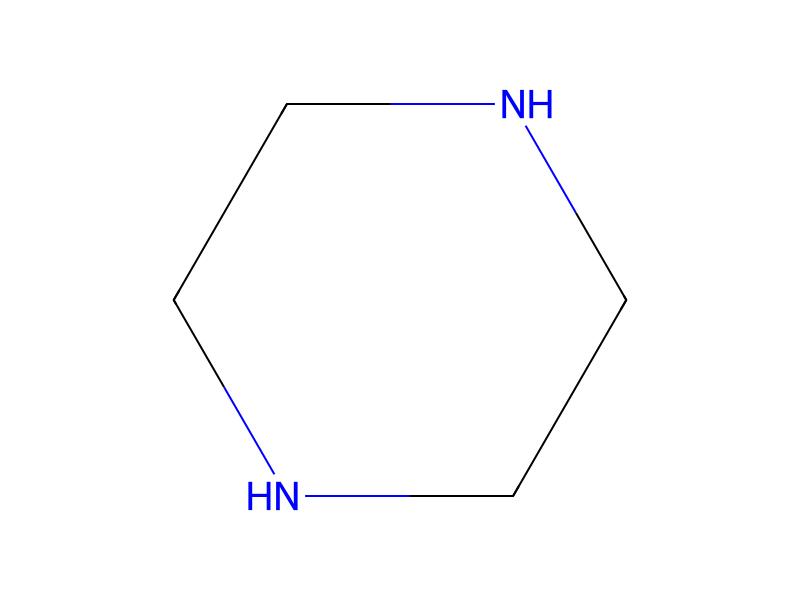


Procedure
As an illustration of the improved synthesis, 1,4-benzodioxan-2-ethylcarboxylate and piperazine were reacted to form N-(1,4-benzodioxan-2-ylcarbonyl)piperazine. Since piperazine includes secondary amines, it is known that the amidization reaction can proceed only in the presence of a solvent and catalyst, e.g., a Lewis acid, strong base, or enzyme. Therefore, the solvent, e.g, THF, acetonitrile, benzene, toluene, or chlorine-containing solvent, was used to dissolve 1,4-benzodioxan-2-ethylcarboxylate and piperazine. The reactants were dissolved in anhydrous THF and potassium carbonate was added to catalyze the reaction. The mixture was stirred under nitrogen and heated to 110° C. After extraction and purification, it was found that the yield of 1-(1,4-benzodioxan-2-yl-carbonyl)piperazine (compound 1) was very low. The yield was less than 5%. Most of the product was 1,4-benzodioxan-2-carboxylic acid, which was obtained from hydrolysis of the reactant 1,4-benzodioxan-2-ethyl carboxylate.
Workup
- customwere reacted
Sources & evidence
- ORD record
- ord-3bcd6d2c601e45e3bdada550bee52869
- Source dataset
- uspto-grants-2001_11
- Patent number
- US06313294B1
Reaction notes
Loading…