Benzyl mercaptan → HCID 18354200, compound
Reaction equation

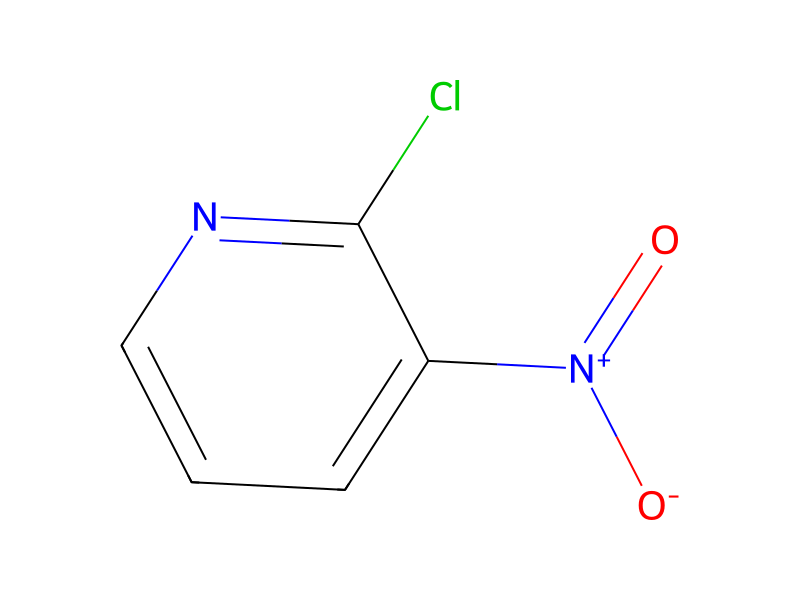
[CH2:1](S)[C:2]1[CH:7]=[CH:6][CH:5]=[CH:4][CH:3]=1.C([O-])([O-])=O.[K+].[K+].Cl[C:16]1[C:21]([N+:22]([O-:24])=[O:23])=[CH:20][CH:19]=[CH:18][N:17]=1>C(#N)C>[CH2:1]([C:16]1[C:21]([N+:22]([O-:24])=[O:23])=[CH:20][CH:19]=[CH:18][N:17]=1)[C:2]1[CH:7]=[CH:6][CH:5]=[CH:4][CH:3]=1Participants
Reactant 3


Product 1

Reagents, catalysts & solvents 1

Conditions
- Temperature
- 60 °C
Procedure
39.1 g (0.315 mol) of benzylmercaptan are introduced into 200 ml of acetonitrile, 47.8 g (0.346 mol) of K2CO3 are added, and the mixture is stirred for 40 minutes at 60° C. 50.0 g (0.315 mol) of 2-chloro-3-nitropyridine, dissolved in 150 ml of acetonitrile, are subsequently added dropwise and the mixture is refluxed for 4 hours. The acetonitrile is distilled off under reduced pressure, the residue is taken up in dichloromethane, the organic phase is washed in each case once with saturated sodium hydrogen carbonate solution and with 1N hydrochloric acid, the organic phase is dried over magnesium sulfate and the drying agent is filtered off, and the dichloromethane is removed under reduced pressure. Recrystallization from methanol gives 60.9 g (79% of theory) of 2-benzyl3-nitropyridine of melting point 72° C.
Workup
- additionare added
- additionare subsequently added dropwise
- temperaturethe mixture is refluxed for 4 hours
- distillationThe acetonitrile is distilled off under reduced pressure
- washthe organic phase is washed in each case once with saturated sodium hydrogen carbonate solution and with 1N hydrochloric acid
- dry with materialthe organic phase is dried over magnesium sulfate
- filtrationthe drying agent is filtered off
- customthe dichloromethane is removed under reduced pressure
- customRecrystallization from methanol
Sources & evidence
- ORD record
- ord-dcfcfff3c36040ea8861093e1a13bda3
- Source dataset
- uspto-grants-2001_11
- Patent number
- US06316388B1
Reaction notes
Loading…