Lithium Hydroxide → 4'-(3-chloropropoxy)[1,1'-biphenyl]-4-carboxylic Acid
Reaction equation

[Cl:1][CH2:2][CH2:3][CH2:4][O:5][C:6]1[CH:11]=[CH:10][C:9]([C:12]2[CH:17]=[CH:16][C:15]([C:18]([O:20]C)=[O:19])=[CH:14][CH:13]=2)=[CH:8][CH:7]=1.[OH-].[Li+]>C1COCC1.O>[Cl:1][CH2:2][CH2:3][CH2:4][O:5][C:6]1[CH:7]=[CH:8][C:9]([C:12]2[CH:17]=[CH:16][C:15]([C:18]([OH:20])=[O:19])=[CH:14][CH:13]=2)=[CH:10][CH:11]=1Participants
4



Procedure
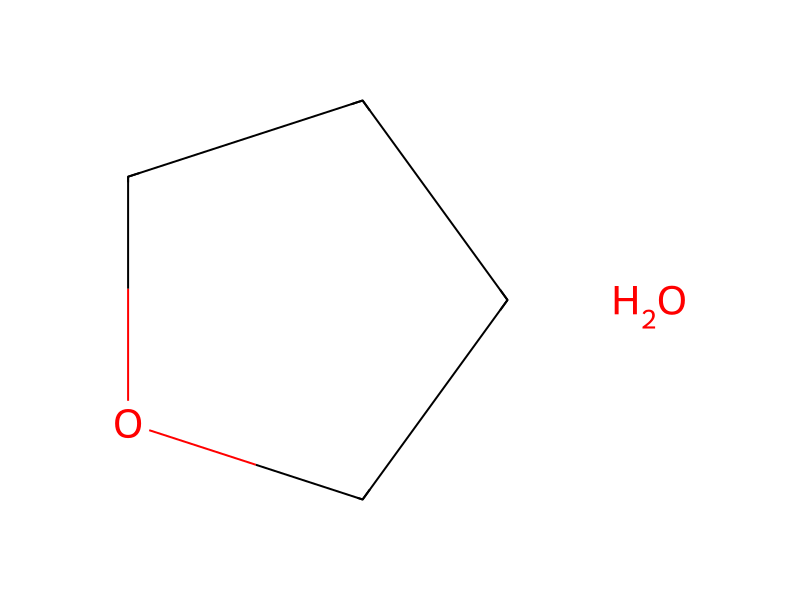
The product from Example 10B (3.4 g, 11.2 mmol) and lithium hydroxide (1.2 g, 28.6 mmol) in THF:water (3:1, 52 mL) were stirred vigorously at ambient temperature for 24 hours. The volume of the mixture was reduced under reduced pressure and then extracted with hexanes (2×25 mL). The remaining aqueous phase was acidified to pH 2 and then extracted with ethyl acetate (3×50 mL). The ethyl acetate extract was evaporated under reduced pressure to provide the title compound as a solid (2.68 g).
Workup
- extractionextracted with hexanes (2×25 mL)
- extractionextracted with ethyl acetate (3×50 mL)
- extractionThe ethyl acetate extract
- customwas evaporated under reduced pressure
Sources & evidence
- ORD record
- ord-69443ec7a13b446b8db7e469a187aa62
- Source dataset
- uspto-grants-2001_11
- Patent number
- US06316475B1
Reaction notes
Loading…