Chloroacetyl chloride → 1-(Chloroacetyl)pyrrolidine
Reaction equation

[Cl:1][CH2:2][C:3]([N:5]1[CH2:9][CH2:8][CH2:7][CH2:6]1)=[O:4].[CH3:10][C:11]1[N:12]=[CH:13][S:14][C:15]=1[CH3:16].N1CCCC1.ClCC(Cl)=O.[OH-].[Na+]>C(Cl)Cl>[Cl-:1].[N:5]1([C:3](=[O:4])[CH2:2][N+:12]2[C:11]([CH3:10])=[C:15]([CH3:16])[S:14][CH:13]=2)[CH2:9][CH2:8][CH2:7][CH2:6]1.[Cl:1][CH2:2][C:3]([N:5]1[CH2:9][CH2:8][CH2:7][CH2:6]1)=[O:4]Participants
8
Reactant 5



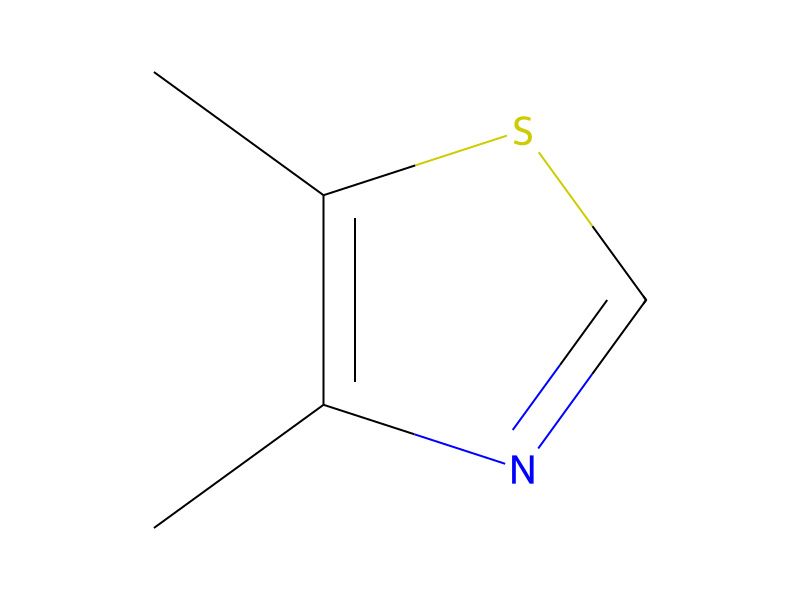

Product 2

Reagents, catalysts & solvents 1

Conditions
- Temperature
- 0 °C
Procedure
3-(2-(1-pyrrolidinyl)-2-oxoethyl)-4,5-dimethyl-thiazolium chloride was prepared from the reaction of N-(chloroacetyl)pyrrolidine with 4,5-dimethylthiazole. N-(chloroacetyl)pyrrolidine was prepared as follows. Pyrrolidine (63.9 g, 0.9 mol) was taken in methylene chloride (640 mL) and cooled to 0° C. in a salt-ice bath. To the stirred mixture was added chloroacetyl chloride (101.8 g in 450 mL of CH2, Cl2, 0.9 mol) dropwise keeping the inside temperature below 15° C. After adding the chloroacetyl chloride, the mixture was stirred for an hour at 5° C. Sodium hydroxide solution (7 M, 190 mL) was added with vigorous stirring such that the inside temperature did not exceed 20° C.
Workup
- customthe inside temperature below 15° C
- stirringwith vigorous stirring such that the inside temperature
- customdid not exceed 20° C.
Sources & evidence
- ORD record
- ord-ffc88bb2f5944b068e9fb000009b0ac5
- Source dataset
- uspto-grants-2001_11
- Patent number
- US06319934B1
Reaction notes
Loading…