N-Hydroxyphthalimide → Phthalimidyl 10-hydroxydecanoate
Reaction equation

[OH:1][CH2:2][CH2:3][CH2:4][CH2:5][CH2:6][CH2:7][CH2:8][CH2:9][CH2:10][C:11]([OH:13])=[O:12].O[N:15]1[C:19](=[O:20])[C:18]2=[CH:21][CH:22]=[CH:23][CH:24]=[C:17]2[C:16]1=[O:25].C1(N=C=NC2CCCCC2)CCCCC1>ClCCl>[OH:1][CH2:2][CH2:3][CH2:4][CH2:5][CH2:6][CH2:7][CH2:8][CH2:9][CH2:10][C:11]([O:13][N:15]1[C:16](=[O:25])[C:17]2=[CH:24][CH:23]=[CH:22][CH:21]=[C:18]2[C:19]1=[O:20])=[O:12]Participants
5
Reactant 3
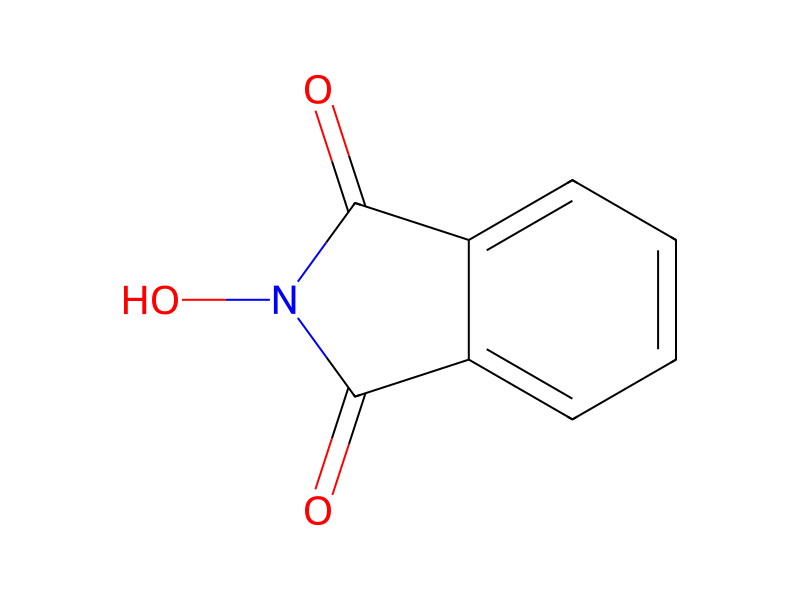


Product 1

Reagents, catalysts & solvents 1

Procedure
To a solution of 10-hydroxydecanoic acid (1.880 g, 10 mmol) in dichloromethane (25 mL) at room temperature was added N-hydroxyphthalimide (NHP) (1.63 g, 10 mmol) followed by N, N′-dicyclohexylcarbodimide (DCC) (2.1 g, 10 mmol). Quantitative conversion to product was achieved after stirring at room temperature for 45 minutes as determined by tlc using silica gel (ethyl acetate/heptane 4:1; Rf=0.28). The precipitate was removed by filtration and the filtrate was evaporated to dryness. The residue was chromatographed on silica gel column (2.5×30 cm) using chloroform/methanol (98:2) to give 1.7 g product (yield 52%) as a colorless syrup.
Workup
- customThe precipitate was removed by filtration
- customthe filtrate was evaporated to dryness
- customThe residue was chromatographed on silica gel column (2.5×30 cm)
Sources & evidence
- ORD record
- ord-56ab030448e9466aac30ebab00854fe8
- Source dataset
- uspto-grants-2001_11
- Patent number
- US06320041B1
Reaction notes
Loading…