Sodium Dithionite → 4-Chloroquinazolin-6-amine
Reaction equation

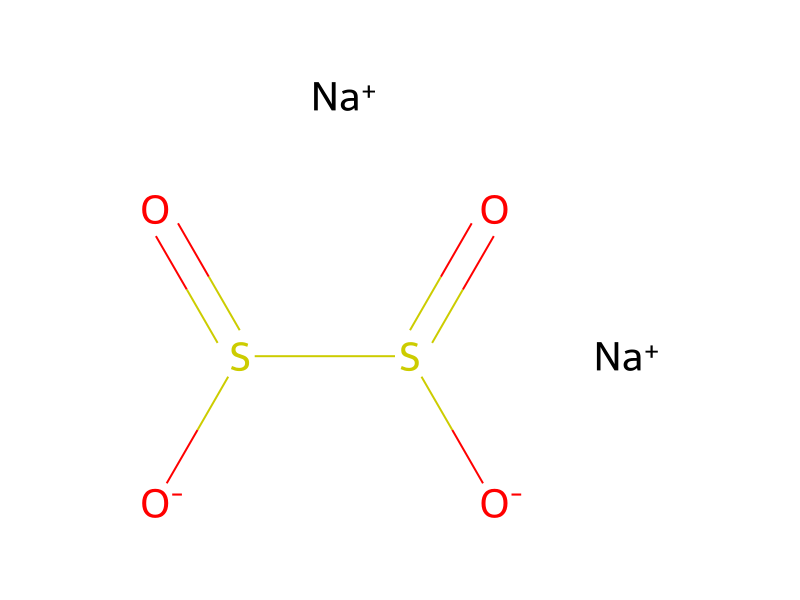
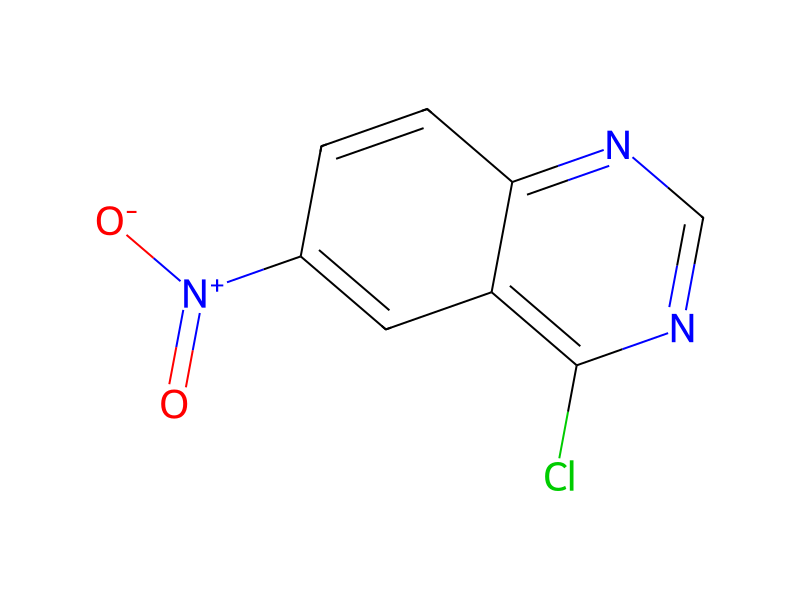
[Cl:1][C:2]1[C:11]2[C:6](=[CH:7][CH:8]=[C:9]([N+:12]([O-])=O)[CH:10]=2)[N:5]=[CH:4][N:3]=1.S(S([O-])=O)([O-])=O.[Na+].[Na+]>O1CCCC1.O.CCOCC>[NH2:12][C:9]1[CH:10]=[C:11]2[C:6](=[CH:7][CH:8]=1)[N:5]=[CH:4][N:3]=[C:2]2[Cl:1]Participants
6
Reactant 2
Product 1

Reagents, catalysts & solvents 3



Procedure
A mixture consisting of 3.25 g of 4-chloro-6-nitroquinazoline, 10.8 g of sodium hydrosulfite, and 0.3 g of the phase transfer catalyst (C8H17)3NCH3)3NCH3+Cl−in 97 ml of tetrahydrofuran and 32 ml of water was stirred rapidly for 2 hours. The mixture was diluted with ether and the organic layer was separated. The organic solution was washed with brine and then dried over magnesium sulfate. The solution was passed through a small column of silica gel. The solvent was removed at 30° C. at reduced pressure giving 6amino-4-chloroquinazoline which is used in the next step without additional purification.
Workup
- customthe organic layer was separated
- washThe organic solution was washed with brine
- dry with materialdried over magnesium sulfate
- customThe solvent was removed at 30° C. at reduced pressure
Sources & evidence
- ORD record
- ord-1ddab7b0e9744a26b57826fe4cece3bc
- Source dataset
- uspto-grants-2001_11
- Patent number
- US06323209B1
Reaction notes
Loading…