cis-Isogeraniol → Citronellol
Reaction equation

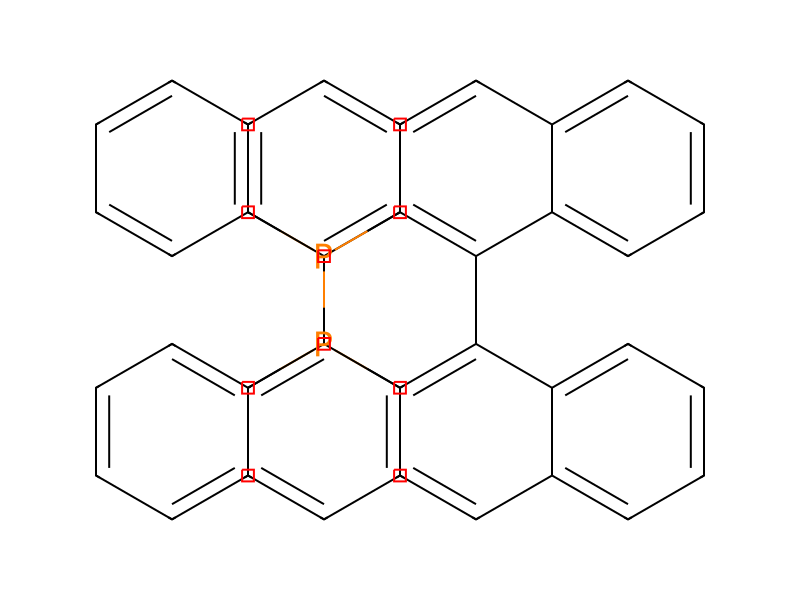
[CH3:1][C:2](=[CH:4][CH2:5][CH2:6]/[C:7](=[CH:9]/[CH2:10][OH:11])/[CH3:8])[CH3:3].OC/C=C(/C)\CCC=C(C)C.CC(C)=CCCC(CCO)=C.C1C=CC(P(C2C=CC3C(=CC=CC=3)C=2C2C3C(=CC=CC=3)C=CC=2P(C2C=CC=CC=2)C2C=CC=CC=2)C2C=CC=CC=2)=CC=1>>[CH3:1][C:2](=[CH:4][CH2:5][CH2:6][CH:7]([CH2:9][CH2:10][OH:11])[CH3:8])[CH3:3]Participants
5



Procedure
The asymmetric hydrogenation of geraniol, nerol and γ-geraniol using a ruthenium complex has already been reported (J. Am. Chem. Soc. 109, 1596, 4129 (1987); J. Organomet. Chem. 548, 65 (1997); Chem. Ind. (Dekker), 68, (1996)). When geraniol, nerol and γ-geraniol are subjected to asymmetric hydrogenation using the rhutenium complex of (S)-BINAP to produce citronellol, one of the enantiomers of citronellol is obtained when geraniol is hydrogenated and the other is obtained when nerol or γ-geraniol is hydrogenated.
Sources & evidence
- ORD record
- ord-995be9d3c2924b96a4fef3de798203e0
- Source dataset
- uspto-grants-2001_11
- Patent number
- US06323353B1
Reaction notes
Loading…