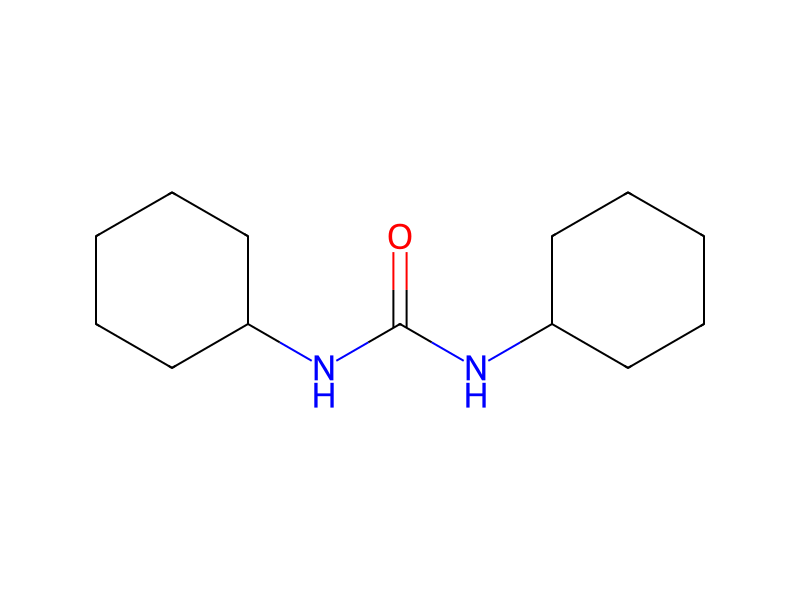
Triethylamine → N,N'-Dicyclohexylurea
Reaction equation

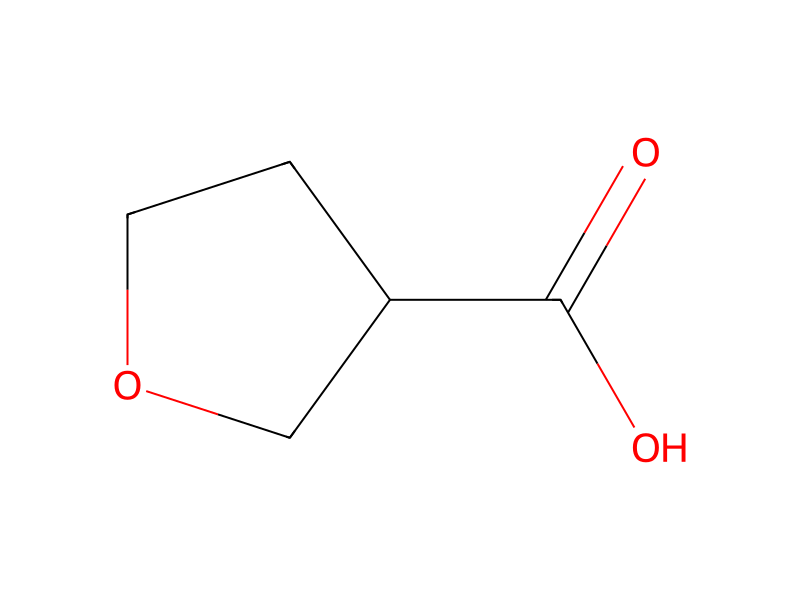
[O:1]1CCC(C(O)=O)C1.[CH:9]1([N:15]=[C:16]=[N:17][CH:18]2[CH2:23][CH2:22][CH2:21][CH2:20][CH2:19]2)[CH2:14][CH2:13][CH2:12][CH2:11][CH2:10]1.C(N(CC)CC)C>ClCCl>[CH:18]1([NH:17][C:16](=[O:1])[NH:15][CH:9]2[CH2:10][CH2:11][CH2:12][CH2:13][CH2:14]2)[CH2:23][CH2:22][CH2:21][CH2:20][CH2:19]1Participants
Reactant 3


Product 1
Reagents, catalysts & solvents 1

Procedure
To a solution of 3.16 g of tetrahydro-3-furoic acid (27 mmol; 1 equiv.) in 25 mL anhydrous dichloromethane was added 7.85 g of dicyclohexylcarbodiimide (38 mmol; 1.4 equiv.) and 4.54 mL triethylamine (32.6 mmol; 1.2 equiv.). N-methyl-20 methanolamine hydrochloride was then added, followed by 60 mg of DMAP (4-dimethylamino)pyridine. An exothermic reaction ensued and a further 25 mL of dichloromethane were added. The mixture was stirred at ambient temperature overnight, then filtered through diatomaceous earth and concentrated. The residue was treated with ether and the white solid filtered off and removed. The solvent was removed from the mother liquor and the residue purified by column chromatography on SiO2 using 15-25% EtOAc in hexanes as eluent mixtures to provide the desired amide as a colorless oil (55% of theoretical yield) that still contained 10% of dicyclohexyl urea. This was used without further purification in the next reaction.
Workup
- customAn exothermic reaction
- filtrationfiltered through diatomaceous earth
- concentrationconcentrated
- additionThe residue was treated with ether
- filtrationthe white solid filtered off
- customremoved
- customThe solvent was removed from the mother liquor
- customthe residue purified by column chromatography on SiO2 using 15-25% EtOAc in hexanes as eluent mixtures
- customto provide
Sources & evidence
- ORD record
- ord-3331a97507614985b7d09b19e774e6a0
- Source dataset
- uspto-grants-2003_12
- Patent number
- US06656933B2
Reaction notes
Loading…