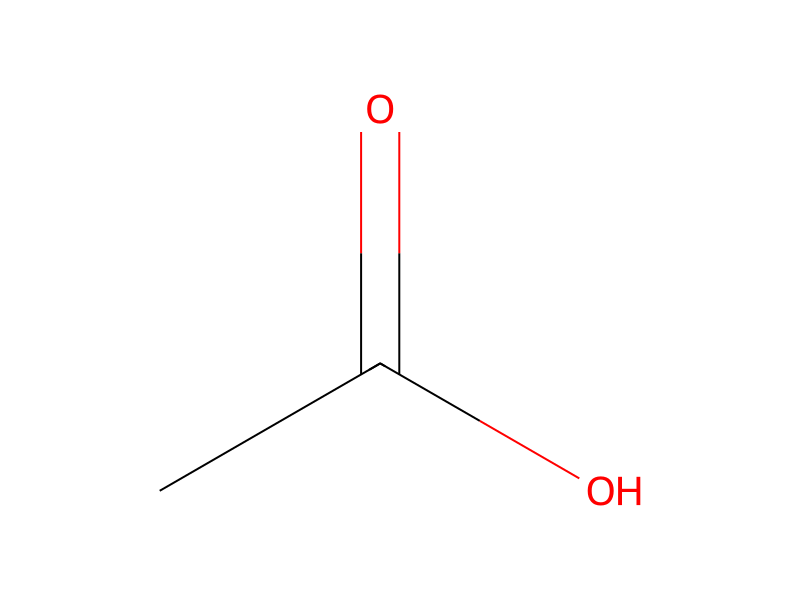
Acetic Acid → 3-Chlorophthalic anhydride
Reaction equation

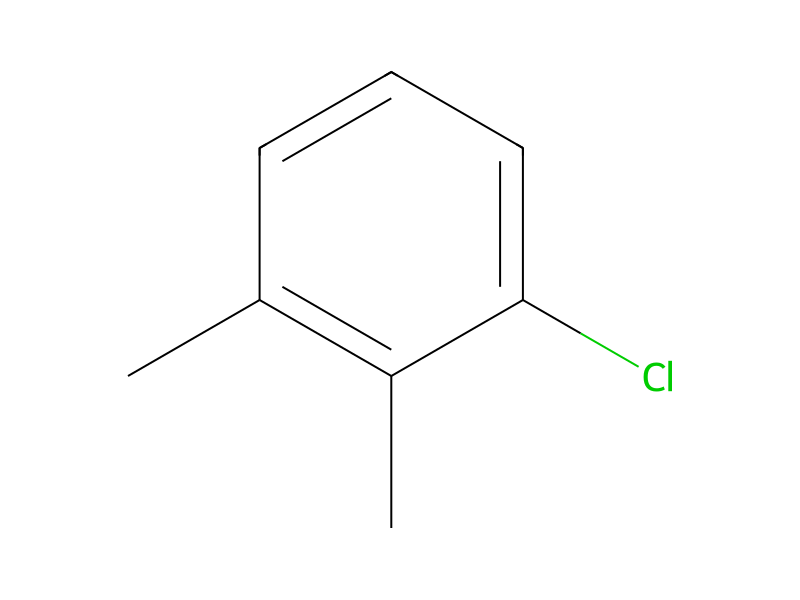
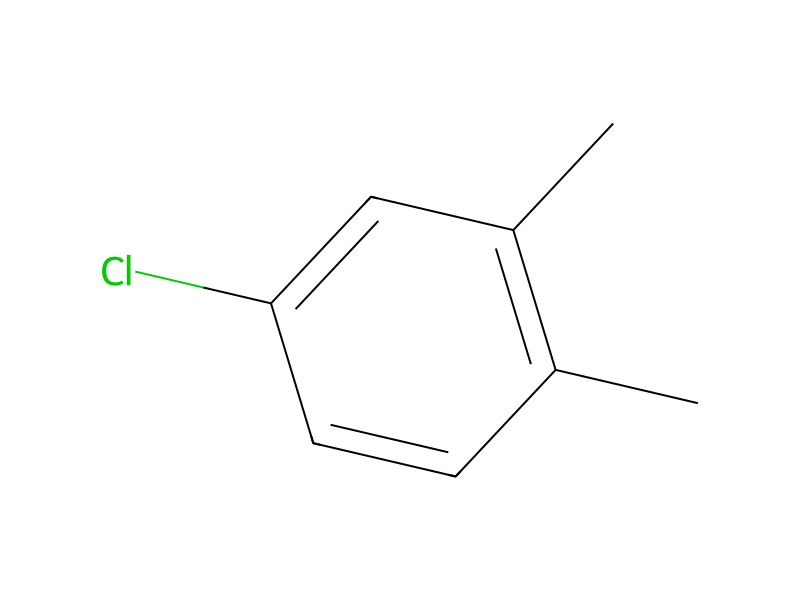
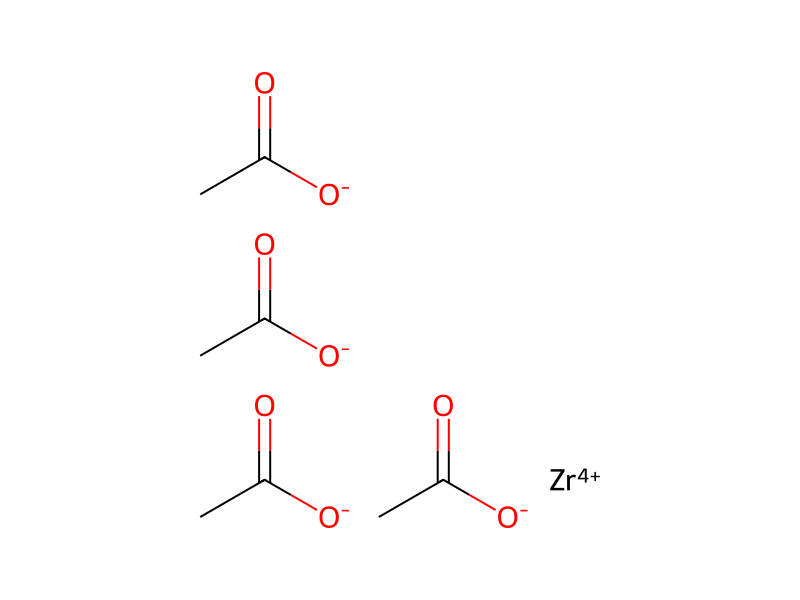
[Cl:1][C:2]1[CH:7]=[CH:6][CH:5]=[C:4](C)[C:3]=1C.ClC1C=C(C)C(C)=CC=1.[C:19]([O-:22])(=[O:21])[CH3:20].[Na+].[Br-].[Na+].C(O)(=[O:28])C>O.O.O.O.C([O-])(=O)C.[Co+2].C([O-])(=O)C.O.O.O.O.C([O-])(=O)C.[Mn+2].C([O-])(=O)C.C([O-])(=O)C.[Zr+4].C([O-])(=O)C.C([O-])(=O)C.C([O-])(=O)C>[Cl:1][C:2]1[CH:7]=[CH:6][CH:5]=[C:20]2[C:19]([O:22][C:4](=[O:28])[C:3]=12)=[O:21]Participants
Reactant 5


Product 1

Reagents, catalysts & solvents 3

Conditions
- Temperature
- 160 °C
Procedure
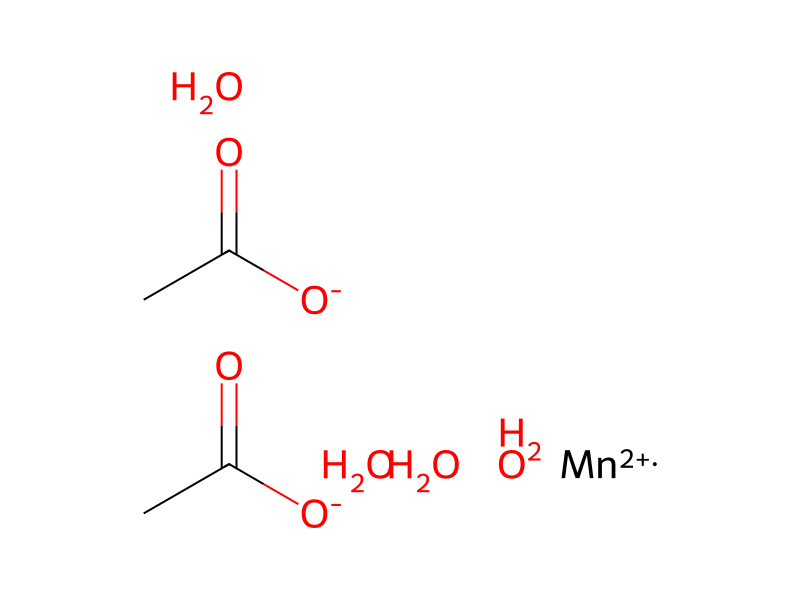
In a laboratory scale reactor 492 grams (g) (3.5 mol) of chloro-ortho-xylene (a mixture of about 30% 3-chloro-ortho-xylene and about 70% 4-chloro-ortho-xylene), 1925 g of glacial acetic acid, 8.7 g (1 mol %) of cobalt acetate tetrahydrate, 4.3 g (0.5 mol %) of manganese acetate tetrahydrate, 1.0 g (0.06 mol %) zirconium acetate solution, 4.3 g (1.5 mol %) sodium acetate and varying amounts of sodium bromide were combined. The reactor was filled with nitrogen, pressurized to 1900 KPa and heated to about 160° C. Air was then introduced to the reactor through a dip tube. Initially, the off gas oxygen concentration was greater than 0 but less than 1 percent. The reaction mixture was agitated throughout the reaction time. After about 3 hours the oxygen concentration of the off gas increased to greater than 3 percent. The flow of air was stopped. Air diluted with nitrogen so as to have an off gas oxygen concentration of about 5 percent was introduced to the reactor and the temperature of the reactor was increased to about 190° C. The flow of diluted air continued for about 1 to 3 hours. Chlorophthalic acid was determined to be present in an amount of 25 wt % based on the total weight of the reaction mixture. The majority of water formed by the reaction and the acetic acid were removed under atmospheric distillation. The chlorophthalic acid was dehydrated and any residual water and acetic acid were removed under heat and reduced pressure to form chlorophthalic anhydride. Chlorophthalic anhydride was separated from the catalyst by distillation under vacuum at distillation temperatures near 170° C. The isolated chlorophthalic acid was analyzed by gas chromatography. Results are shown in Table 1:
Workup
- additionThe reactor was filled with nitrogen
- additionAir was then introduced to the reactor through a dip tube
- concentrationInitially, the off gas oxygen concentration
- temperatureAfter about 3 hours the oxygen concentration of the off gas increased to greater than 3 percent
- additionAir diluted with nitrogen so as
- additionwas introduced to the reactor
- temperaturethe temperature of the reactor was increased to about 190° C
- customThe majority of water formed by the reaction
- customthe acetic acid were removed under atmospheric distillation
- customany residual water and acetic acid were removed
- temperatureunder heat
Sources & evidence
- ORD record
- ord-bc0a63a00a9d4c3c9893b9c06bdf2edc
- Source dataset
- uspto-grants-2003_12
- Patent number
- US06657067B2
Reaction notes
Loading…