Nitrogen → Bis(1-isoquinolyl)amine
Reaction equation

Cl[C:2]1[C:11]2[C:6](=[CH:7][CH:8]=[CH:9][CH:10]=2)[CH:5]=[CH:4][N:3]=1.[NH2:12][C:13]1[C:22]2[C:17](=[CH:18][CH:19]=[CH:20][CH:21]=2)[CH:16]=[CH:15][N:14]=1.CC(C)([O-])C.[Na+].N#N>CCOCC.C1COCC1.C([O-])(=O)C.[Pd+2].C([O-])(=O)C.C1(P(C2C=CC=CC=2)C2C=CC=CC=2OC2C=CC=CC=2P(C2C=CC=CC=2)C2C=CC=CC=2)C=CC=CC=1.C1(C)C=CC=CC=1>[C:2]1([NH:12][C:13]2[C:22]3[C:17](=[CH:18][CH:19]=[CH:20][CH:21]=3)[CH:16]=[CH:15][N:14]=2)[C:11]2[C:6](=[CH:7][CH:8]=[CH:9][CH:10]=2)[CH:5]=[CH:4][N:3]=1Participants
Reactant 4




Product 1

Reagents, catalysts & solvents 5




Procedure
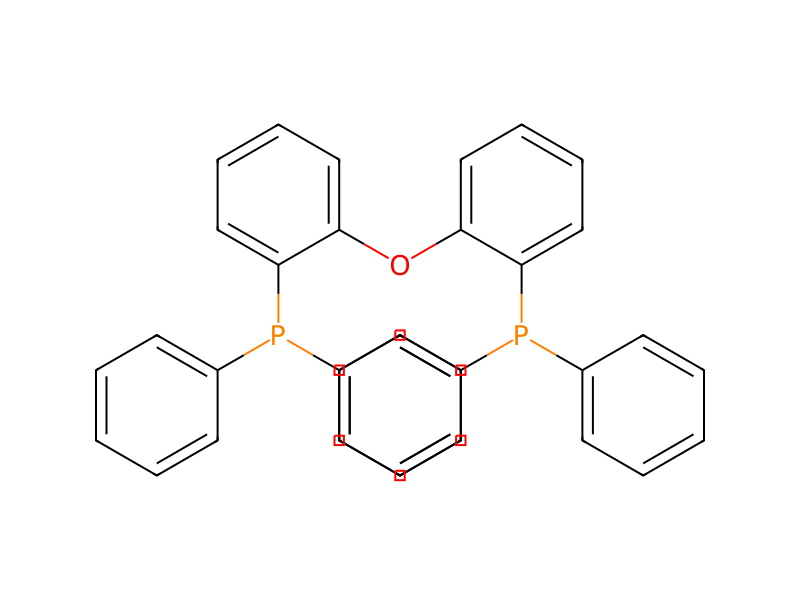
To a 100-mL round-bottom flask were added 1-chloroisoquinoline (2.84 g, 17.3 mmol), 1-aminoisoquinoline (2.5 g, 17.3 mmol), sodium tert-butoxide (2.33 g, 24.3 mmol), palladium (II) acetate (0.16 g, 0.69 mmol), bis(2-diphenylphosphinophenyl)ether(0.35 g, 0.65 mmol), and toluene (40 mL sparged with N2). The reaction mixture was heated at 105° C. for 18 h under an atm of N2. The reaction mixture was diluted with ether and THF, and washed with water. This solution was passed through a pad of celite to remove insoluble particles. The organic layer was dried over MgSO4 and then passed through a plug of SiO2 gel eluting with CH2Cl2:CH3CN 90:10. The volatile components were removed with a rotary evaporator to afford 4.46 g (94.9%) of bis(1-isoquinolyl)amine as an olive powder. Results of 1H NMR spectroscopy and electrospray mass spectroscopy are consistent with the product. 1H NMR (300 MHz, CDCl3): δ 6.93 (d, J=6.4 Hz, 2H), 7.63 (m, 7H), 7.71 (d, J=6.4 Hz, 2H), 9.11 (d, J=7.9 Hz, 2H).
Workup
- washwashed with water
- customto remove insoluble particles
- dry with materialThe organic layer was dried over MgSO4
- washeluting with CH2Cl2:CH3CN 90:10
- customThe volatile components were removed with a rotary evaporator
Sources & evidence
- ORD record
- ord-077be86e66214c4db4ac5e2bd6de9754
- Source dataset
- uspto-grants-2003_12
- Patent number
- US06661023B2
Reaction notes
Loading…