Diethyl Ether → Cinnamoyl carnitine hydrochloride
Reaction equation

Cl.[OH:2][CH:3]([CH2:9][C:10](=[O:12])[O-:11])[CH2:4][N+:5]([CH3:8])([CH3:7])[CH3:6].[C:13]([Cl:23])(=[O:22])[CH:14]=[CH:15][C:16]1[CH:21]=[CH:20][CH:19]=[CH:18][CH:17]=1.CCOCC>C(O)(C(F)(F)F)=O.CC(C)=O>[ClH:23].[C:13]([C:3]([CH2:9][C:10](=[O:11])[O-:12])([CH2:4][N+:5]([CH3:8])([CH3:6])[CH3:7])[OH:2])(=[O:22])[CH:14]=[CH:15][C:16]1[CH:21]=[CH:20][CH:19]=[CH:18][CH:17]=1Participants
6





Procedure
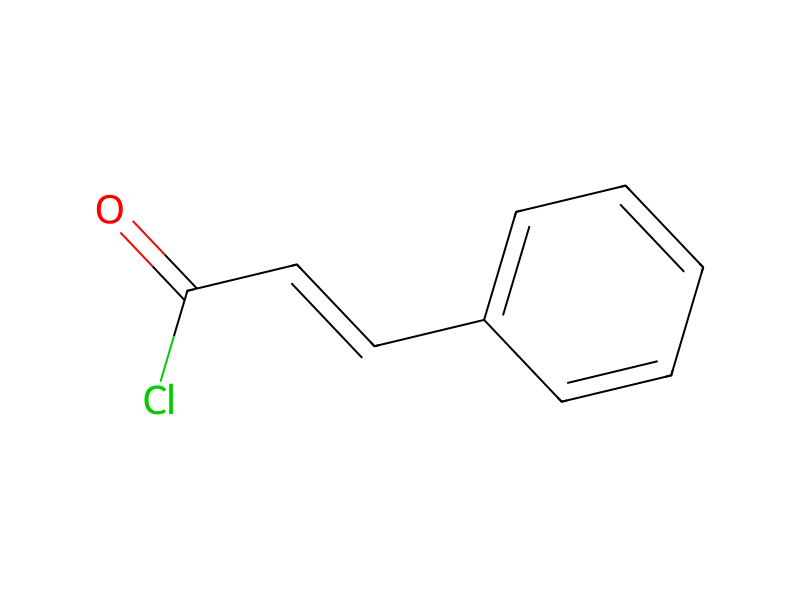
4.55 g (0.023 moles) of carnitine hydrochloride are dissolved in 6.9 mls of CF3COOH, and to the solution an excess (16 mls) of cinnamoyl chloride is added. The mixture is kept under stirring at 40°-45° C. for 4-5 hours. At the end of this period of time, the mixture is diluted with 60 mls of acetone and some ether is slowly added till complete precipitation. The mixture is filtered and the precipitate which has the tendency to become hygroscopic is quickly washed with ether and dried under vacuum at a temperature not exceeding 50° C.; 5.3 g of a product are obtained (yield 70%) having the following characteristics:
Workup
- filtrationThe mixture is filtered
- washis quickly washed with ether
- customdried under vacuum at a temperature not
- customexceeding 50° C.
Sources & evidence
- ORD record
- ord-f0497f1aa60a4845b3dc8e451c561c50
- Source dataset
- uspto-grants-1983_08
- Patent number
- US04401827
Reaction notes
Loading…