Potassium Iodide → HCID 12275544, compound
Reaction equation

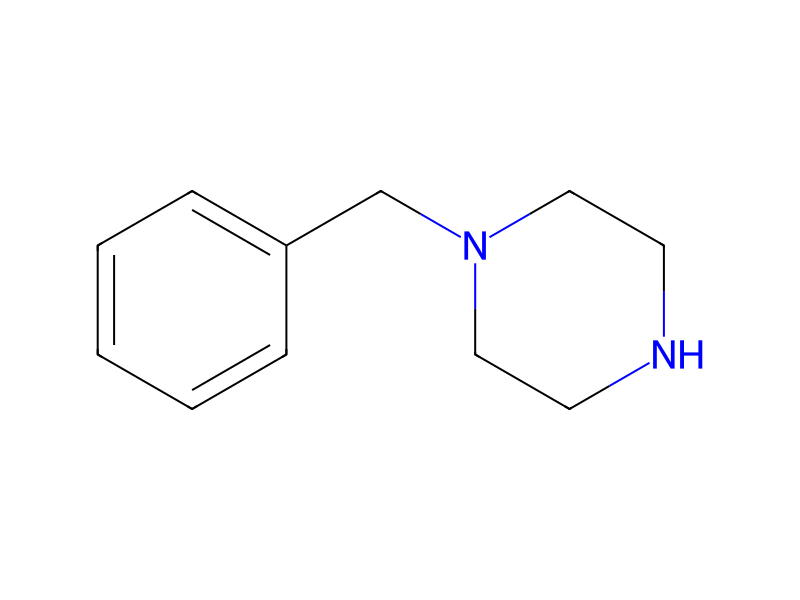
[CH2:1]([N:8]1[CH2:13][CH2:12][NH:11][CH2:10][CH2:9]1)[C:2]1[CH:7]=[CH:6][CH:5]=[CH:4][CH:3]=1.C(=O)([O-])[O-].[K+].[K+].[I-].[K+].Cl[CH2:23][CH2:24][N:25]1[CH2:29][CH2:28][O:27][C:26]1=[O:30]>C1(C)C=CC=CC=1>[CH2:1]([N:8]1[CH2:13][CH2:12][N:11]([CH2:23][CH2:24][N:25]2[CH2:29][CH2:28][O:27][C:26]2=[O:30])[CH2:10][CH2:9]1)[C:2]1[CH:3]=[CH:4][CH:5]=[CH:6][CH:7]=1Participants
6
Reactant 4



Product 1

Reagents, catalysts & solvents 1

Procedure
744 g of 1-benzyl-piperazine are treated, together with 590 g of powdered potassium carbonate, 10 g of potassium iodide and 5 litres of toluene, with 450 g of 3-(2-chloroethyl)-2-oxazolidinone and the mixture is heated to reflux for 21 hours. The mixture is cooled, filtered and concentrated under reduced pressure. The residue is distilled under reduced pressure. There is obtained 3-[2-(4-benzyl-1-piperazinyl)-ethyl]-2-oxazolidinone which boils at 225°-235° C under a pressure of 2-2.5 mm. The compound is recrystallised from ethyl acetate; melting point 82°-84° C. The dihydrochloride of melting point 243°-245° C is obtained by treatment with an excess of hydrochloric acid in ethanol.
Workup
- temperaturethe mixture is heated
- temperatureto reflux for 21 hours
- temperatureThe mixture is cooled
- filtrationfiltered
- concentrationconcentrated under reduced pressure
- distillationThe residue is distilled under reduced pressure
Sources & evidence
- ORD record
- ord-7e4df71d4aeb4c49aa4ea7977d6de466
- Source dataset
- uspto-grants-1977_02
- Patent number
- US04006144
Reaction notes
Loading…