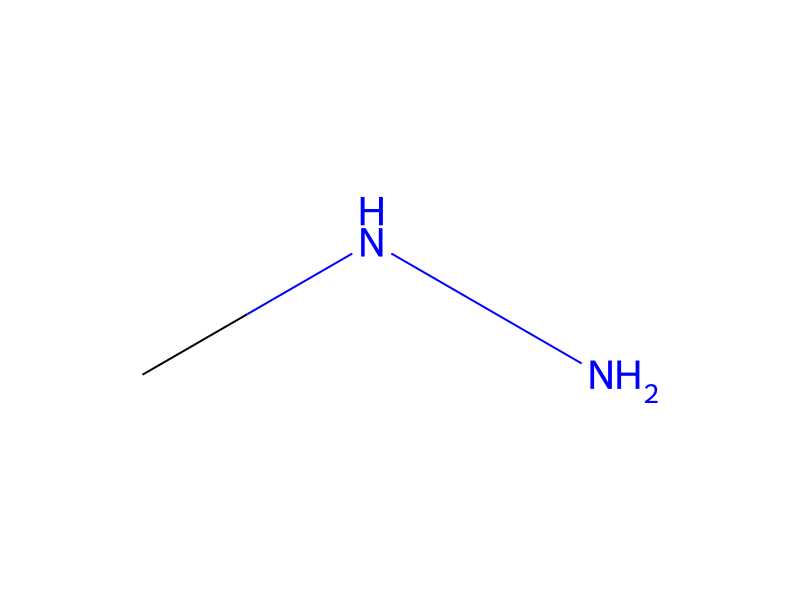
Methylhydrazine → 4-[1-(t-Butylazo)cyclohexyl]-2-methylsemicarbazide
Reaction equation

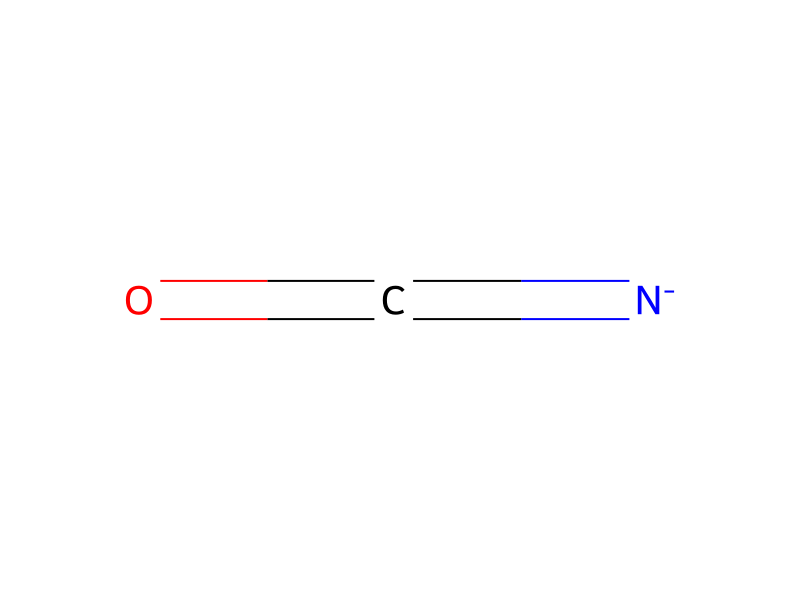
[C:1]([N:5]=[N:6][C:7]1([N:13]=[C:14]=[O:15])[CH2:12][CH2:11][CH2:10][CH2:9][CH2:8]1)([CH3:4])([CH3:3])[CH3:2].[CH3:16][NH:17][NH2:18].[N-]=C=O>CCCCC>[C:1]([N:5]=[N:6][C:7]1([NH:13][C:14](=[O:15])[N:17]([CH3:16])[NH2:18])[CH2:12][CH2:11][CH2:10][CH2:9][CH2:8]1)([CH3:4])([CH3:2])[CH3:3]Participants
5
Reactant 3

Product 1

Reagents, catalysts & solvents 1

Conditions
- Temperature
- 5 °C
Procedure
To 8.2 grams (0.0392 moles) of 1-t-butylazo-1-isocyanatocyclohexane stirred with a magnetic stirrer in a 50 ml erlenmeyer flask and cooled to 5° C. was added 1.82 grams (0.0392 moles) of methylhydrazine. The reaction was very rapid and exothermic and became quite viscous. The reaction mixture was diluted with pentane and stirred for an additional 60 minutes at room temperature. The pentane was evaporated under reduced pressure leaving 9.0 grams (90% crude yield) of a yellow solid. The product melted at 169°-171° C. with decomposition. The infrared spectrum of the product contained a strong carbonyl band at 1660 cm-1 and a moderate NH band at 3320 cm-1. The isocyanate band at 2225 cm-1 was absent.
Workup
- customThe pentane was evaporated under reduced pressure
- customleaving 9.0 grams (90% crude yield) of a yellow solid
Sources & evidence
- ORD record
- ord-8d416c253721430bb3e24f8c083b70fb
- Source dataset
- uspto-grants-1977_06
- Patent number
- US04028344
Reaction notes
Loading…