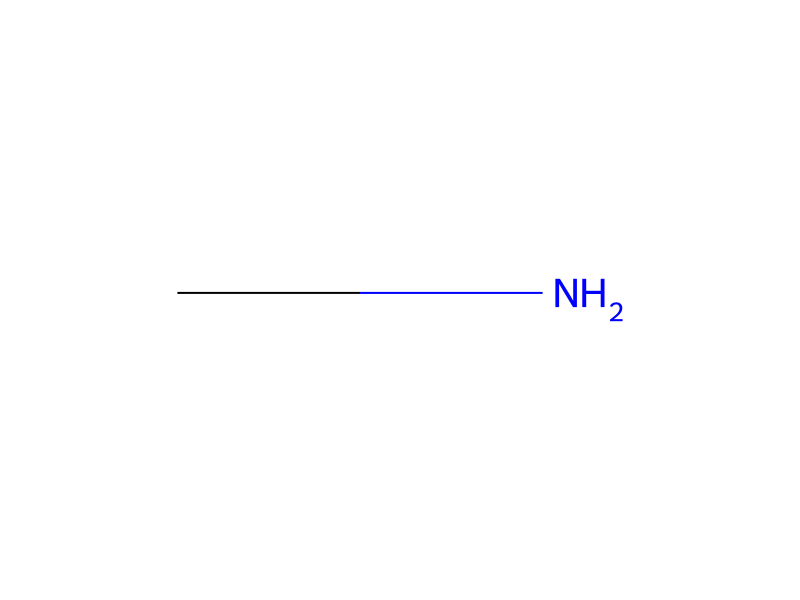
Methylamine → (4-Chlorophenyl)-N,N'-dimethylethanimidamide--hydrogen chloride (1/1)
Reaction equation

[CH3:1][NH:2][C:3](=O)[CH2:4][C:5]1[CH:10]=[CH:9][C:8]([Cl:11])=[CH:7][CH:6]=1.F[B-](F)(F)F.C([O+](CC)CC)C.[CH3:25][NH2:26]>C(Cl)Cl>[ClH:11].[Cl:11][C:8]1[CH:9]=[CH:10][C:5]([CH2:4][C:3]([NH:26][CH3:25])=[N:2][CH3:1])=[CH:6][CH:7]=1Participants



Procedure
Using glass vessels dried at 125° C. before use, N-methyl-2-(4-chlorophenyl)acetamide (18.4 grams; 0.1 mole) is dispersed in a mixture of 150 milliliters of methylene chloride and triethyloxonium fluoroborate (19 grams; 0.1 mole). The reaction mixture is stirred at room temperature for 72 hours, then cooled in an acetone-Dry Ice bath while monomethylamine (10 grams; 0.33 mole) is added. The mixture is then stirred an additional 18 hours at room temperature. During the foregoing additions and mixing of reactants the mixture is maintained under a dry nitrogen blanket. The reaction mixture is then concentrated under vacuum and the residue is suspended in water, made strongly alkaline by addition of cold aqueous 20 percent sodium hydroxide, and extracted with ethyl acetate. The organic phase is separated and dried over anhydrous sodium sulfate. Excess dry gaseous hydrogen chloride is introduced into the mixture, and the resulting mixture is evaporated under reduced pressure, residual oil is taken up in methyl ethyl ketone, filtered and the filtrate evaporated. The product is obtained as a residue which is recrystallized from isopropanol. The 2-(4-chlorophenyl)-N,N'-dimethylacetamidine hydrochloride product is obtained in a yield of 4 grams; corresponding to a 17.1 percent yield based on the acetamide starting material. The product is found to melt at a temperature of 242.5°-243.5° C. Infrared and nuclear magnetic resonance analyses also confirm the named structure.
Workup
- additionis added
- stirringThe mixture is then stirred an additional 18 hours at room temperature
- additionDuring the foregoing additions and mixing of reactants the mixture
- temperatureis maintained under a dry nitrogen blanket
- concentrationThe reaction mixture is then concentrated under vacuum
- additionmade strongly alkaline by addition of cold aqueous 20 percent sodium hydroxide
- extractionextracted with ethyl acetate
- customThe organic phase is separated
- dry with materialdried over anhydrous sodium sulfate
- additionExcess dry gaseous hydrogen chloride is introduced into the mixture
- customthe resulting mixture is evaporated under reduced pressure, residual oil
- filtrationfiltered
- customthe filtrate evaporated
- customThe product is obtained as a residue which
- customis recrystallized from isopropanol
Sources & evidence
- ORD record
- ord-df48c45856e740df8534d76d057f2fae
- Source dataset
- uspto-grants-1977_06
- Patent number
- US04029703
Reaction notes
Loading…