Dibutyl maleate → Gamma-Butyrolactone
Reaction equation

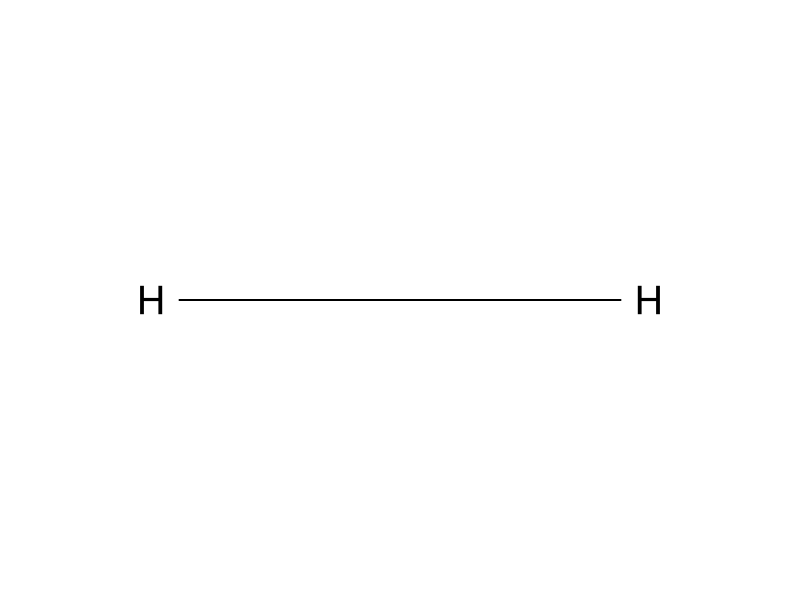
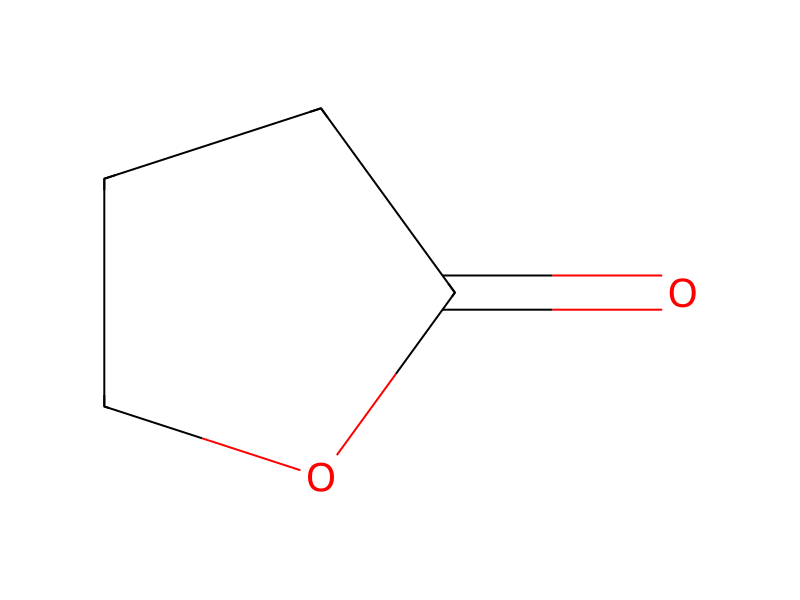
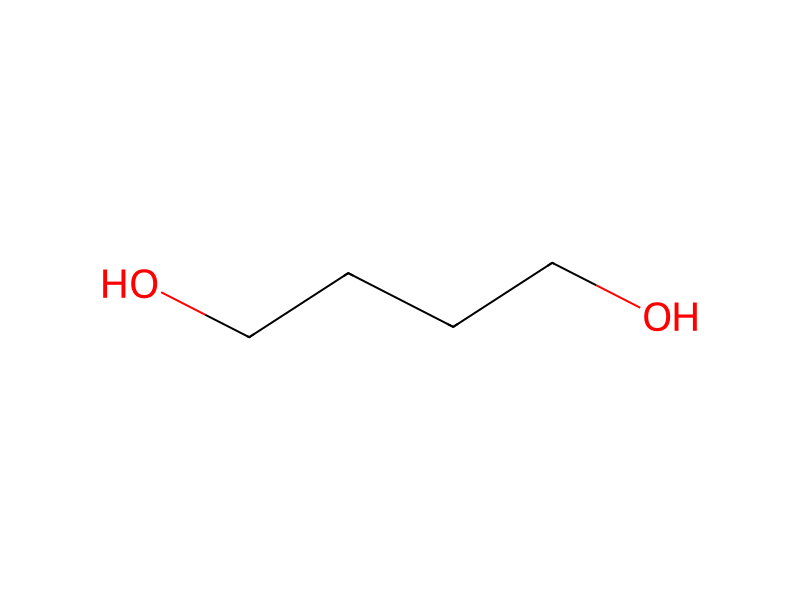
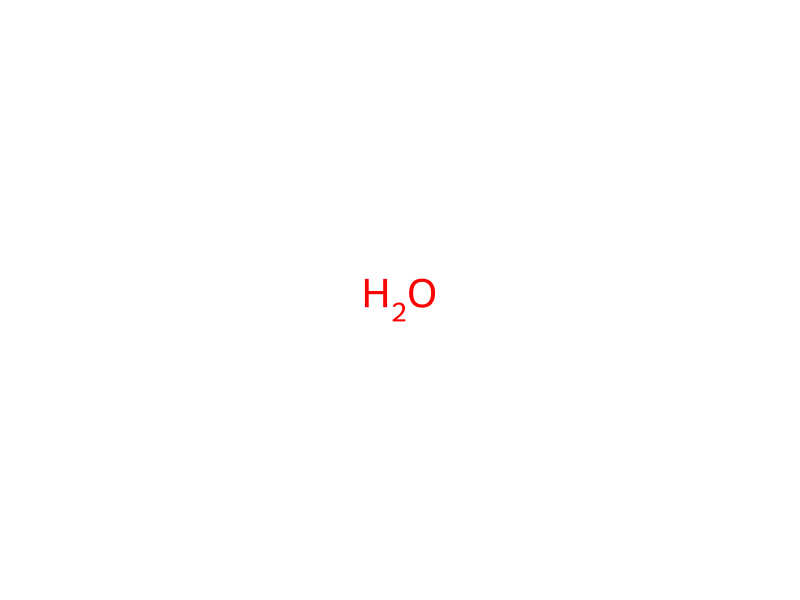
[C:1]([O:12][CH2:13][CH2:14][CH2:15]C)(=[O:11])/[CH:2]=[CH:3]\[C:4](OCCCC)=[O:5].[H][H]>[Cr]([O-])([O-])=O.[Cu+2].O>[CH2:1]([OH:11])[CH2:2][CH2:3][CH2:4][OH:5].[C:1]1(=[O:11])[O:12][CH2:13][CH2:14][CH2:15]1Participants
Reactant 2

Product 2
Reagents, catalysts & solvents 2

Conditions
- Temperature
- 250 °C
Procedure
Into a 1 liter magnedrive stirred autoclave was placed 200 g. of dibutyl maleate (reagent grade, Matheson Coleman and Bell) and 30 g. of copper chromite hydrogenation catalyst (Calsicat PC 108-80, Mallinckrodt Chemical Works). The autoclave was charged and pressured to 2,900 psig with hydrogen. Heat was then applied and the temperature was slowly brought to approximately 100° C. at which point an exothermic reaction ensued at a temperature increase to 250° C. Cooling water was passed through the internal coils of the autoclave to control the temperature and not to permit it to exceed about 250° C. After about 5 to 10 minutes the internal temperature had returned to approximately 120° C. and the contents of the autoclave were again heated to a temperature of 200° C. and maintained at this temperature and a hydrogen partial pressure of 2,900 psig for a period of 2.5 hours at which time the reaction appeared to be complete. The contents of the autoclave were then cooled and the hydrogen partial pressure was vented to the atmosphere. The catalyst was separated from the liquid autoclave contents by filtration and the filter was washed with n-butanol. Distillation of the filtrate yielded 1,4-butanediol containing a trace of γ-butyrolactone. Analysis of the filtrate by gas-liquid partition chromatographic techniques indicated that 99% of the dibutyl maleate had been converted to products and that the selectivity to 1,4-butanediol was 90%.
Workup
- additionThe autoclave was charged
- temperatureHeat
- customwas slowly brought to approximately 100° C. at which point
- customan exothermic reaction
- customto exceed about 250° C
- temperaturethe contents of the autoclave were again heated to a temperature of 200° C.
- temperaturemaintained at this temperature
- temperatureThe contents of the autoclave were then cooled
- customThe catalyst was separated from the liquid autoclave contents by filtration
- washthe filter was washed with n-butanol
- distillationDistillation of the filtrate
Sources & evidence
- ORD record
- ord-91e2745a9fa94781bdd1439468befe17
- Source dataset
- uspto-grants-1977_06
- Patent number
- US04032458
Reaction notes
Loading…