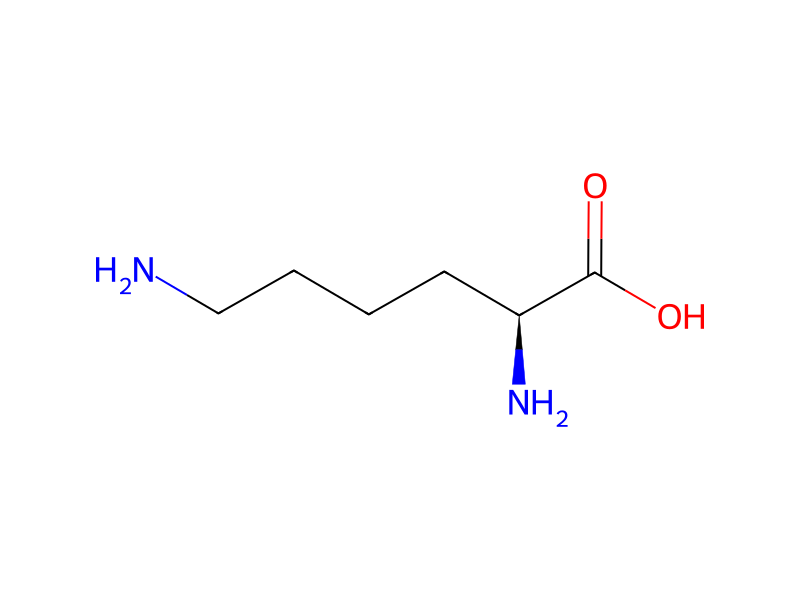
L-Lysine → HCID 54549959, compound
Reaction equation

O=[CH:2][C@@H:3]([C@H:5]([C@@H:7]([C@@H:9]([CH2:11][OH:12])[OH:10])[OH:8])[OH:6])[OH:4].[NH2:13][C@H:14]([C:20]([OH:22])=[O:21])[CH2:15][CH2:16][CH2:17][CH2:18][NH2:19]>[Pd]>[OH:4][CH:3]([CH:5]([OH:6])[CH:7]([OH:8])[CH:9]([OH:10])[CH2:11][OH:12])[CH2:2][NH:13][C@H:14]([C:20]([OH:22])=[O:21])[CH2:15][CH2:16][CH2:17][CH2:18][NH2:19]Participants
4
Reactant 2

Product 1

Reagents, catalysts & solvents 1

Procedure
The starting materials were D-glucose and L-(+)-lysine in the molar ratio 1:1. The reductive amination took place using palladium/activated carbon (10%) as a catalyst under the conditions of the above examples and yielded a colorless, wax-like product.
Workup
- customyielded a colorless, wax-like product
Sources & evidence
- ORD record
- ord-49f006c690d4419dbf73760930f31fc7
- Source dataset
- uspto-grants-1977_06
- Patent number
- US04032676
Reaction notes
Loading…