Diisopropylethylamine → Ethyl 2-{3-[(tert-butoxycarbonyl)amino]azetidin-1-yl)-1,3-benzothiazole-6-carboxylate
Reaction equation

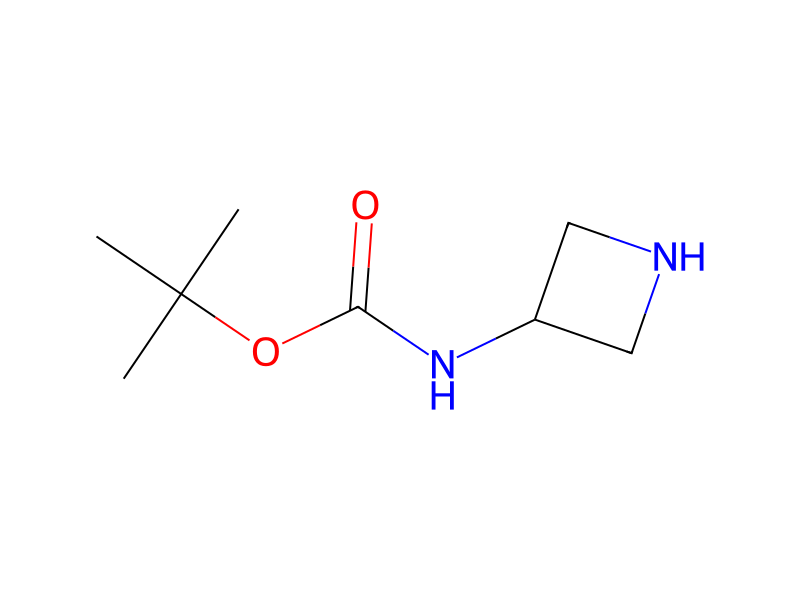
[C:1]([O:5][C:6]([NH:8][CH:9]1[CH2:12][NH:11][CH2:10]1)=[O:7])([CH3:4])([CH3:3])[CH3:2].Br[C:14]1[S:15][C:16]2[CH:22]=[C:21]([C:23]([O:25][CH2:26][CH3:27])=[O:24])[CH:20]=[CH:19][C:17]=2[N:18]=1.C(N(C(C)C)CC)(C)C>>[C:1]([O:5][C:6]([NH:8][CH:9]1[CH2:10][N:11]([C:14]2[S:15][C:16]3[CH:22]=[C:21]([C:23]([O:25][CH2:26][CH3:27])=[O:24])[CH:20]=[CH:19][C:17]=3[N:18]=2)[CH2:12]1)=[O:7])([CH3:4])([CH3:2])[CH3:3]Participants
4



Procedure
The same operation as in Example (221a) was performed using 3-tert-butoxycarbonylaminoazetidine (199 mg, 1.15 mmol), ethyl 2-bromo-1,3-benzothiazole-6-carboxylate obtained in Example (225a) (300 mg, 1.05 mmol) and diisopropylethylamine (0.37 mL, 2.10 mmol), to obtain 297 mg of the title compound as a milk white solid (75%).
Sources & evidence
- ORD record
- ord-1b5cc856370348be9d1b9e1bd3f1172f
- Source dataset
- uspto-grants-2013_09
- Patent number
- US08536197B2
Reaction notes
Loading…