Hydrogen Cyanide → Isophorone
Reaction equation

[O:1]=[C:2]1[CH2:9][C:6]([CH3:8])([CH3:7])[CH2:5][C:4]([CH3:10])=[CH:3]1.[CH:11]#[N:12].OP(O)(O)=O>[C-]#N.C([N+](CC)(CC)CC)C>[O:1]=[C:2]1[CH2:9][C:6]([CH3:8])([CH3:7])[CH2:5][C:4]([CH3:10])=[CH:3]1.[C:11]([C:4]1([CH3:10])[CH2:5][C:6]([CH3:8])([CH3:7])[CH2:9][C:2](=[O:1])[CH2:3]1)#[N:12]Participants
6
Reactant 3
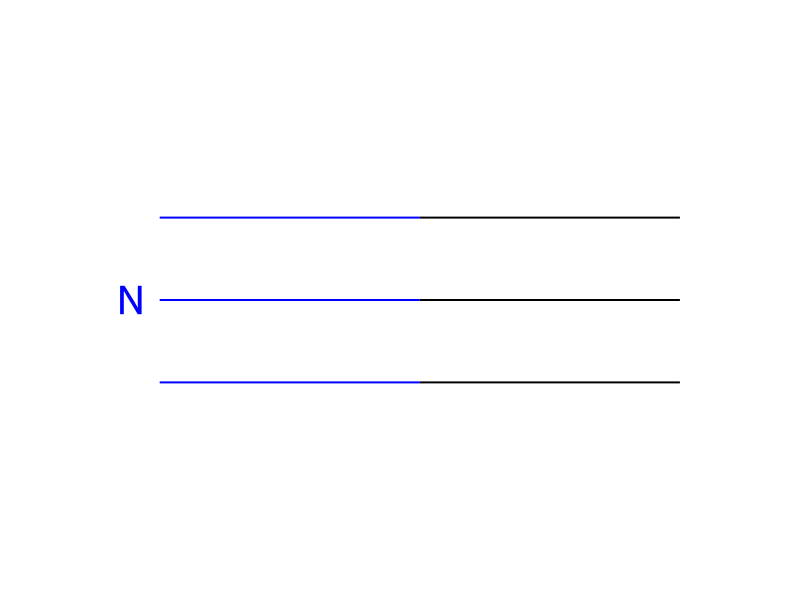


Product 2

Reagents, catalysts & solvents 1

Procedure
To 415 g (3 mol) of isophorone containing 12 g (0.077 mol) of tetraethylammonium cyanide there are added dropwise, over a period of 1 hour, 81 g (3 mol) of hydrogen cyanide at a reaction temperature of 108° C. Following a post-reacting period of 3 min the HCN concentration is 0.16%. The effluent is neutralized with 9 g of H3PO4 and distilled. There are obtained 15 g of isophorone and 443.6 g of 3-cyano-3,5,5-trimethylcyclohexanone. This is equivalent to a yield of 89.6% based on HCN used and 93% based on converted isophorone. The distillation residues weigh 28.2 g, which is equivalent to 5.5% based on crude product used.
Workup
- customat a reaction temperature of 108° C
- customa post-reacting period of 3 min
- distillationdistilled
Sources & evidence
- ORD record
- ord-9996fdca10a940d5821a5ccacf1d4d91
- Source dataset
- uspto-grants-1996_05
- Patent number
- US05516928
Reaction notes
Loading…