Tetrabutylammonium Fluoride → Methacrylic Acid
Reaction equation

[C:1]([O:6][Si](C)(C)C)(=[O:5])[C:2]([CH3:4])=[CH2:3].[C:11]([OH:16])(=[O:15])[C:12]([CH3:14])=[CH2:13].[CH3:17][CH2:18][O:19][CH:20]([OH:29])[CH2:21][O:22][CH2:23][CH2:24][O:25][CH2:26][CH2:27][OH:28].[F-].C([N+](CCCC)(CCCC)CCCC)CCC>C1COCC1>[C:1]([OH:6])(=[O:5])[C:2]([CH3:4])=[CH2:3].[C:11]([OH:16])(=[O:15])[C:12]([CH3:14])=[CH2:13].[CH3:17][CH2:18][O:19][CH:20]([OH:29])[CH2:21][O:22][CH2:23][CH2:24][O:25][CH2:26][CH2:27][OH:28]Participants
6
Reactant 3

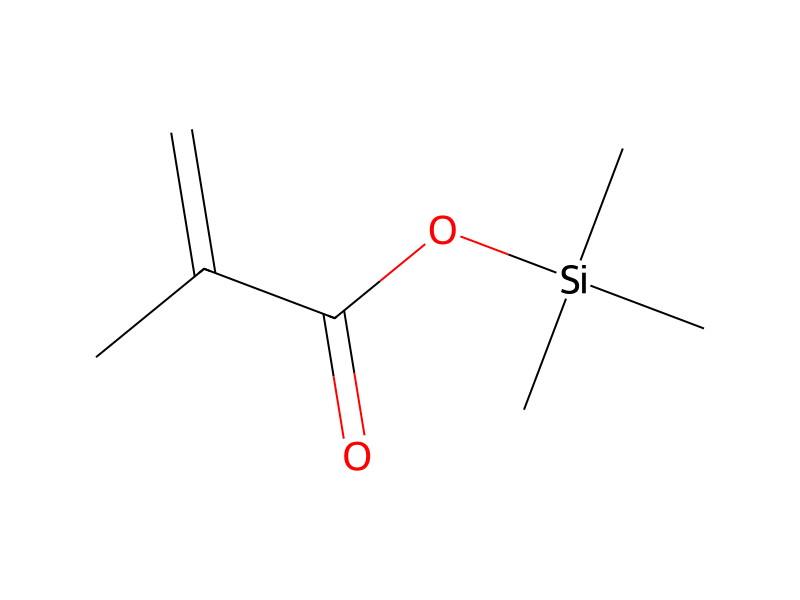

Product 2

Reagents, catalysts & solvents 1

Procedure
The solution of poly(trimethylsilyl methacrylate [48 mol %]-b-benzyl methacrylate [37 mol %]-b-ethoxytriethylene glycol methacrylate [15 mol % ]) was refluxed for 12 hr with 150 mL of 0.03 M methanolic tetrabutylammonium fluoride and an additional 100 mL of THF. After evaporation in a rotary evaporator under reduced pressure, the residual polymer was dried for 48 hr in a vacuum oven at 50° C. to give 186.3 g of poly(methacrylic acid [48 mol %]-b-benzyl methacrylate [37 mol %]-b-ethoxytriethylene glycol methacrylate [15 mol %]). 1H NMR analysis of the product showed that no trimethylsilyl ester groups remained.
Workup
- customAfter evaporation
- customin a rotary evaporator under reduced pressure
- customthe residual polymer was dried for 48 hr in a vacuum oven at 50° C.
Sources & evidence
- ORD record
- ord-118056e3eaf8447aab6b423355c11bbd
- Source dataset
- uspto-grants-1996_05
- Patent number
- US05519085
Reaction notes
Loading…