反应详情
EQUATION
反应方程式

REACTANTS
反应物
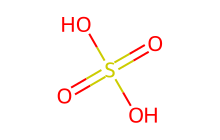


PRODUCTS
产物
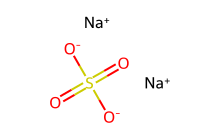

PROCEDURE
实验过程
In the drawing, a solution of sodium chromate (Na2CrO4) in line 1 is added to acidifier 2. When sulfuric acid from line 3 and sodium bisulfate from line 4 are added, sodium sulfate and sodium bichromate (Na2Cr2O7) are produced. The solution of sodium bichromate passes through line 5 to evaporator 6 where water is evaporated, resulting in the precipitation of the sodium sulfate. The water is removed through line 7 and the slurry passes through line 8 to separator 9 where the solution of 69 to 92 wt % sodium bichromate is removed through line 10. The solid sodium sulfate is sent through line 11 to dissolver 12 where water is added from line 13 forming a solution of sodium sulfate, typically containing about 200 to about 1000 ppm Cr(VI), as well as a trace amount of Cr(III). The sodium sulfate solution is sent through line 14 to reduction tank 15 where sulfuric acid is added from line 16 and sulfur dioxide (or any suitable reducing agent) from line 17, reducing the Cr(VI) to Cr(III). The solution then passes through line 18 to precipitation tank 19 where sodium hydroxide is added from line 20, resulting in the formation of chromium hydroxide (Cr(OH)3), which precipitates. The resulting slurry passes through line 21 to separator 22 and the precipitated chromium hydroxide is removed through line 23. The remaining solution of sodium sulfate, which typically contains less than 100 ppm of Cr(III), is passed through line 24 to evaporator 25. Water is evaporated through line 26 resulting in the precipitation of the sodium sulfate. The slurry of sodium sulfate is sent through line 27 to separator 28 which removes the precipitated sodium sulfate through line 29. All of the Cr(III) entering through line 24 enters the sodium sulfate product through line 29. Periodically, the mother liquor in separator 28 is recycled through line 30 to either dissolver 12 or reduction tank 15 to purge other impurities that build-up over time in the process.