Sodium hydride → HCID 22404788, compound
Reaction equation

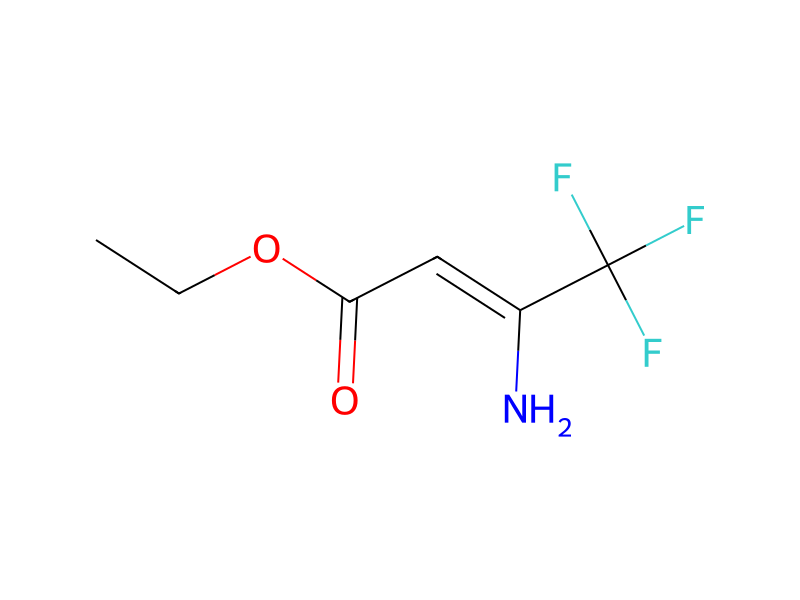
[Cl:1][C:2]1[C:7]2[C:8](=[O:11])[CH2:9][O:10][C:6]=2[C:5]([N:12]=[C:13]=[O:14])=[CH:4][CH:3]=1.[H-].[Na+].[NH2:17]/[C:18](/[C:25]([F:28])([F:27])[F:26])=[CH:19]\[C:20](OCC)=[O:21]>>[Cl:1][C:2]1[C:7]2[C:8](=[O:11])[CH2:9][O:10][C:6]=2[C:5]([N:12]2[C:20](=[O:21])[CH:19]=[C:18]([C:25]([F:28])([F:27])[F:26])[NH:17][C:13]2=[O:14])=[CH:4][CH:3]=1Participants
4



Procedure
By the method of Example 1, Step G, 2.10 g (0.010 mole) of 4-chloro-2,3-dihydrobenzofuran-3-on-7-yl isocyanate is reacted with 0.40 g (0.010 mole) of sodium hydride and 1.83 g (0.010 mole) of ethyl 3-amino-4,4,4-trifluorocrotonate, yielding 3-(4-chloro-2,3-dihydrobenzofuran-3-on-7-yl)-6-trifluoromethyluracil. This product is further reacted with 1.38 g (0.010 mole) of potassium carbonate and 2.80 g (0.020 mole) of methyl iodide, yielding 3-(4-chloro-2,3-dihydrobenzofuran-3-on-7-yl)-1-methyl-6-trifluoromethyluracil (Compound 30).
Sources & evidence
- ORD record
- ord-a403c897823d467b986b7a065fdacf06
- Source dataset
- uspto-grants-1996_05
- Patent number
- US05521147
Reaction notes
Loading…