Triethylamine → 1,1-Dimethylethyl (((2,4,6-trimethylphenyl)sulphonyl)oxy)carbamate
Reaction equation

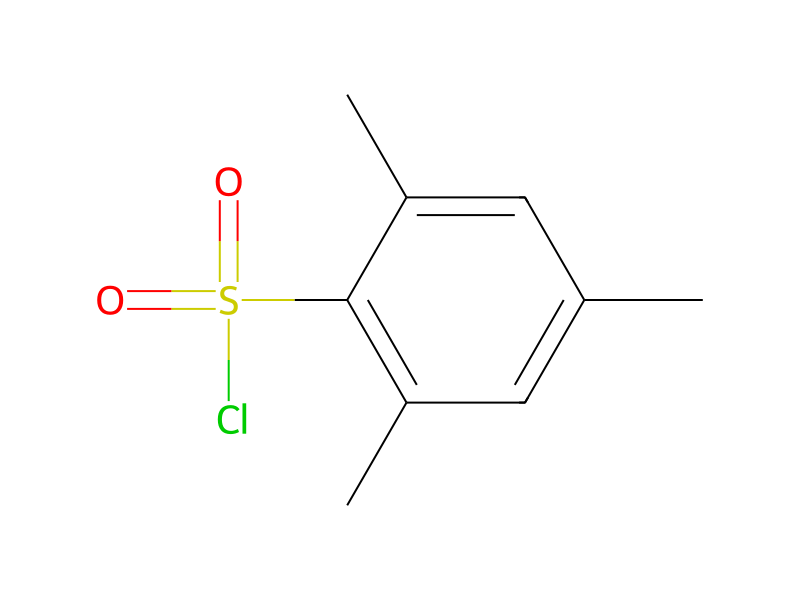
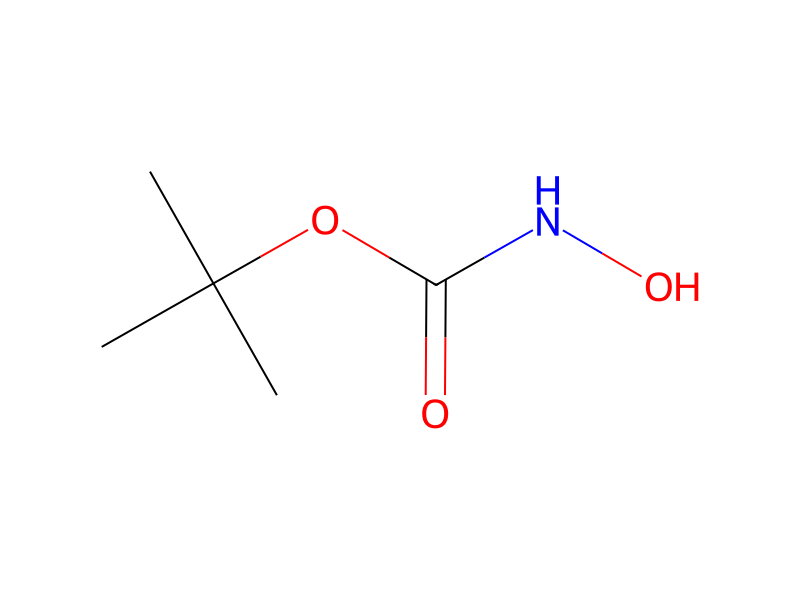
[CH3:1][C:2]1[CH:7]=[C:6]([CH3:8])[CH:5]=[C:4]([CH3:9])[C:3]=1[S:10](Cl)(=[O:12])=[O:11].[OH:14][NH:15][C:16](=[O:22])[O:17][C:18]([CH3:21])([CH3:20])[CH3:19].C(N(CC)CC)C>C(OCC)C>[CH3:1][C:2]1[CH:7]=[C:6]([CH3:8])[CH:5]=[C:4]([CH3:9])[C:3]=1[S:10]([O:14][NH:15][C:16](=[O:22])[O:17][C:18]([CH3:21])([CH3:20])[CH3:19])(=[O:11])=[O:12]Participants



Procedure
A stirred solution of 25.0 grams (0.114 mole) of 2,4,6-trimethylbenzenesulfonyl chloride and 15.3 grams (0.114 mole) of 1,1-dimethylethyl N-hydroxycarbamate in 350 mL of diethyl ether was cooled in an ice-water bath, and 11.4 grams (0.114 mole) of triethylamine was added dropwise. Upon completion of the addition, the reaction mixture was allowed to warm to ambient temperature as it stirred for about 18 hours. The reaction mixture was then filtered, and the filtrate was concentrated under reduced pressure to a residue, which was slurried with toluene and petroleum ether. The resultant solid was collected by filtration, yielding 25.0 grams of 1,1-dimethylethyl N-(2,4,6-trimethylphenylsulfonyloxy)carbamate. The NMR spectrum was consistent with the proposed structure.
Workup
- additionUpon completion of the addition
- filtrationThe reaction mixture was then filtered
- concentrationthe filtrate was concentrated under reduced pressure to a residue, which
- filtrationThe resultant solid was collected by filtration
Sources & evidence
- ORD record
- ord-eacf51e1a654425e8eb05774c51177d5
- Source dataset
- uspto-grants-1996_05
- Patent number
- US05521147
Reaction notes
Loading…