Piperidine → 1-(1,3-Benzoxazol-6-ylcarbonyl)-piperidine
Reaction equation

[O:1]1[C:5]2[CH:6]=[C:7]([C:10]([OH:12])=O)[CH:8]=[CH:9][C:4]=2[N:3]=[CH:2]1.[NH:13]1[CH2:18][CH2:17][CH2:16][CH2:15][CH2:14]1.C(C1NC=CN=1)(C1NC=CN=1)=O>C(Cl)Cl>[O:1]1[C:5]2[CH:6]=[C:7]([C:10]([N:13]3[CH2:18][CH2:17][CH2:16][CH2:15][CH2:14]3)=[O:12])[CH:8]=[CH:9][C:4]=2[N:3]=[CH:2]1Participants
5
Reactant 3

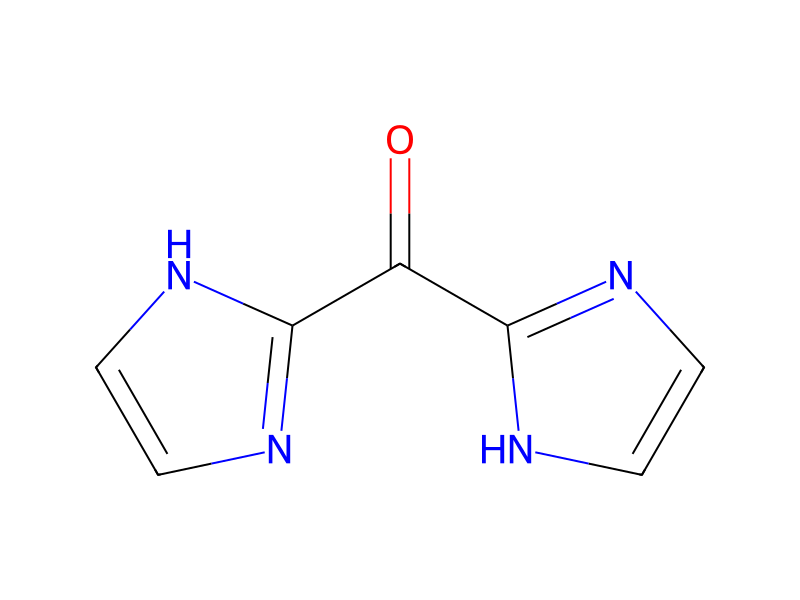

Product 1

Reagents, catalysts & solvents 1

Procedure
The amide is prepared by coupling 1,3-benzoxazol-6-carboxylic acid with piperidine by activation of the acid with carbonyl diimidazole as described for the preparation of Invention Compound V. Dilution of the reaction solution with more CH2Cl2 causes the product to precipitate. Purification is achieved by chromatography on silica gel. EMIS m/z=230 (parent), 229, 146 (base), and 118. 1H NMR δ 1.55 (br m, 4), 1.70 (br, 2), 3.4 (br, 2), 3.75 (br, 2), 7.48 (dd, 1, J=8.29, 1.22 Hz), 7.62 (d, 1, J=8.44 Hz), 7.84 (d, 1, J=1.00 Hz), and 8.15 ppm (s, 1).
Workup
- customto precipitate
- customPurification
Sources & evidence
- ORD record
- ord-078bf833a35842e59ac0f66a34470887
- Source dataset
- uspto-grants-1999_04
- Patent number
- US05891876
Reaction notes
Loading…