2,3,4,6-Tetrachlorophenol → HCID 53648427, compound
Reaction equation

[Cl:1][C:2]1[C:7]([Cl:8])=[C:6]([Cl:9])[CH:5]=[C:4]([Cl:10])[C:3]=1[OH:11].C1(C)C(C)=CC=CC=1.[Cl:20][CH2:21][C:22]1[CH:30]=[CH:29][C:25]([C:26](Cl)=[O:27])=[CH:24][CH:23]=1>N1C=CC=CC=1>[Cl:1][C:2]1[C:7]([Cl:8])=[C:6]([Cl:9])[CH:5]=[C:4]([Cl:10])[C:3]=1[O:11][C:26](=[O:27])[C:25]1[CH:29]=[CH:30][C:22]([CH2:21][Cl:20])=[CH:23][CH:24]=1Participants
5
Reactant 3


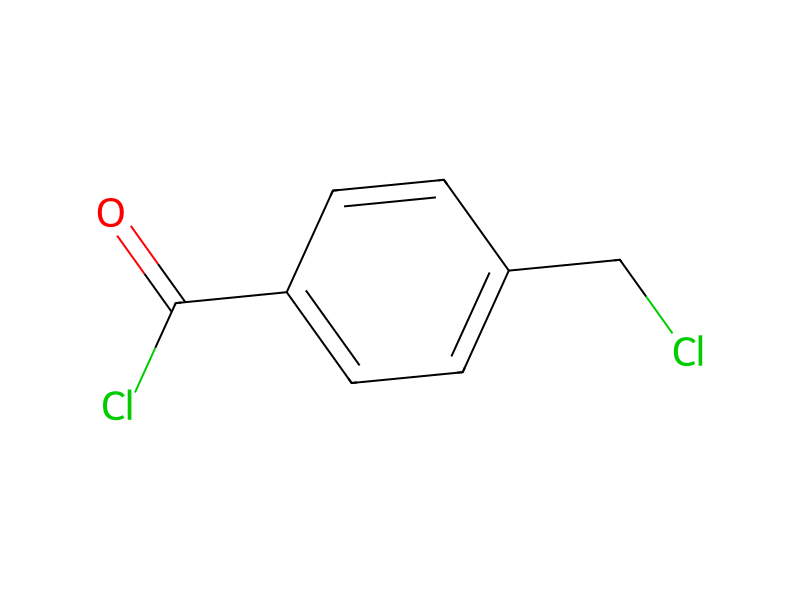
Product 1

Reagents, catalysts & solvents 1

Procedure
58 g (0.25 mole) of 2,3,4,6-tetrachlorophenol, 100 ml of absolute xylene, 47.5 g (0.25 mole) of p-chloromethylbenzoyl chloride and 0.25 ml of absolute pyridine were refluxed as described above for 4 hours. A part of the ester that formed crystallized upon the cooling of the reaction solution. The concentrated mother liquor yielded much additional crystallizate. In all, 93.15 g (97%) was isolated, with a melting point of 110° to 114° C. The raw ester was recrystallized from cyclohexane (1:15) and then melted at 143°-149° C. Another recrystallization raised the melting point to 150°-152° C.
Workup
- customas described above for 4 hours
Sources & evidence
- ORD record
- ord-52dc1d9c74d74c069e0b54caac80914e
- Source dataset
- uspto-grants-1981_04
- Patent number
- US04260803
Reaction notes
Loading…