(4-Bromophenyl)(4-chlorophenyl)methanone → 4-Chloro-4'-isopropylbenzophenone
Reaction equation

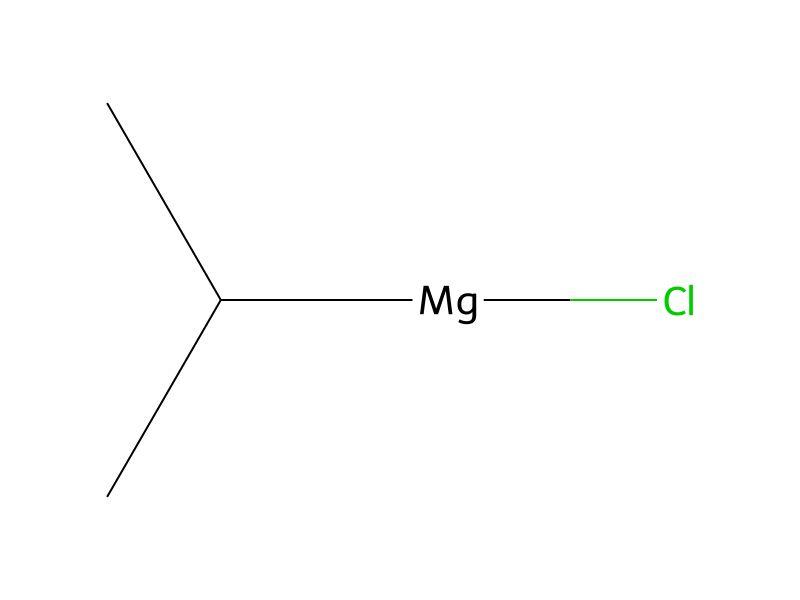
Br[C:2]1[CH:7]=[CH:6][C:5]([C:8]([C:10]2[CH:15]=[CH:14][C:13]([Cl:16])=[CH:12][CH:11]=2)=[O:9])=[CH:4][CH:3]=1.[CH:17]([Mg]Cl)([CH3:19])[CH3:18]>O1CCCC1.[Ni](Cl)Cl.C1(P(C(P(C2C=CC=CC=2)C2C=CC=CC=2)(C)C)C2C=CC=CC=2)C=CC=CC=1>[Cl:16][C:13]1[CH:14]=[CH:15][C:10]([C:8]([C:5]2[CH:6]=[CH:7][C:2]([CH:17]([CH3:19])[CH3:18])=[CH:3][CH:4]=2)=[O:9])=[CH:11][CH:12]=1Participants
5




Procedure
(4-bromophenyl)(4-chlorophenyl)methanone (10.0 g, 12.3 mmol) and bis(diphenylphosphino)propane nickel(II) chloride (0.4 g, 0.7 mmol) were dissolved in purified tetrahydrofuran (200 mL) under a nitrogen atmosphere, and isopropyl magnesium chloride (18.7 mL, 37.4 mmol) was slowly added thereto at 0° C. The reaction mixture solution was stirred at room temperature for 24 hours. The reaction mixture solution was subjected to extraction with dichloromethane and distilled water, and the extracted material was subjected to column chromatography (hexane:ethylacetate=8:2). The reaction solvent was removed, and then the residue material was dried in vacuum to thereby obtain a white solid (6.3 g, yield: 72%).
Workup
- customat 0° C
- extractionThe reaction mixture solution was subjected to extraction with dichloromethane
- distillationdistilled water
- customThe reaction solvent was removed
- customthe residue material was dried in vacuum
Sources & evidence
- ORD record
- ord-a921723b4f7c4fc99175605abb39d337
- Source dataset
- uspto-grants-2013_07
- Patent number
- US08476474B2
Reaction notes
Loading…