Citric Acid → Carbon Dioxide
Reaction equation

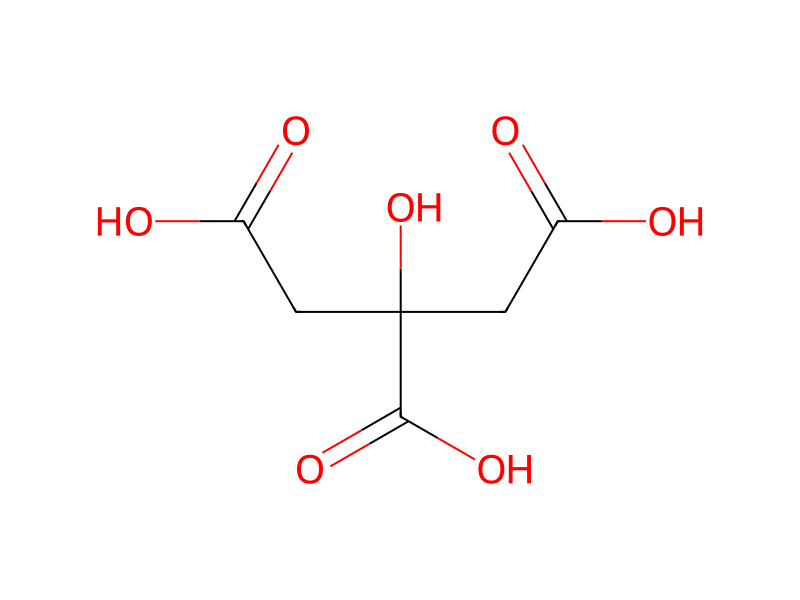
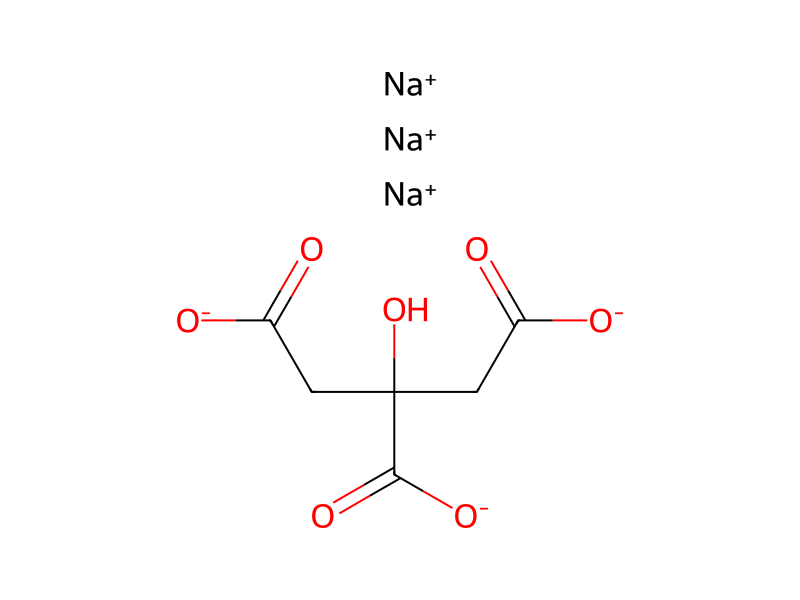
[C:1]([OH:13])(=[O:12])[CH2:2][C:3]([CH2:8][C:9]([OH:11])=[O:10])([C:5]([OH:7])=[O:6])[OH:4].[C:14](=O)([OH:16])[O-:15].[Na+:18].O>>[C:1]([O-:13])(=[O:12])[CH2:2][C:3]([CH2:8][C:9]([O-:11])=[O:10])([C:5]([O-:7])=[O:6])[OH:4].[Na+:18].[Na+:18].[Na+:18].[C:14](=[O:16])=[O:15]Participants



Procedure
As shown in the above table, citric acid (C6H8O7) and sodium bicarbonate (NaHCO3) serve as a binary disintegrant. A single mole of citric acid plus three moles of sodium bicarbonate combine to form one mole of sodium citrate (Na3C6H5O7), three moles water (H2O), and three moles of carbon dioxide (CO2). This stoichiometric, 3:1 molar ratio of sodium bicarbonate:citric acid equates to a 1.312:1 ratio by mass. The sodium bicarbonate:citric acid mass ratio in the example of TABLE 1 is a 2.62:1. It is doubly rich in sodium bicarbonate. This ratio, in combination with crosscarmellose sodium, exhibits excellent disintegration performance in simulated gastric juice after a light meal (pH 3.0 HCl at 37° C.). The present disclosure believes that that the extra sodium bicarbonate reacts with hydrochloric acid in the stomach and helps to ensure that sufficient sodium bicarbonate is available to react with the citric acid.
Sources & evidence
- ORD record
- ord-f53aed2fff03435cb658ca60da41e9cb
- Source dataset
- uspto-grants-2013_07
- Patent number
- US08481076B2
Reaction notes
Loading…