1,4-Dioxa-8-azaspiro(4.5)decane → 8-(3-Methyl-[1,2,4]thiadiazol-5-yl)-1,4-dioxa-8-aza-spiro[4.5]decane
Reaction equation

C1(P(C2CCCCC2)C2C=CC=CC=2C2C=CC=CC=2)CCCCC1.[O:26]1[C:30]2([CH2:35][CH2:34][NH:33][CH2:32][CH2:31]2)[O:29][CH2:28][CH2:27]1.Cl[C:37]1[S:41][N:40]=[C:39]([CH3:42])[N:38]=1>O1CCOCC1.[Cl-].[Na+].O.C([O-])(=O)C.[Pd+2].C([O-])(=O)C>[CH3:42][C:39]1[N:38]=[C:37]([N:33]2[CH2:34][CH2:35][C:30]3([O:29][CH2:28][CH2:27][O:26]3)[CH2:31][CH2:32]2)[S:41][N:40]=1Participants
Reactant 3


Product 1

Reagents, catalysts & solvents 3



Conditions
- Temperature
- 130 °C
Procedure
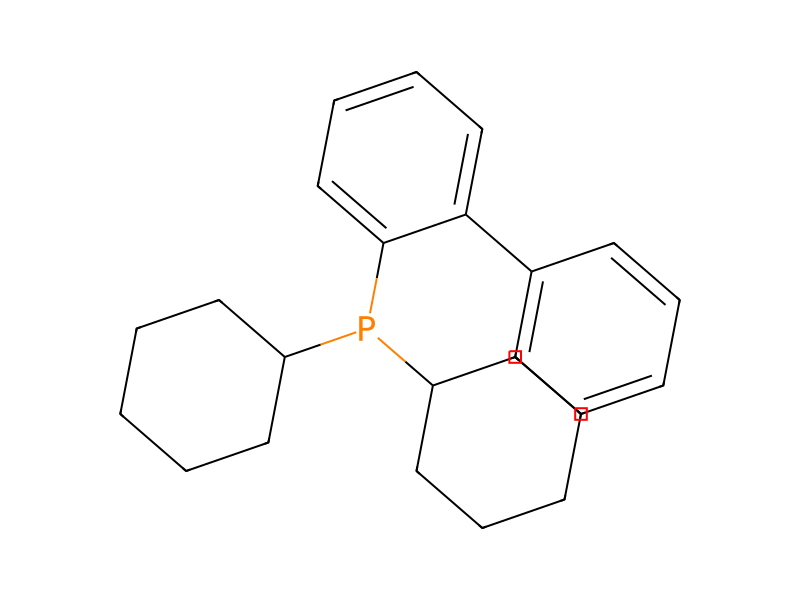
To a prestirred solution (10 minutes at room temperature) of palladium(II) acetate (180 mg, 0.001 mmol) and 2-(dicyclohexylphosphino)biphenyl (572 mg, 0.002 mmol) in dioxane (10 mL) were added 1,4-dioxa-8-azaspiro(4,5)decane (1.3 mL, 10 mmol), 5-chloro-3-methyl-[1,2,4]thiadiazole (1.48 g, 11 mmol) and sodium tert-butylate (1.47 g, 15 mmol) and heated in the microwave at 130° C. for 15 minutes. The reaction mixture was diluted with half saturated brine, the aqueous phase was extracted with ethyl acetate, the combined organic phases were dried over sodium sulfate, the solvent was evaporated and the residue was purified by silica gel chromatography using ethyl acetate as eluent. The title compound was obtained as a light yellow solid (1.87 g, 77%).
Workup
- extractionthe aqueous phase was extracted with ethyl acetate
- dry with materialthe combined organic phases were dried over sodium sulfate
- customthe solvent was evaporated
- customthe residue was purified by silica gel chromatography
Sources & evidence
- ORD record
- ord-7ccbc31a04fd4186be31720467f31f27
- Source dataset
- uspto-grants-2013_07
- Patent number
- US08486967B2
Reaction notes
Loading…